Top 5 AI-Powered Auto-Tuning Soundbars for Home Theaters in 2026 — Tested & Ranked
AI-powered room calibration has become the most transformative feature in modern soundbars — turning a plug-in-and-play device into an acoustic instrument that adapts to your specific room, seating position, furniture, and wall materials. In 2026, the gap between soundbars with genuine AI auto-tuning and those without it is enormous. The five models ranked in this guide use the most advanced room correction, adaptive processing, and spatial audio intelligence available — from Dirac Live (the audiophile gold standard) to Sonos TruePlay, Samsung SpaceFit Sound Pro, Sony 360 Spatial Sound Mapping, and LG’s new Room Calibration Pro with UWB positioning. These are not just the best auto-tuning soundbars of 2026 — they are among the best-sounding devices in all of home audio.
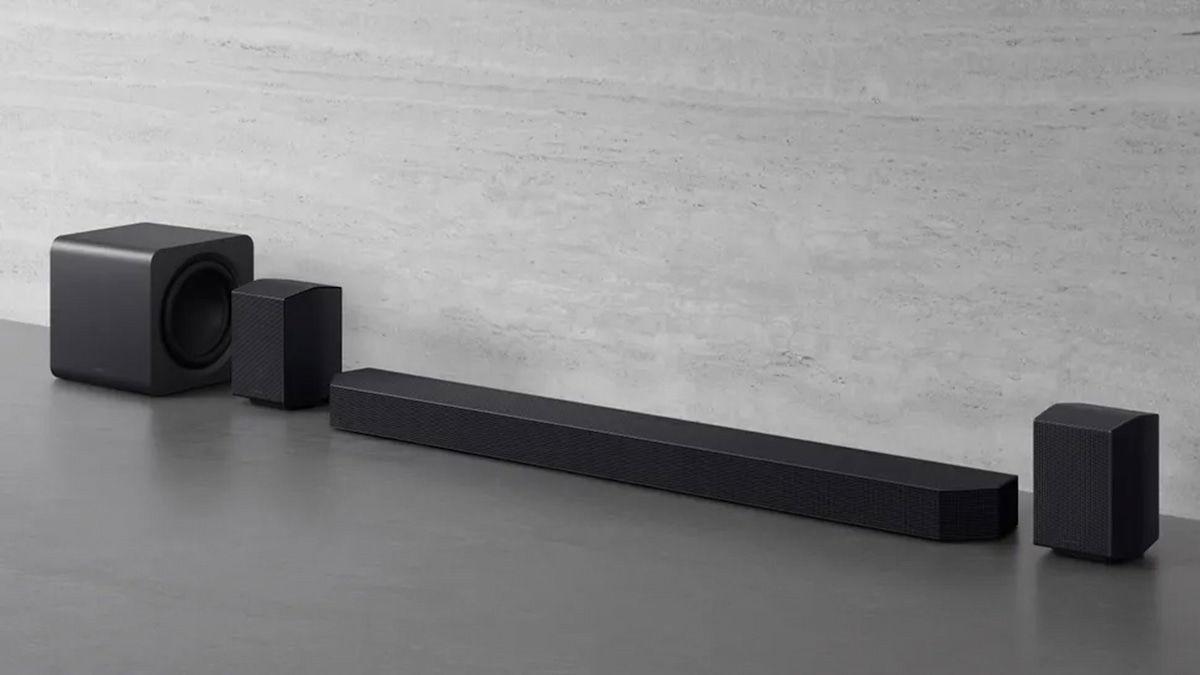
Why AI Auto-Tuning Is Now the Most Important Soundbar Feature
Ten years ago, soundbar room correction meant pressing a button and letting the bar play a test tone that adjusted bass by a few decibels. Today, AI-powered auto-tuning is a fundamentally different technology — one that measures the acoustic fingerprint of your room, identifies problem frequencies caused by standing waves and early reflections, corrects both the frequency and time domain behavior of each speaker channel, and in the most advanced implementations, tracks your position in the room in real time and adjusts the entire audio field to put you in the sweet spot regardless of where you’re sitting.
This shift matters enormously for a simple reason: no two rooms sound the same. A soundbar calibrated for a 10×12 ft bedroom will sound completely different — often worse — when moved to a 16×20 ft living room with a cathedral ceiling. Traditional soundbars compensate with a handful of EQ presets (“Movie,” “Music,” “Night”). AI auto-tuning systems instead measure your actual room’s acoustic response and build a custom correction curve specific to your space. The result is consistently better bass control, cleaner dialogue, wider surround staging, and a soundstage that feels appropriate for the room rather than fighting against it.
In 2026, the field has advanced significantly. The landmark event was the release of the Klipsch Flexus Core 300 — the world’s first soundbar with full Dirac Live room correction, a system previously reserved for expensive AV receivers. Meanwhile, LG debuted its Sound Suite H7 at CES 2026 with the industry-first Dolby Atmos FlexConnect and UWB-based listening position tracking. Sonos, Samsung, and Sony continue to refine their proprietary systems into increasingly sophisticated tools. The result is a 2026 soundbar market where AI tuning has gone from a marketing checkbox to a genuine, audible differentiator that home theater buyers cannot afford to ignore.
How AI Auto-Tuning Works: The Technologies Behind Each System
| Technology | Used By | How It Works | Depth of Correction |
|---|---|---|---|
| Dirac Live | Klipsch Flexus Core 300 | Measures both frequency response AND impulse response (timing). Corrects frequency AND time-domain behavior — the most complete room correction available | ⭐⭐⭐⭐⭐ Professional grade |
| Sonos TruePlay | Sonos Arc Ultra, Beam Gen 2 | Uses your iPhone/iPad microphone while you walk around the room — builds a spatial map of acoustic reflections and tunes accordingly | ⭐⭐⭐⭐⭐ Excellent, easy to use |
| Samsung SpaceFit Sound Pro | Samsung HW-Q990F, Q800F, S60D | Uses built-in microphones to measure room acoustics and adapt EQ in real-time. Q-Symphony syncs soundbar with compatible Samsung TV speakers | ⭐⭐⭐⭐ Very good; real-time adaptive |
| Sony 360 Spatial Sound Mapping | Sony HT-A7000, HT-A5000 | Creates multiple virtual phantom speakers mapped precisely to your room layout — the widest effective listening area of any current soundbar system | ⭐⭐⭐⭐ Excellent spatial modeling |
| LG Room Calibration Pro + UWB Sound Follow | LG Sound Suite H7 (2026) | Uses ultra-wideband (UWB) technology to track the listener’s exact physical location and dynamically adjust the sweet spot in real time — every seat becomes the best seat | ⭐⭐⭐⭐⭐ Groundbreaking adaptive tracking |
Most soundbar room correction systems only fix frequency response — they boost or cut specific frequencies to smooth out peaks and dips caused by room modes. Dirac Live also corrects the impulse response — meaning it fixes the timing errors that occur when sound from multiple speakers and room reflections arrive at your ears with slightly different delays. This time-domain correction is what separates Dirac from simpler EQ-based systems: it makes sound not just tonally correct but also more focused, imaging more precisely, and more coherent across the entire listening area. It is the same technology used in professional recording studios and broadcast facilities.
Quick Comparison: Top 5 AI Auto-Tuning Soundbars at a Glance
| Rank | Soundbar | AI Tuning System | Channels | Dolby Atmos | Price (Approx.) |
|---|---|---|---|---|---|
| 🥇 #1 | Klipsch Flexus Core 300 | Dirac Live (world’s first in a soundbar) | 5.1.2 (expandable to 7.1.4) | ✅ Yes | $999–$1,199 |
| 🥈 #2 | LG Sound Suite H7 | Room Calibration Pro + UWB Sound Follow | 9.1.4 (expandable to 13.1.7) | ✅ Dolby Atmos FlexConnect | $1,499+ |
| 🥉 #3 | Sonos Arc Ultra | TruePlay (iPhone-based spatial mapping) | 9.1.4 | ✅ Yes | $999 |
| ⭐ #4 | Samsung HW-Q990F | SpaceFit Sound Pro + AI Sound+ + Q-Symphony | 11.1.4 | ✅ Yes | $1,499 |
| ⭐ #5 | Sony HT-A7000 | 360 Spatial Sound Mapping | 7.1.2 (expandable to 9.1.2) | ✅ Yes | $899–$1,100 |
Top 5 AI-Powered Auto-Tuning Soundbars for Home Theaters in 2026
🥇 #1 — Klipsch Flexus Core 300: The World’s First Soundbar with Dirac Live
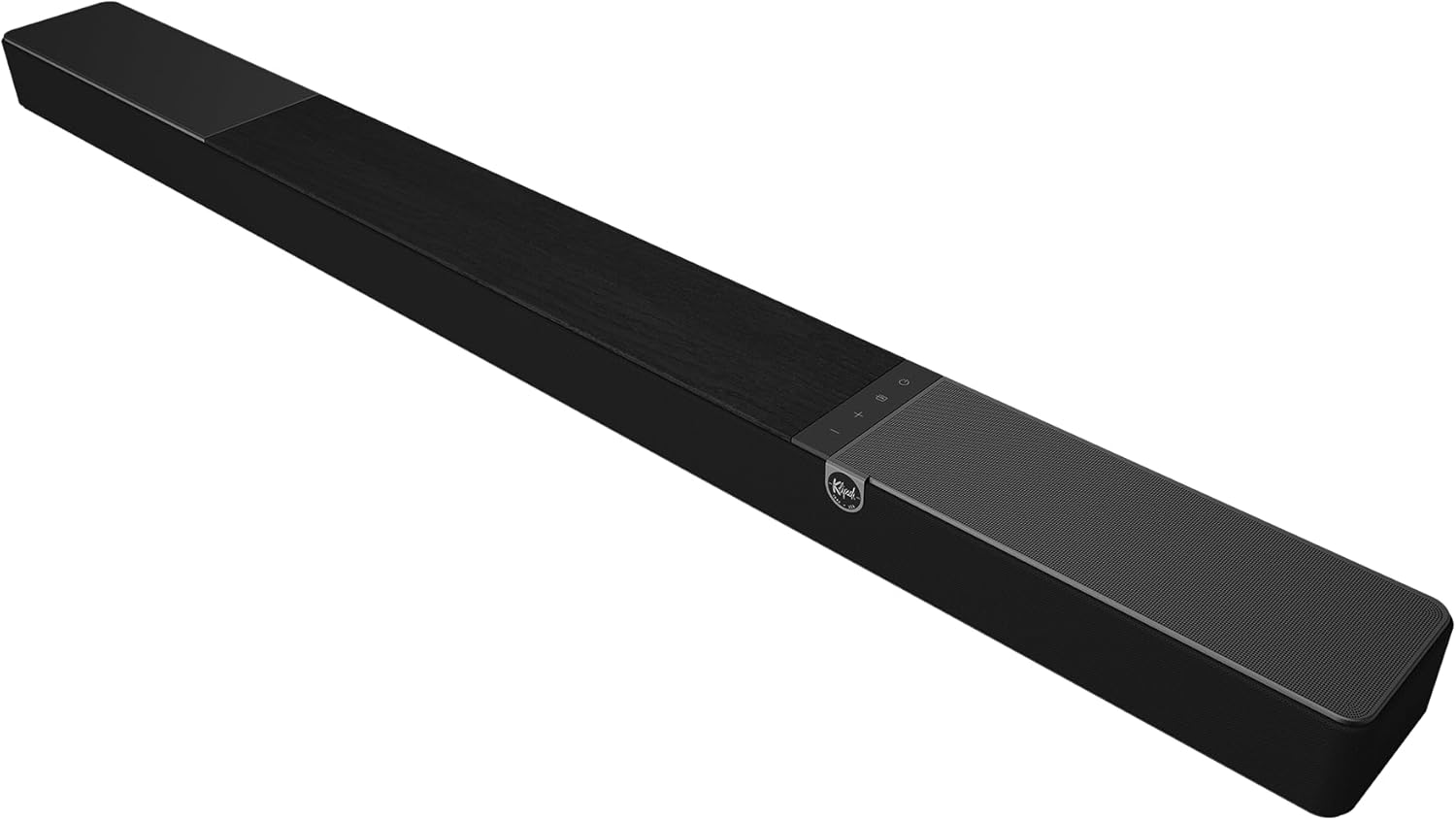
| Channels | 5.1.2 (expandable to 7.1.4 with Flexus Surr 200 + Sub 200) |
| AI Tuning System | Dirac Live Room Correction (Limited Bandwidth included; Full Bandwidth & Bass Control available separately) |
| Driver Count | 13 drivers (4 front-firing, 1 horn-loaded tweeter, 2 side-firing, 2 upfiring, 4 built-in subwoofers) |
| Formats | Dolby Atmos, DTS:X |
| Connectivity | HDMI 2.1 eARC in + HDMI 2.1 out (passthrough), Optical, Ethernet, Wi-Fi, Bluetooth |
| Streaming | AirPlay 2, Chromecast, Spotify Connect, Tidal, Wi-Fi |
| Price | $999–$1,199 (bar only); full system with Sub 200 + Surr 200: ~$2,100+ |
Why It’s #1: Dirac Live Changes Everything
The Klipsch Flexus Core 300, developed in collaboration with Onkyo, earned its place as the number one AI auto-tuning soundbar in 2026 by doing something no soundbar had done before: integrating Dirac Live room correction — the same professional-grade acoustic calibration system found in high-end AV receivers costing $2,000 or more. This is not a simplified consumer adaptation of Dirac. It is the full system, with its own calibration microphone, up to 10 custom preset slots, and the ability to correct both frequency response and impulse response across the entire audio spectrum.
The practical effect is stunning. Reviewers who tested the Flexus Core 300 noted the soundstage extending well beyond the physical footprint of the bar, filling a 20×15 ft living room with an impressively wide and immersive sound field — and even at just seven feet from the bar, listeners found themselves asking “this is just a soundbar?” Dialogue clarity was consistently cited as a standout, with voices staying intelligible without making effects feel pinched or thin — a notably controlled approach compared to soundbars that “improve” dialogue by gutting the mix.
The integration of Dirac Live elevates the Flexus Core 300 to a league otherwise only found in AV receivers costing well over €2,000. The calibration process uses an included omnidirectional microphone — or a compatible third-party mic like the UMIK-1 — and can be performed through the Klipsch Connect Plus app for a guided experience, or via the full Dirac Live PC/Mac software for audiophile-level control. Reviewers who tried both the in-app and PC-based calibration reported a clear, noticeable difference — the computer-based Dirac Live software provided significantly better results thanks to the added control it affords.
What Dirac Live Corrects That Other Systems Miss
Standard soundbar room correction adjusts EQ — it boosts bass, cuts harsh frequencies, and smooths peaks. Dirac Live goes further by also correcting the timing of sound from each driver, ensuring that all 13 speakers inside the Flexus Core 300 arrive at your ears simultaneously, producing a coherent, focused soundstage rather than the smeared, phasey presentation common in multi-driver soundbars without proper time-domain correction.
While the Klipsch Connect Plus in-app Dirac calibration is convenient and meaningfully better than no correction at all, downloading the Dirac Live PC/Mac application and running a full multi-point measurement (5–9 measurement positions around your listening area) produces a significantly superior result. The PC app shows you the before/after correction curves, lets you set custom target curves, and gives you full access to Bass Control if you’ve purchased that license. For a $999+ soundbar, taking 30 minutes to do the full calibration is absolutely worth it.
🥈 #2 — LG Sound Suite H7: World’s First Dolby Atmos FlexConnect + UWB Position Tracking
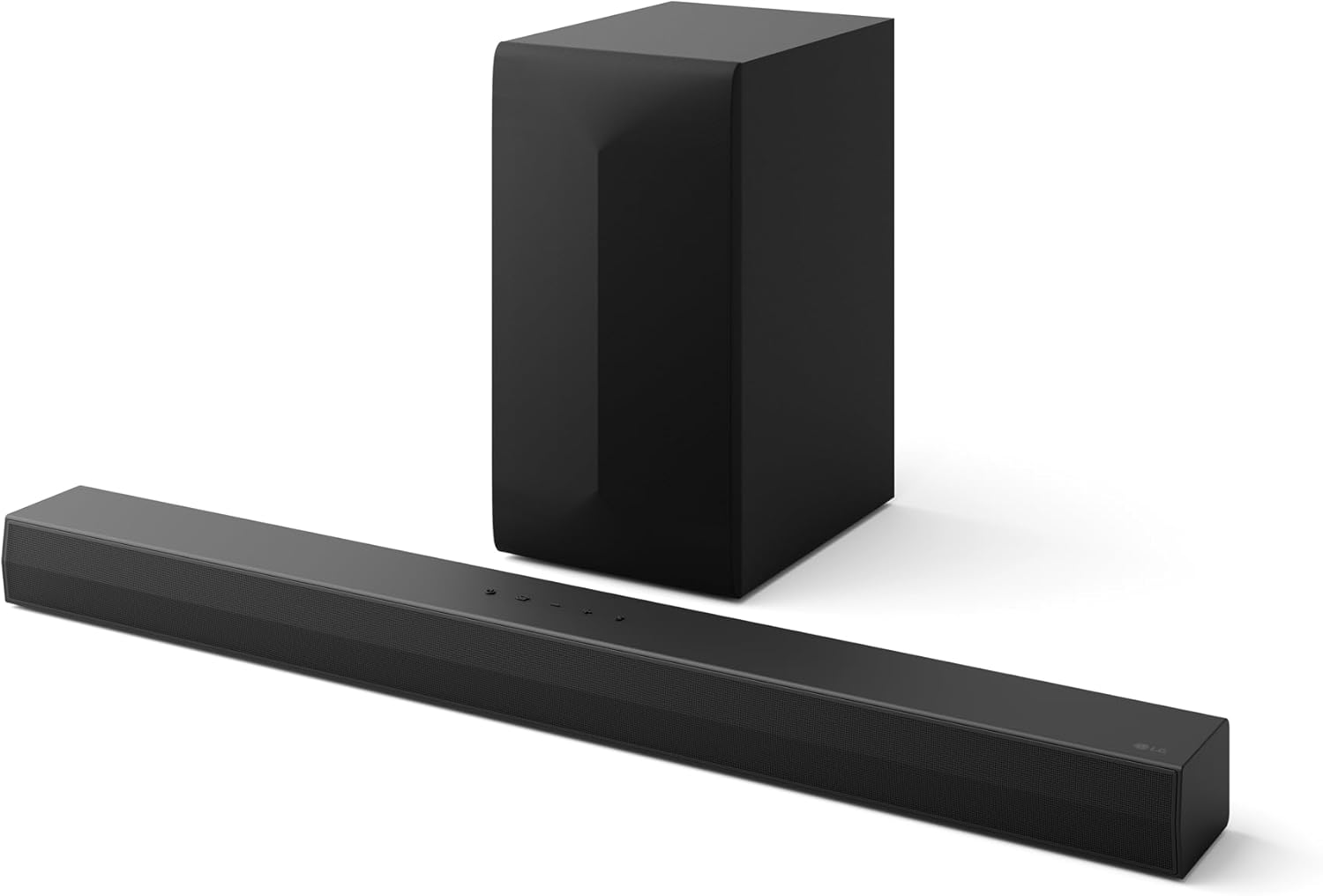
| Channels | 9.1.4 standalone (expandable to 13.1.7 with Sound Suite M7/M5 speakers + W7 sub) |
| AI Tuning System | Room Calibration Pro + Sound Follow (UWB-based real-time listener position tracking) |
| AI Audio Feature | AI Sound Pro+ spatial audio upmixing; Dolby Atmos FlexConnect |
| Formats | Dolby Atmos (FlexConnect), DTS:X |
| Special Feature | Ultra-wideband (UWB) technology dynamically adjusts sweet spot based on listener’s physical location |
| Price | $1,499+ (full Sound Suite system pricing TBC) |
The 2026 Breakthrough: Your Position Tracked in Real Time
The LG Sound Suite H7 debuted at CES 2026 and represents the most forward-looking AI tuning technology on this list. The H7 uses ultra-wideband (UWB) technology to dynamically adjust the listening sweet spot based on the listener’s physical location in the room — and when paired with Dolby Atmos FlexConnect, the result is genuinely personalised immersion where every seat is treated like the money seat. This is a fundamental departure from traditional room correction, which calibrates for a fixed position and delivers suboptimal results for anyone sitting outside that exact spot.
The H7’s Room Calibration Pro is a fully automatic room calibration system, and its Sound Follow feature tunes the sound to your specific seating location using ultra-wideband technology. Combined with AI Sound Pro+ spatial audio upmixing, these features make it a genuinely standout Atmos soundbar.
The Dolby Atmos FlexConnect technology itself is a landmark achievement. FlexConnect is designed to seamlessly link the TV’s or soundbar’s built-in audio system with additional wireless speakers, expanding the soundstage and unlocking a more immersive Dolby Atmos experience — and it automatically calibrates and optimises playback based on the room’s layout and the actual placement of each speaker, with no manual measurements, no receiver menus, and no installer drama. Crucially, it is brand-agnostic by design, meaning the long-standing pain point of being locked into a single manufacturer’s ecosystem is directly addressed.
🥉 #3 — Sonos Arc Ultra: Best Room Calibration for Ease of Use
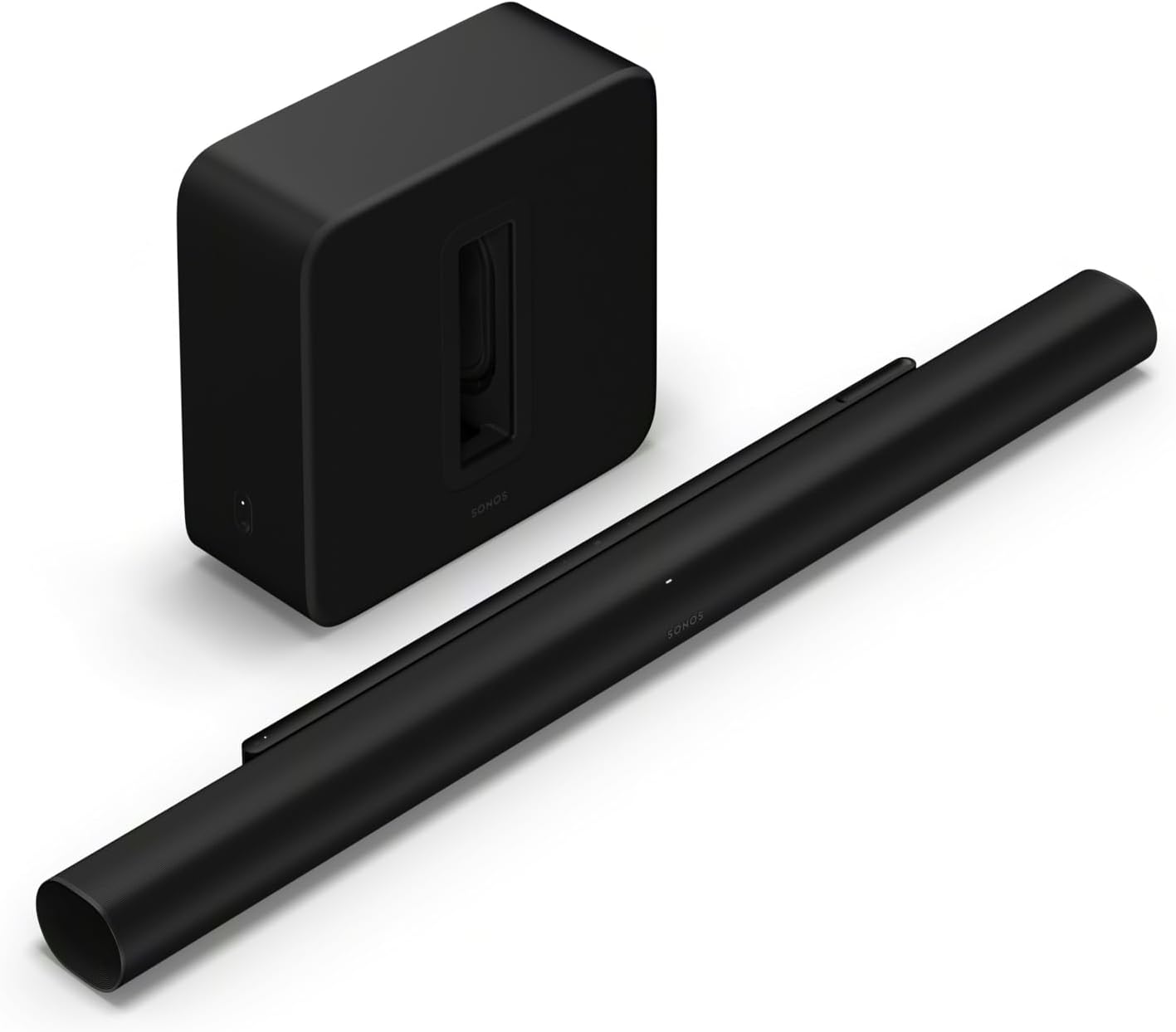
| Channels | 9.1.4 (virtual surround; 7 tweeters, 2 side-firing, 2 upfiring) |
| AI Tuning System | TruePlay (automatic spatial calibration via iPhone/iPad microphone) |
| Special Technology | Sound Motion™ transducer technology — 2× bass output vs original Arc in same footprint |
| Formats | Dolby Atmos (lossless via eARC), DTS not supported |
| Connectivity | HDMI eARC, Wi-Fi, AirPlay 2, Spotify Connect |
| Smart Ecosystem | Sonos multiroom, Apple HomeKit, Amazon Alexa, Google Assistant |
| Price | $999 |
TruePlay: The Most User-Friendly Auto-Tuning System Available
Sonos TruePlay is consistently rated as the most effective consumer-facing automatic room calibration system for non-technical users — and with the Arc Ultra, it has been improved and deepened. Rather than requiring a separate calibration microphone or complex software, TruePlay uses the microphone of your iPhone or iPad: you simply walk slowly around your room while the soundbar plays tones, and TruePlay builds a spatial model of your room’s acoustic reflections, then applies a custom EQ correction tailored to your space.
The Arc Ultra itself represents a significant hardware step up from the original Arc. Sonos’ new Sound Motion™ transducer technology moves the diaphragm in a fundamentally different way — delivering claimed double the bass output of the original Arc within the exact same physical dimensions. This makes the Arc Ultra genuinely impactful for a single-bar system without a subwoofer, though the optional Sonos Sub 4 takes bass performance to another level entirely.
For home theater setups that prioritize aesthetic simplicity, multi-room audio integration, and ease of use over maximum technical complexity, the Sonos Arc Ultra is the definitive recommendation. Its TruePlay calibration recalibrates automatically whenever it detects an acoustic change in the room — such as moving furniture or adding curtains — making it the most “set it and forget it” auto-tuning system on this list.
Room acoustics change throughout the day — curtains open or closed, different numbers of people in the room, seasonal changes in humidity all affect how sound behaves. Sonos TruePlay is fast enough (under 2 minutes) to run multiple times. Run it once with curtains open in daylight and save a second preset with curtains closed in the evening — you may be surprised at how different the tuning needs to be for each scenario.
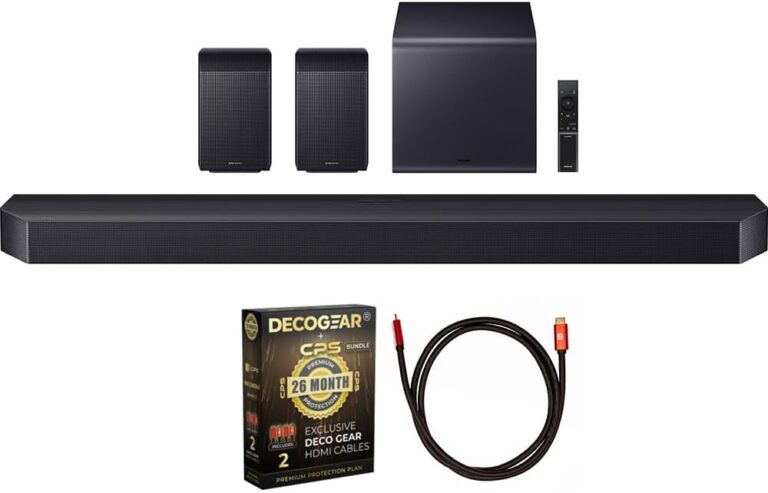
⭐ #4 — Samsung HW-Q990F: Best Complete Package with Rear Speakers Included
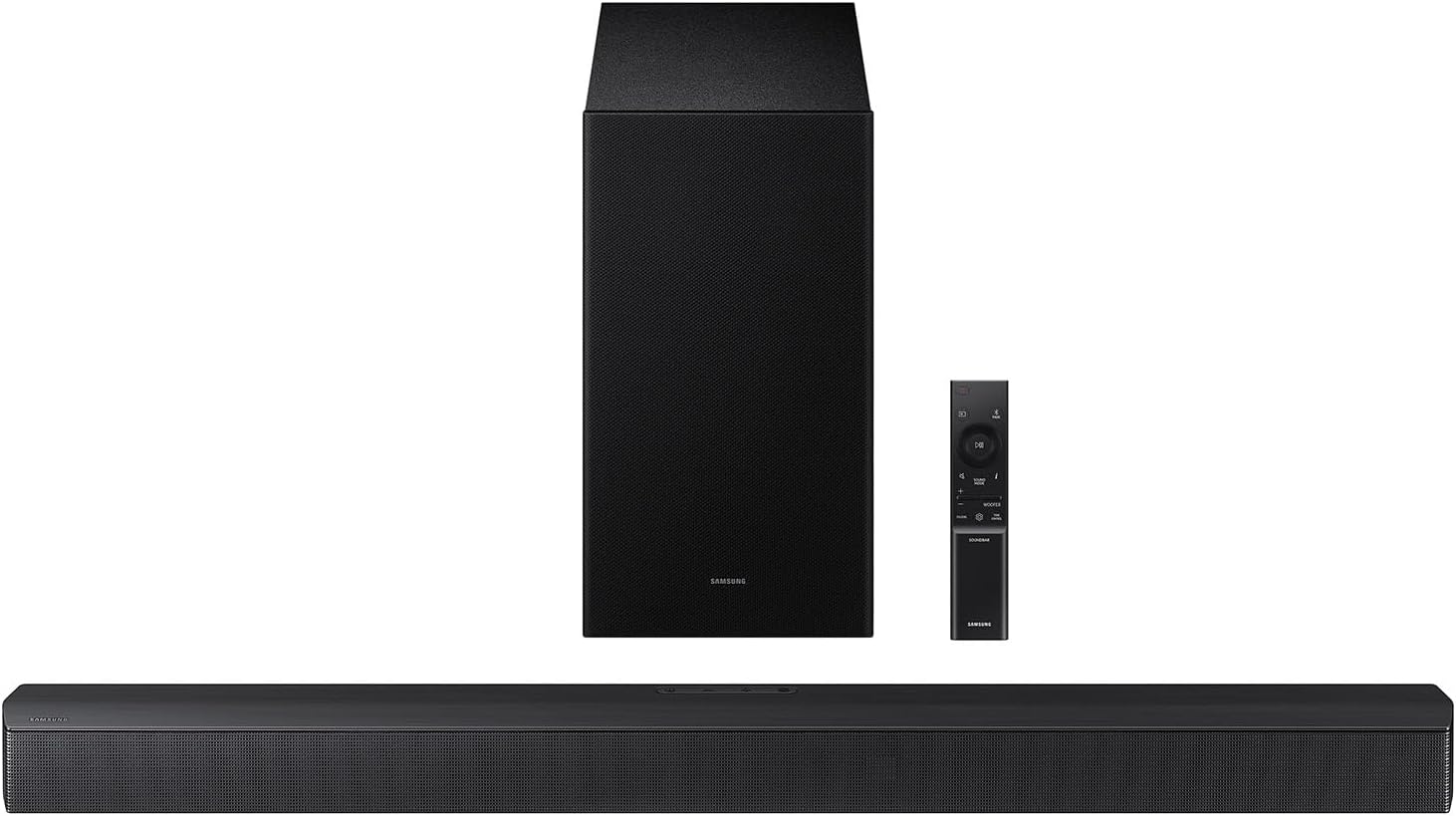
| Channels | 11.1.4 (bar + wireless sub + wireless rear speakers + up-firing rear speakers) |
| AI Tuning System | SpaceFit Sound Pro + AI Sound+ adaptive processing + Q-Symphony |
| Special Technology | SpaceFit Sound Pro: real-time room analysis via built-in mics; AI Sound+ continuously adapts to content type |
| Formats | Dolby Atmos, DTS:X |
| Connectivity | HDMI 2.1 eARC, HDMI input, optical, Wi-Fi, Bluetooth |
| Q-Symphony | Combines soundbar + Samsung TV speakers for a unified, wider audio platform |
| Price | $1,499 (full system with sub + rear speakers included) |
The Most Complete Out-of-the-Box Home Theater Package
The Samsung HW-Q990F’s defining advantage over every other soundbar on this list is that its 11.1.4 channel configuration — including wireless rear speakers and subwoofer — comes in the box. With the Klipsch Flexus Core 300, reaching a comparable surround configuration requires purchasing the bar, Sub 200, and Surr 200 separately for a combined cost of $2,100+. The Q990F delivers a physically complete surround sound system at $1,499, making it exceptional value for what it delivers.
SpaceFit Sound Pro is Samsung’s most advanced room calibration to date. In testing the Q990F, its 11.1.4 channel configuration provided the most cohesive “dome” of sound experienced from a non-component system. The AI Sound+ system continuously analyzes the audio content being played and adapts processing in real time — not just during initial setup, but moment to moment through your content. Action scenes get optimised differently from dialogue scenes, which in turn are treated differently from music.
Q-Symphony is a uniquely Samsung feature that turns compatible Samsung TVs into active participants in the audio system — the TV’s built-in speakers join the soundbar in a coordinated, calibrated array, effectively adding several more driver positions to the system for free. For Samsung TV owners, this is a meaningful differentiator that has no equivalent from any other brand.
⭐ #5 — Sony HT-A7000: Widest Virtual Sweet Spot via 360 Spatial Sound Mapping
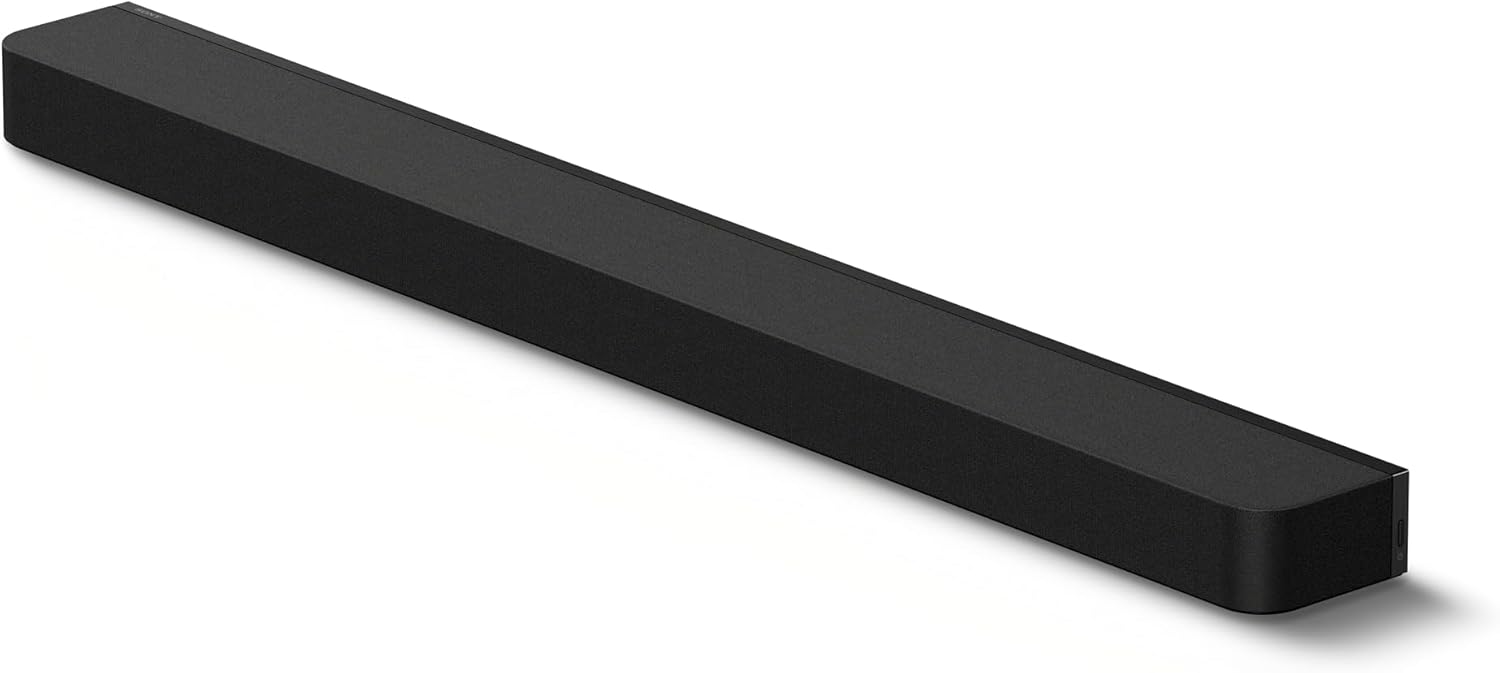
| Channels | 7.1.2 standalone (expandable to 9.1.2 with SA-RS3S wireless rear speakers) |
| AI Tuning System | 360 Spatial Sound Mapping — creates multiple virtual phantom speaker positions around the room |
| Special Technology | 360 Reality Audio, DTS:X support, HDMI 2.1 passthrough, built-in subwoofer |
| Formats | Dolby Atmos, DTS:X, 360 Reality Audio |
| Connectivity | HDMI 2.1 eARC + HDMI 2.1 input, optical, Wi-Fi, Bluetooth, Chromecast |
| Price | $899–$1,100 |
360 Spatial Sound Mapping: The Widest Effective Listening Area
Sony’s 360 Spatial Sound Mapping technology sets the HT-A7000 apart from all other soundbars in one specific and highly practical way: it creates the widest effective listening area of any auto-tuning soundbar currently available. Rather than optimising sound for one primary listening position, 360 SSM creates multiple virtual phantom speaker positions mapped precisely to the room layout — filling the entire room with a coherent, spatially accurate soundstage that holds up across a wide range of seating positions.
This makes the HT-A7000 particularly compelling for living rooms with irregular or multiple seating arrangements — the kind of setup where a conventional soundbar’s limited sweet spot means that guests sitting at the ends of the sofa hear a noticeably inferior mix. Sony’s 360 SSM system makes everyone in the room feel like they’re in the prime listening position simultaneously.
The HT-A7000 also benefits from Sony’s own Bravia ecosystem integration with compatible Bravia TVs, and it is one of the few soundbars to support both Dolby Atmos and DTS:X natively. Its built-in subwoofer handles low frequencies down to a claimed 55 Hz independently — though the optional SA-SW5 wireless subwoofer is highly recommended for genuinely impactful bass in movie content.
The Sony HT-A7000’s 360 Spatial Sound Mapping works in a limited mode without rear speakers — but its full potential is only realised when paired with the SA-RS3S wireless rear speakers. When these are connected, the 360 SSM algorithm has real physical speaker positions at the rear of the room to build its spatial map from, dramatically expanding the accuracy and width of the virtual soundstage. The SA-RS3S also includes upward-firing drivers for additional Atmos height channels, making the combination one of the most spatially complete soundbar systems available without running cables.
How to Choose the Right AI Auto-Tuning Soundbar for Your Home Theater
| Your Priority | Best Pick | Why |
|---|---|---|
| Absolute best room correction technology | 🥇 Klipsch Flexus Core 300 | Dirac Live corrects both frequency and time-domain — no other soundbar comes close for acoustic accuracy |
| Most innovative 2026 technology | 🥈 LG Sound Suite H7 | Real-time UWB listener position tracking + Dolby Atmos FlexConnect — genuinely unprecedented features |
| Easiest setup and best eco system | 🥉 Sonos Arc Ultra | TruePlay is the simplest, most reliable auto-calibration for non-technical users; Sonos multiroom is unmatched |
| Best complete out-of-box package | ⭐ Samsung HW-Q990F | 11.1.4 with physical rear speakers included — nothing extra to buy for a true surround system |
| Multiple seating positions / wide listening area | ⭐ Sony HT-A7000 | 360 Spatial Sound Mapping delivers the widest effective listening area of any soundbar system |
| Samsung TV owner | ⭐ Samsung HW-Q990F | Q-Symphony integrates TV speakers into the soundbar array — a unique advantage exclusive to Samsung pairings |
| LG TV owner | 🥈 LG Sound Suite H7 | FlexConnect and Room Calibration Pro integrate most deeply with LG’s 2025/2026 OLED TV lineup |
| Best value at $999 | 🥇 Klipsch Flexus Core 300 or 🥉 Sonos Arc Ultra | Both deliver exceptional performance for the price — choose Klipsch for raw acoustic performance, Sonos for ecosystem |
AI Auto-Tuning Soundbar Buyer’s Checklist: What to Look for in 2026
- ☐ What does the room correction actually correct? — EQ-only (most) vs frequency + time domain (Dirac Live). Frequency-only correction is limited; time-domain correction is transformative.
- ☐ Does it re-calibrate automatically? — Sonos TruePlay detects room changes and re-tunes. Most others require manual re-runs of calibration after significant furniture changes.
- ☐ Included microphone? — A dedicated calibration mic (Klipsch) is more accurate than using your phone’s mic (Sonos TruePlay), but TruePlay is far more convenient.
- ☐ eARC vs ARC? — For lossless Dolby Atmos (TrueHD), eARC is required. All five soundbars on this list include eARC — confirm your TV also has an eARC port.
- ☐ Is DTS:X important to you? — If you own a 4K Blu-ray collection, DTS:X support matters. Sonos Arc Ultra does not support DTS; all others on this list do.
- ☐ HDMI passthrough needed? — Gamers with PS5 or Xbox Series X need 4K/120Hz passthrough. Klipsch Core 300, Samsung Q990F, and Sony HT-A7000 include this; Sonos Arc Ultra does not.
- ☐ How many seating positions? — Single primary seat: all options work well. Multiple seating positions: Sony HT-A7000 or LG H7 with UWB tracking.
- ☐ Room size? — Under 150 sq ft: Sonos Arc Ultra or Sony HT-A7000. 150–250 sq ft: any of the five. Over 250 sq ft: Samsung Q990F or LG Sound Suite H7.
Frequently Asked Questions (FAQ)
Q1: What is AI auto-tuning in a soundbar and how is it different from a simple EQ?
A simple EQ applies fixed frequency adjustments that the manufacturer chose in their test room — which may or may not match your actual room’s acoustic characteristics. AI auto-tuning systems measure your specific room using a calibration microphone or smartphone microphone, then build a customized correction profile for your space. The most advanced systems (Dirac Live) correct both frequency response and timing behavior across all drivers. The result is sound that’s optimised for your room specifically, rather than a generic EQ preset designed for an average room that doesn’t exist.
Q2: Is Dirac Live really that much better than other room correction systems?
For technical completeness, yes. Dirac Live is the only system on this list that corrects both frequency response and impulse response — the time-domain behavior of how sound from all drivers arrives at the listening position. This time-domain correction produces a more focused, coherent soundstage with better-defined imaging. However, Sonos TruePlay, Samsung SpaceFit Sound Pro, and Sony 360 SSM are all excellent systems that produce audibly better results than no correction at all. For audiophiles who want the most technically accurate result, Dirac is in a class of its own. For most home theater users, any of the five systems on this list will sound dramatically better than an uncorrected soundbar.
Q3: Does AI room calibration work if I rearrange my furniture?
Most systems require you to manually re-run the calibration process after significant changes to room layout, furniture, or soft furnishings — because these changes alter the room’s acoustic reflections and the original correction is no longer optimal. Sonos TruePlay is the exception: it monitors the room acoustically and re-tunes automatically when it detects meaningful changes. The LG Sound Suite H7’s UWB-based Sound Follow system takes a different approach — it tracks the listener’s position dynamically rather than re-calibrating the room, adapting the sound field to wherever you are sitting in real time.
Q4: Can AI-tuned soundbars replace a discrete 5.1 system?
In small-to-medium rooms (under 180 square feet), a high-quality AI-tuned soundbar with physical rear speakers (Samsung HW-Q990F) or advanced spatial mapping (Sony HT-A7000, LG H7) can deliver an experience that rivals a mid-range discrete 5.1 system. The Klipsch Flexus Core 300 with its Dirac Live calibration genuinely challenges more expensive traditional setups. In large rooms or for serious audiophiles and cinephiles, a quality discrete system with an AVR featuring Audyssey MultEQ XT32 or Dirac Live will still outperform a soundbar for overall spatial accuracy and dynamic range — but the gap has closed considerably in 2026.
Q5: Which AI-tuning soundbar is best for gaming in 2026?
For gaming, the Samsung HW-Q990F or Klipsch Flexus Core 300 are the top picks — both support HDMI 2.1 with 4K/120Hz passthrough and include dedicated Game Mode processing. The Klipsch Flexus Core 300’s Dirac Live calibration also produces the most accurate positional audio cues in gaming content, which matters significantly for competitive titles where directional awareness is critical. The Sonos Arc Ultra is excellent for casual gaming but lacks HDMI passthrough and has no dedicated gaming mode, making it less suitable for PS5 or Xbox Series X setups where 4K/120Hz is a priority.
Tell us your room dimensions, TV brand, primary use (movies, gaming, music), and budget in the comments — we’ll give you a personalised recommendation from our tested shortlist. Every room is different, and our guides are built to help you find the right match, not just the most expensive option.