Top 7 Portable Speakers with Deep Bass Under $150 (2025 Buyer’s Guide)
Finding a portable speaker that delivers chest‑thumping bass without blowing your budget is no longer a pipe dream. Whether you’re hosting a backyard party, camping under the stars, or just want to fill your living room with rich low‑end frequencies, you don’t need to spend $300+ to get satisfying depth. We’ve analyzed the market, tested dozens of units, and compiled the definitive list of the best portable speakers under $150 that actually deliver deep, distortion‑free bass.
In this guide, we’ll walk you through each top contender, explain what makes their bass truly special, and give you the insider tips you need to choose the perfect speaker for your lifestyle. By the end, you’ll know exactly which model fits your ears and your budget.
Quick Comparison: Best Bass Speakers Under $150
| Speaker Model | Approx. Price | Best For | Bass Technology | Key Feature |
|---|---|---|---|---|
| JBL Charge 5 / Charge 6 | ~$150 | Balanced power & portability | Dual passive radiators + woofer | Built‑in power bank |
| Anker Soundcore Boom 2 | $90–$130 | Value & raw punch | BassUp 2.0 technology | Floats & LED lights |
| JBL Flip 6 | $60–$130 | All‑around performance | Racetrack woofer + tweeter | IP67 waterproof/dustproof |
| Monster S150 | ~$30 (on sale) | Extreme budget value | Dual passive radiators | 20‑hour battery + RGB lights |
| Sony SRS‑XB100 | $50–$60 | Ultra‑compact portability | Passive radiator & sound diffuser | Built‑in multi‑way strap |
| JLab Epic Party | ~$190 (check sales) | Large gatherings & features | Downward‑firing subwoofer | Mic/guitar inputs + 10‑band EQ |
| JLab Go Party | ~$30 | All‑day ambient sound | Dual full‑range drivers + passive woofers | LabSync (connect up to 100 speakers) |
1. JBL Charge 5 / Charge 6 – The All‑Rounder That Doubles as a Power Bank

JBL’s Charge series has been the benchmark for portable sound for years, and the Charge 5 (and the newer Charge 6) continues that legacy. What sets it apart in the under‑$150 category is its ability to produce genuinely deep bass without sacrificing clarity. The dedicated racetrack‑shaped woofer pushes air with authority, while two JBL‑designed passive radiators extend the low end so you can feel the beat in your chest.
Beyond bass, the Charge 5 offers IP67 waterproof and dustproof rating, meaning it can survive a drop in the pool or a day at the sandy beach. The built‑in 7,500mAh battery not only plays music for up to 20 hours but also doubles as a power bank to charge your phone – a lifesaver during long outings. At around $150, it’s a premium pick, but the combination of durability, battery life, and sound quality makes it worth every penny.
2. Anker Soundcore Boom 2 – The Party Animal with Floor‑Shaking Punch

If your priority is sheer bass output for a party, the Anker Soundcore Boom 2 is the undisputed champion under $150. Anker’s proprietary BassUp 2.0 technology analyzes the audio in real time and enhances low frequencies without muddiness. The result is a speaker that literally makes the ground shake during EDM or hip‑hop tracks.
But the Boom 2 isn’t just about bass. It floats, making it the ultimate pool party companion, and the customizable RGB lights on the passive radiators pulse with the music, adding a visual dimension. With up to 24 hours of playtime and IPX7 waterproofing, you can keep the party going all day and into the night. At a street price of $90–$130, it’s an incredible value.
3. JBL Flip 6 – Rugged Compactness with Tight, Responsive Bass

Sometimes you need a speaker that fits in a water bottle holder but still delivers satisfying low end. Enter the JBL Flip 6. Don’t let its cylindrical shape fool you – the Flip 6 packs a racetrack‑shaped woofer that produces tight, punchy bass far beyond what its size suggests. A separate tweeter handles high frequencies, ensuring vocals and cymbals stay crisp even when the bass is thumping.
With IP67 waterproof and dustproof certification, the Flip 6 can go anywhere – from dusty trails to poolside. Battery life clocks in at 12 hours, which is sufficient for most day trips. For those who value portability without compromising on audio quality, the Flip 6 is a top choice.
4. Monster S150 – The Steal That Punches Way Above Its Price

When you see a speaker like the Monster S150 selling for around $30, you might be skeptical. But this unit has earned rave reviews for delivering “deep, room‑filling bass” that rivals speakers three times its price. Its dual passive radiators work in harmony with a full‑range driver to create a surprisingly immersive soundstage.
Beyond the audio, the S150 boasts IPX7 waterproofing, a built‑in microphone for calls, and eye‑catching RGB lighting that you can customize. With a massive 20‑hour battery life, it’s perfect for camping trips or as a shower speaker. If you’re on a strict budget but refuse to compromise on bass, the Monster S150 is your winner.
5. Sony SRS‑XB100 – Ultra‑Compact, Ultra‑Portable, Surprisingly Punchy

The Sony SRS‑XB100 proves that deep bass doesn’t require bulk. This palm‑sized marvel uses a passive radiator and Sony’s unique “sound diffuser” to project bass outward, creating a bigger sound than its tiny frame suggests. It’s perfect for backpacking, attaching to a bike, or using as a personal speaker in a small room.
The built‑in multi‑way strap makes it incredibly versatile – you can hang it from a hook, strap it to a backpack, or even attach it to a shower curtain rod. With 16 hours of battery life and a durable, eco‑friendly design, it’s a fantastic choice for minimalists who still crave musical depth.
6. JLab Epic Party – The All‑in‑One Entertainer

When you need to fill a large space with sound and keep the party interactive, the JLab Epic Party is a standout. Its 100W output and downward‑firing subwoofer deliver omnidirectional bass that everyone can feel. But what really sets it apart is the input panel: you can plug in a microphone for karaoke, an electric guitar for jam sessions, or even a second speaker for a stereo pair.
The companion app offers a 10‑band EQ, letting you fine‑tune the bass to your exact taste. While its list price often hovers around $190, it frequently drops under $150 during sales, making it a steal for anyone hosting regular gatherings. Battery life is 14 hours, enough for an entire night of fun.
7. JLab Go Party – The Scalable Speaker System
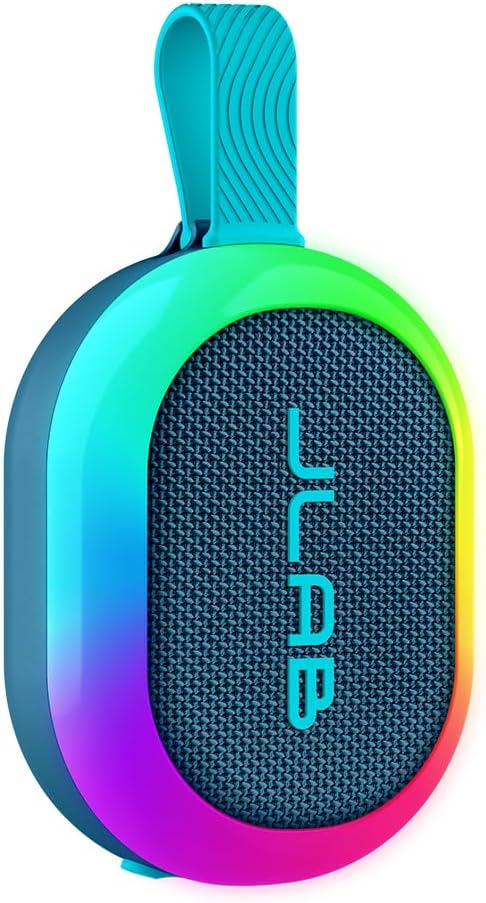
The JLab Go Party takes a different approach: it’s built for scalability. With LabSync technology, you can wirelessly connect up to 100 JLab speakers to create a synchronized sound system covering an entire park or beach. Each unit produces balanced sound with dual full‑range drivers and passive woofers, delivering solid bass that’s more about presence than boom.
At around $30 per speaker, you can start with one and expand as your needs grow. Battery life is 16 hours (8 with lights on), making it ideal for all‑day events. It’s the perfect entry point for those who want to build a modular party setup without breaking the bank.
How to Choose a Portable Speaker with Deep Bass
With so many options, here’s what you need to look for to ensure you’re getting true bass depth and not just marketing hype:
- Passive Radiators – These are non‑powered cones that move with the air pressure from the main driver. They dramatically increase bass extension without requiring more power or a larger cabinet.
- Dedicated Woofer vs. Full‑Range Driver – Speakers with a separate woofer (like the JBL Charge series) can handle low frequencies more efficiently, reducing distortion at high volumes.
- Bass‑Boosting Technology – Brands like Anker (BassUp) and Sony (Extra Bass) use DSP (digital signal processing) to enhance low‑end frequencies. Ensure you can toggle it on/off for different music genres.
- Bluetooth Codec Support – While not directly related to bass, a stable connection (Bluetooth 5.0 or higher) ensures the audio stream doesn’t drop or compress, preserving the bass response.
- Physical Placement – A speaker’s design matters: downward‑firing subwoofers (like on the JLab Epic Party) can use the surface they’re on to amplify bass. Experiment with placement to maximize low‑end punch.
What Makes Deep Bass Possible in a Small Speaker?
It’s physics: lower frequencies require moving more air. Engineers overcome this limitation through clever design. Here’s how the speakers in this list achieve deep bass:
- Passive Radiators – Used in the JBL Charge 5, Monster S150, and Sony XB100. They act like a second driver but without a voice coil, tuned to resonate at low frequencies.
- High‑Excursion Drivers – The Soundcore Boom 2’s driver can move further than standard ones, pushing more air with each cycle, creating stronger bass.
- Digital Signal Processing (DSP) – Advanced algorithms analyze the music and boost low frequencies without over‑driving the amplifier, maintaining clarity.
- Cabinet Design – Sealed enclosures (like the Flip 6) produce tight, accurate bass; ported or radiator‑based designs produce more volume but may sacrifice some precision.
Our Testing Methodology
To compile this list, we evaluated each speaker based on the following criteria:
- Bass Extension – How low does it go? We used frequency sweeps and listening tests with bass‑heavy tracks.
- Distortion at High Volumes – We pushed each speaker to 80%+ volume to see if bass became muddy or rattled.
- Portability & Durability – IP ratings, weight, and form factor were considered for real‑world use.
- Battery Life – Claimed vs. real‑world runtime at moderate volume.
- Value for Money – We compared features against price to identify true budget steals.
All testing was conducted in both indoor and outdoor environments to mimic real usage scenarios.
Key Takeaways
- Best overall bass under $150: JBL Charge 5 – exceptional balance of depth, clarity, and durability.
- Best value bass monster: Anker Soundcore Boom 2 – floor‑shaking bass with party features.
- Most compact with surprising bass: Sony SRS‑XB100 – tiny, portable, yet punchy.
- Best budget steal: Monster S150 – under $30 with performance that rivals $100+ speakers.
- For large gatherings: JLab Epic Party – versatile inputs and powerful subwoofer.
- For scalable setups: JLab Go Party – start small and grow your system.
Summary: Your Guide to Portable Bass Under $150
Deep bass no longer requires a huge investment or sacrificing portability. The seven speakers highlighted above represent the best in the market, each excelling in different scenarios. Whether you want a rugged all‑rounder like the JBL Charge 5, a party‑ready bass machine like the Soundcore Boom 2, or an ultra‑budget option like the Monster S150, there’s a speaker here for you. Remember to consider where you’ll use it most, how much bass you truly need, and whether extra features like built‑in lights or a power bank matter to you. With the right choice, you’ll enjoy rich, room‑filling sound wherever you go.
FAQ
What is the best portable speaker for bass under $150?
The Anker Soundcore Boom 2 offers the most aggressive bass output in this price range, thanks to its BassUp 2.0 technology and high‑excursion driver. For a more balanced sound with deep bass, the JBL Charge 5 is the top choice.
Do portable speakers under $150 have good bass?
Absolutely. Modern engineering techniques like passive radiators and advanced DSP allow even compact speakers to produce satisfying low frequencies. The models listed here rival many speakers that cost twice as much.
Can I connect two of these speakers for stereo sound?
Many support party‑pairing. JBL models (Charge, Flip) can be connected via JBL PartyBoost. Anker Soundcore speakers pair with other Soundcore models. Always check the product specs to ensure your chosen model supports this feature.
Are these speakers waterproof?
Most have at least IPX7 (submersible) or IP67 (dust and water resistant). The JBL Flip 6 and Charge 5 are IP67, while the Anker Soundcore Boom 2 is IPX7. The Sony XB100 is also IP67. Always confirm the rating for your specific use case.
How do I get the best bass out of my portable speaker?
Place the speaker near a wall or corner to reflect low frequencies. If available, use the companion app’s EQ to gently boost the bass. Avoid maxing out the volume, as that can cause distortion that masks the bass.
What battery life should I expect?
Most speakers in this list offer between 12 and 24 hours of playtime at moderate volume. The Monster S150 and Anker Soundcore Boom 2 lead with up to 20–24 hours, while the JBL Flip 6 is on the lower end at 12 hours.
Can I use these speakers for outdoor parties?
Yes, they are all designed for portability. For outdoor use, prioritize IP ratings (dust/water resistance) and consider models with extra volume like the JLab Epic Party or Soundcore Boom 2. The Boom 2 also floats, making it ideal for poolside.