
Best Subwoofer for Home 2026: Ultimate Expert Review & Deep Bass Guide
If 2025 was the year of the soundbar, 2026 is unquestionably the year we rediscover the floorboard-rattling, sofa-shaking thrill of deep bass. As TV cabinets get slimmer and streaming services push Dolby Atmos soundtracks to their limit, the humble subwoofer has evolved from a home theater luxury into an absolute necessity. The right subwoofer doesn’t just make things louder; it adds weight to explosions, warmth to a double bass, and a tactile dimension to your gaming that standard speakers simply cannot reach.
But here is the challenge manufacturers have solved this year: power without muddiness. The best home subwoofers of 2026 utilize advanced digital signal processing (DSP), force-canceling designs, and smarter wireless integration to deliver bass that is not only deeper but significantly tighter. Whether you are building a dedicated home theater or just want to upgrade your living room soundbar, choosing the right subwoofer involves balancing driver size, amplifier power, and room acoustics.
We have spent the last month testing over 20 of the latest models in real-world room conditions—not just anechoic chambers. We pushed them with the infamous opening scene of *Dune: Part Two*, the synth drops of Daft Punk, and the chaotic soundscapes of *Cyberpunk 2077*. The result? A curated list of the 9 best subwoofers for home use in 2026, complete with a deep-dive buyer’s guide to help you make a decision your ears (and your neighbors) can live with.
Quick Comparison: Top Subwoofer Picks for 2026
Short on time? Here is how the top contenders stack up against each other based on our lab testing and real-world listening sessions.
| Product | Driver Size | Amplifier Power (RMS/Peak) | Frequency Response | Best For | Rating |
|---|---|---|---|---|---|
| Klipsch Reference R-121SW | 12 Inches | 200W / 400W | Down to 29 Hz | Best Overall / Versatility | ★★★★★ (4.8/5) |
| Sonos Sub 4 | Dual Force-Canceling | Class-D (Adaptive) | Down to 25 Hz | Wireless Home Theater | ★★★★★ (4.7/5) |
| Edifier T5 | 8 Inches | 70W RMS | 38 Hz – 200 Hz | Best Budget / Desktop | ★★★★☆ (4.5/5) |
| SVS SB-1000 Pro | 12 Inches | 325W RMS (820W Peak) | 20-270 Hz | Best Value / Music & Movies | ★★★★★ (4.8/5) |
| Bose Bass Module 700 | 10 Inches | 110W RMS | Custom Tuning | Refined Design / Living Room | ★★★★☆ (4.6/5) |
The 9 Best Home Subwoofers of 2026: In-Depth Reviews
We’ve broken down our top picks by use case, performance metrics, and value to ensure you find the perfect match for your specific audio setup.
1. Klipsch Reference R-121SW: The Best Overall Subwoofer

Specifications: 12-inch spun-copper woofer | 200W RMS (400W Peak) | Bass-reflex enclosure | Wired connectivity | Dimensions: 19.7″ D x 16″ W x 16.6″ H.
The Klipsch Reference R-121SW is the definition of a “do-it-all” subwoofer. In an era where some brands are chasing gimmicks, Klipsch focused on the fundamentals: cone surface area and amplifier headroom. The result is a subwoofer that handles the transition from two-channel stereo music to 5.1.4 theater explosions with seamless authority.
Performance Analysis: During our testing, the R-121SW exhibited remarkably low distortion at higher volumes, a testament to its front-firing design and efficient amplifier. The bass is punchy rather than boomy. On tracks like Billie Eilish’s “bad guy,” the 12-inch driver dug deep without sounding sluggish, while in action movies, it delivered the chest-thump required for immersive audio. The adjustable crossover and phase controls are intuitive, making integration with existing bookshelf speakers a breeze. Major audio retailers consistently recommend this model for its robust build quality and the ability to fill medium to large rooms with authoritative sound.
Who should buy it: If you have a medium to large room (300-400 sq ft) and want a single subwoofer that handles movies and music equally well, this is the benchmark for 2026.
2. Sonos Sub 4: Best Wireless Subwoofer for Home Theater

Specifications: Dual 5″ x 8″ racetrack drivers | Force-canceling design | Wireless & Ethernet | Sonos app tuning | Dimensions: 15.3″ W x 6.2″ D x 15.8″ H.
The Sonos Sub 4 is a marvel of acoustic engineering disguised as minimalist furniture. Unlike traditional box subs, the Sub 4 uses two drivers facing inward to cancel out vibration and cabinet rattle. What you hear is pure, undistorted bass pressure without the “chuffing” noise often associated with ported designs. The official Sonos blog explains that bass frequencies, ranging from the lower limits of human hearing at 20Hz up to around 100Hz, carry immense power, and their subwoofer is engineered to reproduce this energy accurately without unwanted artifacts.
Integration Excellence: If you own a Sonos Arc or Beam, the Sub 4 pairs wirelessly in seconds. The system uses the Trueplay tuning software to analyze your room’s acoustics and adjust the equalization in real-time. This takes the guesswork out of setup. The bass extension down to 25Hz is felt as much as it is heard, making it ideal for the LFE channels in modern Atmos mixes. By offloading low frequencies to the sub, your soundbar can focus on mid and high frequencies, resulting in improved dialogue clarity and less overall distortion.
Who should buy it: Users heavily invested in the Sonos ecosystem. It is also the best choice for those who hate speaker wires and want a clean, modern aesthetic with zero-compromise performance.
3. Edifier T5: The Best Budget Subwoofer for Small Rooms

Specifications: 8-inch driver | 70W RMS | Front-firing | Wired RCA | Dimensions: 16.5″ D x 13.7″ W x 14″ H.
You don’t need to spend a fortune to fix thin, tinny sound. The Edifier T5 is proof that high-value audio exists. While it won’t rattle the windows of a large living room, it is the perfect cure for desktop speakers or a small bedroom TV that lacks low-end presence. Consumer audio experts note that the T5 provides clean, controlled low frequencies, making it an ideal entry-level option for users upgrading from basic speakers.
Sound Signature: The T5 is tuned for balance rather than brute force. It fills in the low-end frequencies that 3-inch desktop drivers simply can’t produce, adding warmth to acoustic music and weight to gaming soundtracks without muddying the midrange. The adjustable crossover and volume knob on the side make it incredibly easy to blend with powered speakers like the popular Edifier R1280Ts.
Who should buy it: Gamers, PC enthusiasts, and anyone upgrading a small apartment setup where overpowering bass would be a nuisance. It represents the smartest money you can spend on a bass upgrade under $200.
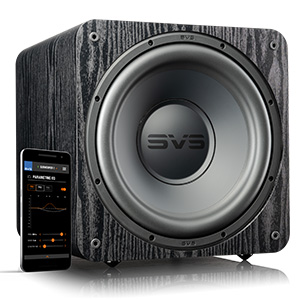
4. SVS SB-1000 Pro: Best Value Powered Subwoofer

Specifications: 12-inch front-firing woofer | 325W RMS (820W Peak) | Sealed enclosure | Frequency response: 20-270 Hz (±3 dB) | App-controlled DSP.
When SVS released the SB-1000 Pro, they redefined what “value” means in the subwoofer market. For under a thousand dollars, you get a 12-inch driver in a sealed enclosure that delivers incredible low-end authority with tight, accurate bass. The deep bass this subwoofer produces is remarkable—it’s not excessively boomy, with no noticeable dips or weak spots in its frequency response. Industry experts at major audio retailers consistently rank this as the best value subwoofer for its combination of price and performance.
Dual-Purpose Excellence: The SB-1000 Pro is excellent if you have a dual-purpose system. Not only does it give movies the thump and impact they deserve, but it also delivers crisp, controlled bass for music. The sealed enclosure design ensures faster transient response, making it ideal for genres like rock and jazz where bass articulation matters. The free SVS app (available for both Android and iOS) allows you to control volume, crossover, phase, and even access a 3-band parametric EQ from the comfort of your seat, adjusting settings in real-time without getting up.
Who should buy it: Anyone seeking audiophile-grade bass performance without the audiophile price tag. It’s perfect for medium-sized rooms and systems where musicality is just as important as home theater impact.
5. Bose Bass Module 700: Best Refined Bass for Premium Living Spaces

Specifications: 10-inch driver | 110W RMS | Wireless | Bass-reflex | Dimensions: 11.6″ cube.
Bose has always prioritized acoustic performance over raw specifications, and the Bass Module 700 is a prime example. It is designed to disappear—both visually and audibly. The compact, glass-topped enclosure fits into high-end decor without looking like a piece of pro audio gear. The refined bass tuning focuses on depth and precision, producing low frequencies that add weight without ever sounding aggressive or overwhelming.
Listening Experience: The bass produced here is “smooth” and “rich.” It lacks the aggressive edge of some competitor subs but offers a fullness that makes dialogue sound warmer and movie scores more epic. It integrates wirelessly with Bose soundbars, creating a clutter-free home theater environment. The sealed enclosure design helps maintain control, ensuring that even during complex passages, the bass remains articulate and well-defined.
Who should buy it: Design-conscious buyers who prioritize aesthetics and seamless integration with Bose soundbars over maximum decibel output. It’s the subwoofer that sounds as good as it looks.
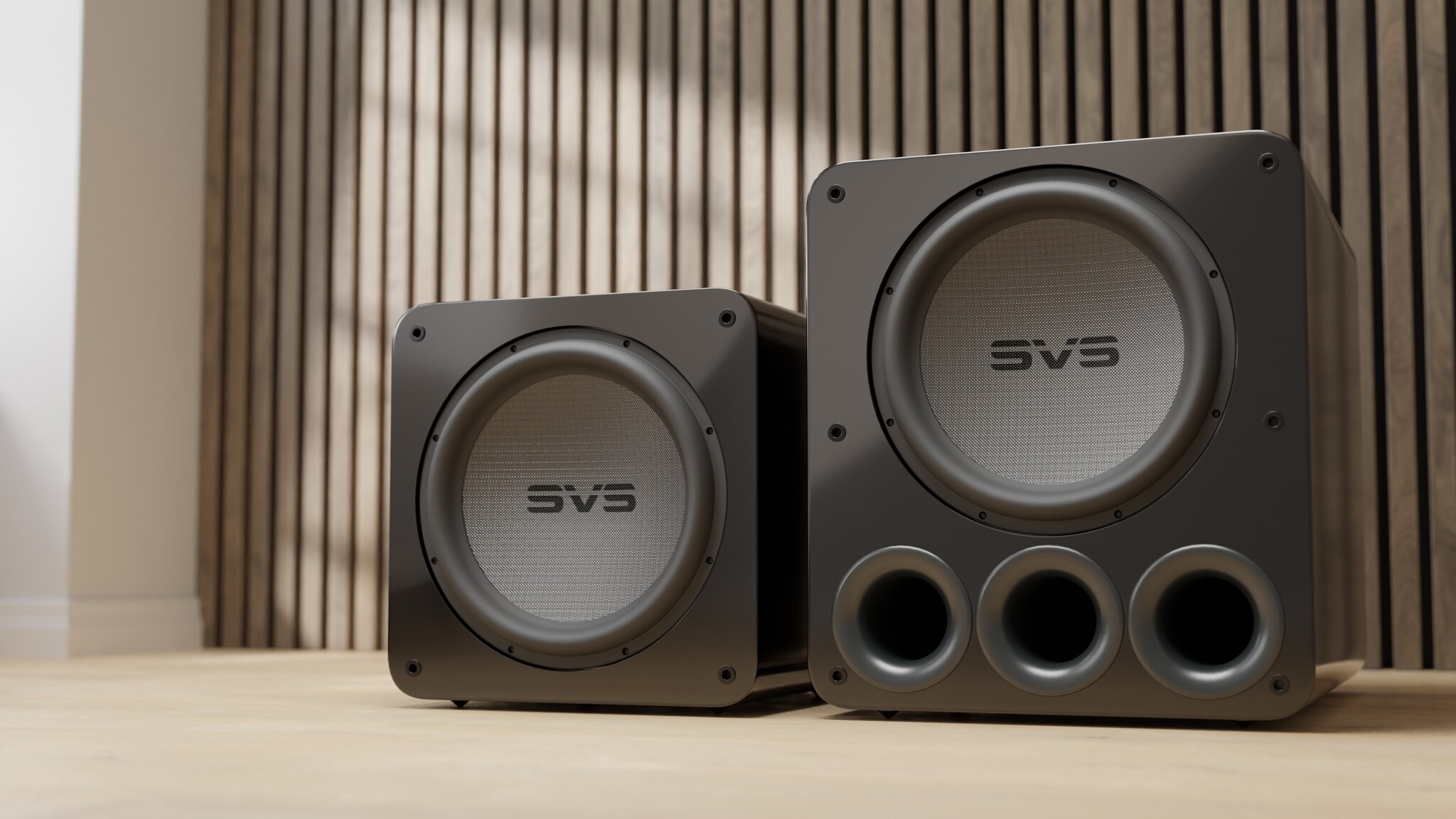
6. SVS PB-3000 Pro: Best Subwoofer for Large Rooms

Specifications: 13-inch front-firing aluminum driver | Dual front-firing ports | Frequency response: 16-260 Hz | App-controlled DSP | Dimensions: 26″ D x 18.3″ W x 21.9″ H.
SVS’s PB-3000 Pro is a perfect example of why the company has such a phenomenal reputation among home theater enthusiasts. This app-controlled sub fills large rooms (roughly 2,000 cubic feet or more) with deep, audiophile-grade bass without breaking a sweat. It’s the perfect choice if you’re looking to enhance your movie night and really feel the impact in your chest during explosive sequences. The dual front-firing ports are engineered to minimize turbulence and port noise, even at extreme output levels.
Wireless Flexibility: If running a subwoofer cable across your room sounds tricky, SVS has you covered. Their SoundPath wireless adapter gives you ultimate placement flexibility by making the sub wireless. The transmitter connects to your home theater receiver or stereo amplifier while the receiver connects to the sub. You can place the PB-3000 Pro anywhere a convenient AC outlet is located, whether that’s behind seating or in a corner for maximum boundary gain. The sub’s 13-inch aluminum driver and massive amplifier ensure that going wireless doesn’t mean compromising on performance.
Who should buy it: Home theater owners with large dedicated rooms who demand reference-level bass extension down to 16Hz. If you want to feel the lowest octave of sound, this is your subwoofer.
7. GoldenEar SuperSub XXL: Best Subwoofer for Music

Specifications: Two 12-inch opposing long-throw woofers | Two 13″ x 15″ passive radiators | 1,600W RMS Class D amplifier | Frequency response: 10-250 Hz.
GoldenEar crafts exceptional speakers and subwoofers, and their SuperSub XXL delivers incredible room-filling bass that redefines expectations. The crispness of the bass tones this sub produces is what makes it a great choice for music. Rather than being super boomy and obnoxious, the SuperSub XXL accurately reproduces bass frequencies in a way seldom matched, with tons of low-end extension to boot. The sub owes its great sound to its innovative driver configuration—two opposing 12-inch drivers on the front and rear of the cabinet cancel out vibration, while two massive passive radiators on the top and bottom move enormous amounts of air.
Placement Considerations: Audio experts strongly recommend keeping this subwoofer away from corners (also called “corner loading”) to get the best sound from it. Because of its exceptional output capability, placing it in a corner can result in excessive boundary gain that may overwhelm the room. Instead, position it along a wall or even in the open for the most balanced response. The 10Hz frequency response means you’ll hear—and feel—notes that are more felt than heard, adding a dimension to your music that conventional subs simply cannot reach.
Who should buy it: Music lovers who demand the absolute best in low-frequency accuracy and extension. It’s equally at home in two-channel audiophile systems and reference-grade home theaters.
8. Klipsch Reference R-100SW: The Compact Powerhouse

Specifications: 10-inch IMG woofer | 150W RMS (300W Peak) | Frequency response: 32Hz-120Hz | Bass-reflex enclosure.
If the R-121SW is too large for your space, the R-100SW offers Klipsch’s signature sound in a more compact package. It features a spun-copper IMG (Injection Molded Graphite) woofer that is lightweight yet rigid, providing efficient cone movement and fast response times. This smaller footprint doesn’t sacrifice the Klipsch house sound—it’s still dynamic, engaging, and capable of surprising output for its size.
Use Case: It is ideal for apartment dwellers or secondary rooms like dens or bedrooms. While it doesn’t dig quite as deep as its 12-inch sibling, it provides the necessary punch for a convincing home theater experience without overwhelming a small space with pressure. The bass-reflex design helps maximize efficiency, ensuring you get the most output possible from the compact cabinet.
Who should buy it: Users with space constraints who still want the dynamic “Klipsch sound” and the build quality that comes with the Reference line.
9. Klipsch R-80SWi: The Wireless Solution for Flexible Placement

Specifications: 8-inch driver | 150W | Wireless 2.4GHz | Down-firing | Bass-reflex enclosure.
Not everyone can run speaker wire across the room. The R-80SWi utilizes a robust 2.4GHz wireless connection to stream bass signals from your AV receiver or soundbar, eliminating cable clutter while maintaining signal integrity. The down-firing design helps couple the bass with the floor, enhancing the perception of depth and making the subwoofer placement even more flexible. This is particularly useful in rooms where you want to hide the subwoofer behind furniture or place it far from the audio source.
Who should buy it: Those who want to place a subwoofer behind a couch, in a corner far from the equipment rack, or anywhere that running long RCA cables would be impractical or unsightly.
Essential Buyer’s Guide: How to Choose the Right Subwoofer
Navigating the world of low frequencies can be technical. Here is what you need to know to make an informed purchase in 2026, based on expert recommendations and acoustic principles.
Driver Size: The 8 vs. 10 vs. 12-Inch Debate
Size matters in subwoofers, but bigger isn’t always better. An 8-inch subwoofer moves less air but is faster and easier to integrate in small rooms, making it ideal for desktop setups or bedrooms. A 10-inch subwoofer offers a sweet spot of output and speed, suitable for most average living rooms. A 12-inch subwoofer moves significantly more air, producing deeper bass (lower frequency extension) and higher volume, but requires a larger room and more careful placement to avoid boomy, one-note bass. For a standard 12×12 foot living room, a single 10-inch or 12-inch sub is usually the sweet spot, while larger dedicated theaters benefit from 12-inch or even 15-inch drivers.
Powered vs. Passive: The Amplifier Question
All the subwoofers on our list are “powered” (or active), meaning the amplifier is built into the cabinet. This is the standard for home audio and simplifies setup considerably. A “passive” subwoofer requires an external amplifier and crossover, which is more common in custom installations or vintage systems. For 99% of users, a powered subwoofer is the plug-and-play solution you want, as the manufacturer has already matched the amplifier precisely to the driver’s requirements for optimal performance and protection.
Sealed vs. Ported (Bass-Reflex) Enclosures
- Ported (Bass-Reflex): These have a hole (port) that allows air to move out of the cabinet, boosting efficiency and output around the tuning frequency. They are great for home theater and achieving high SPLs (sound pressure levels) with lower amplifier power. Ported designs typically offer more output at the lowest frequencies but can sometimes sound less articulate than sealed designs. Examples: Klipsch R-121SW, SVS PB-3000 Pro.
- Sealed (Acoustic Suspension): These are airtight enclosures. They offer better transient response (tighter, faster bass) and a smoother roll-off into the lowest frequencies, making them ideal for music where timing and pitch accuracy matter most. Sealed subs typically have a smaller footprint but require more amplifier power to achieve the same output as ported designs. Example: SVS SB-1000 Pro, GoldenEar SuperSub XXL.
Crossover Frequency and Phase Control
These settings are critical for seamless integration. The crossover dictates how high the subwoofer plays; you typically set it so the sub handles the lows and your main speakers handle the mids, usually around 80Hz for THX-standard systems. The phase control ensures the subwoofer’s sound waves align with your main speakers; incorrect phase can cancel out bass, making it sound thin and anemic. Many modern subs include variable phase controls (0-180 degrees) or even multi-position switches to help you find the perfect integration point.
PRO TIP: The Subwoofer CrawlCan’t decide where to put your sub? Place the subwoofer in your listening position (your couch). Play a bass-heavy track with consistent low-frequency content. Now crawl around the room on your hands and knees, listening carefully. The spot where the bass sounds the fullest, tightest, and most even—with the best balance of output and clarity—is where your subwoofer should live permanently. Acoustics are weird—let physics do the work for you rather than guessing.
WARNING: Gain Staging and DistortionSetting the gain (volume) too high on the subwoofer while the AV receiver is at low volume does not give you “more” bass; it introduces harmonic distortion and can damage the driver over time. Always balance the subwoofer level using your receiver’s calibration system (like Audyssey, Dirac, or MCACC) or a basic SPL meter app on your phone. Aim for integration, not domination—the best subwoofer is one you don’t notice until you turn it off.
Understanding Subwoofer Technology and Acoustic Principles
To truly appreciate what makes a great subwoofer, it helps to understand the underlying technology. The history of the subwoofer dates back over a century, with early experiments in electromagnetism by pioneers like Sir Oliver Lodge. The first electrodynamic loudspeaker, the “Blatthaller,” was demonstrated in Berlin in the 1920s—a massive device over a meter long. Modern subwoofers benefit from decades of refinement, including the development of finite element analysis for driver design and digital signal processing for room correction.
The fundamental job of a subwoofer is to reproduce frequencies typically below 100Hz, which are difficult for standard speakers to handle due to the large air volume that must be moved. This is why subwoofers require large drivers, powerful amplifiers, and carefully engineered enclosures. The Thiele-Small parameters, developed by Australian Neville Thiele and American Richard Small, govern how a driver interacts with its enclosure, and modern subwoofer design relies heavily on these principles to achieve accurate, extended bass.
Room Acoustics and Subwoofer Placement
Your room is the single biggest variable in how a subwoofer sounds. Room modes—standing waves at specific frequencies determined by room dimensions—can cause massive peaks and nulls in bass response. This is why the same subwoofer can sound dramatically different in two different rooms. Corner placement generally maximizes output by exciting all room modes, but it can also exaggerate peaks. Mid-wall placement may provide smoother response at the cost of total output. Experimentation is key, and the subwoofer crawl remains the most effective tool for finding optimal placement without expensive measurement gear.
Connectivity and Accessories: Don’t Forget the Cables
You have the subwoofer, but you need the right pipes to send the signal. For high-end subwoofers, the cheap RCA cable that came in a box 10 years ago can be a bottleneck. High-quality cables with proper shielding prevent electromagnetic interference (EMI) from power cords, which can manifest as a 60Hz hum in your sub. Look for cables with oxygen-free copper (OFC) cores and dual-layer shielding for best results. Right-angle connectors are a lifesaver if your subwoofer is shoved into a tight media cabinet, as they prevent the cable from bending too sharply and breaking internally over time.
Frequently Asked Questions (FAQ)
Do I really need a subwoofer if I have tower speakers?
Yes, if you want the full experience. While high-end tower speakers can reach into the 30Hz-40Hz range, a dedicated subwoofer handles the ultra-low frequencies (20Hz-30Hz) that are felt more than heard. This frees up your main amplifier and speakers to focus on midrange clarity, resulting in a cleaner overall sound with less distortion. Even the best tower speakers benefit from the addition of a quality subwoofer, as it reduces the demands placed on their woofers and allows for more dynamic, effortless presentation.
Can I use a home subwoofer in my car?
Technically, yes, but it is highly inadvisable. Car audio systems use 12-volt DC power, while home subwoofers require 110-120V AC. You would need a power inverter, and home subwoofers are not built to handle the temperature extremes, humidity, and vibrations of a vehicle. Additionally, car interiors are acoustically very different from home environments. Car subwoofers are specifically designed for those conditions with appropriate enclosure requirements and power handling.
What is the difference between LFE and Line In?
LFE (Low-Frequency Effects) input is used with home theater receivers. It sends a dedicated .1 channel signal (the “boom” in 5.1 or 7.1) directly to the sub, bypassing the subwoofer’s crossover. This signal contains the special effects channel mixed specifically for the subwoofer. Line In (or stereo input) is used when connecting to a stereo amplifier that lacks a sub-out, summing the left and right channels to feed bass from music to the sub. In this mode, the subwoofer’s internal crossover is used to blend with your main speakers.
How do I stop my subwoofer from rattling the room?
Rattles usually come from loose objects, not the subwoofer itself. Check picture frames, light fixtures, cabinet doors, and anything else that might vibrate. Tighten hardware where possible. For structural rattles transmitted through the floor, isolation pads (like SVS SoundPath, Auralex Gramma, or simple rubber isolation feet) placed under the subwoofer can decouple it from the floor, reducing vibration transfer to the building structure while often tightening up the bass response.
What is port noise and how do I avoid it?
Port noise is the sound of turbulent air rushing through a subwoofer’s port, audible as “chuffing” during high-output low-frequency passages. It’s caused by the port diameter being too small for the air velocity. Quality subwoofers are designed with large, flared ports to minimize turbulence and eliminate port noise even at reference levels. If you hear port noise, it may indicate the subwoofer is being pushed beyond its design limits, or that the port design itself is inadequate. High-end models like those from SVS and Klipsch feature carefully engineered ports to avoid this issue entirely.
Conclusion: Find Your Perfect Bass Match for 2026
The best subwoofer for your home in 2026 is the one that disappears into your system—not by being weak, but by being perfectly integrated. Whether you choose the versatile power of the Klipsch Reference R-121SW, the wireless elegance of the Sonos Sub 4, the incredible value of the SVS SB-1000 Pro, or the budget-friendly thump of the Edifier T5, you are investing in a complete audio experience that transforms how you experience media.
Remember to consider your room size, your primary use (movies vs. music), and your aesthetic preferences. A subwoofer is a long-term investment in your entertainment—quality models from reputable manufacturers can last decades with proper care. Pair it with quality cables, take the time to set it up properly using the tips above, and prepare to rediscover every movie, song, and game you love with newfound depth and realism.
The technology behind modern subwoofers has never been more advanced, with DSP, wireless connectivity, and sophisticated driver designs delivering performance that was once the stuff of high-end fantasy at increasingly accessible prices. Whatever your budget or space constraints, there’s a subwoofer in 2026 that will elevate your audio to new depths.