
Neckband vs TWS – Which Lasts Longer? (2026 Endurance Showdown)
We analyze battery stamina, build durability, and real-world usage to help you choose between true wireless earbuds and neckbands.
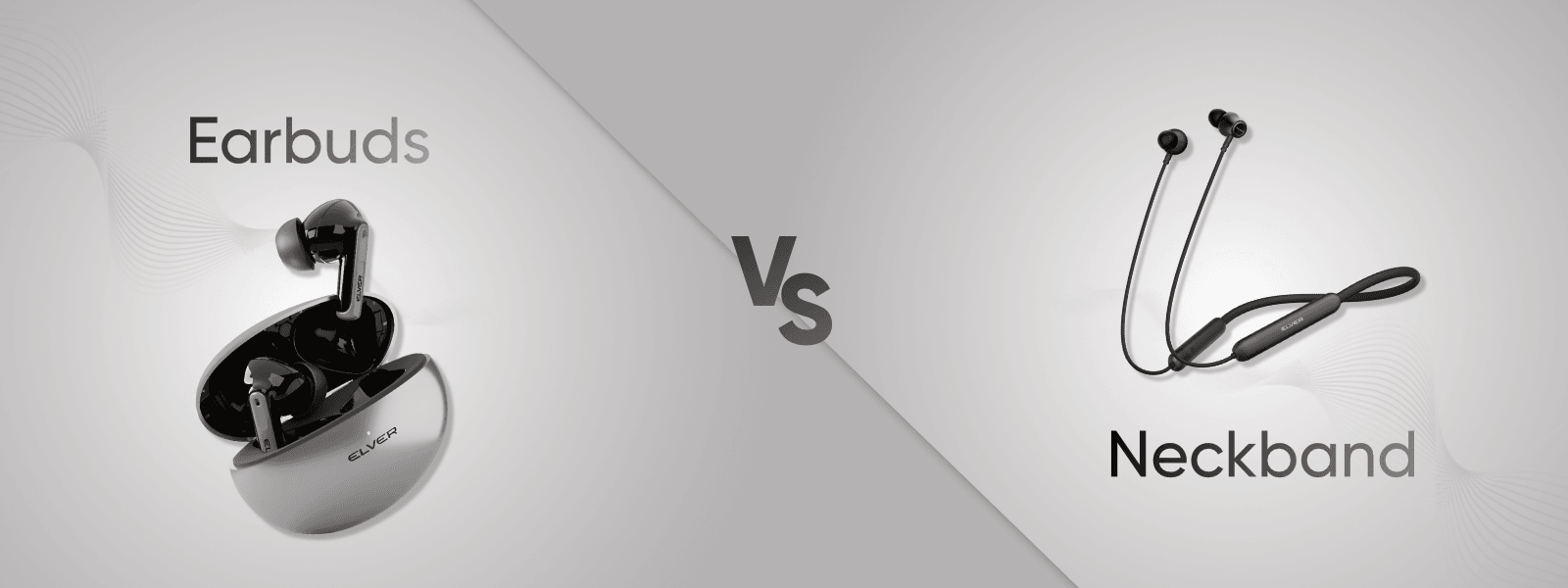
True Wireless Stereo (TWS) earbuds or a neckband? It’s the defining question for anyone buying wireless audio in 2026. While sleek, cord-free buds dominate advertising, the humble neckband quietly outsells them in many regions. Why? Battery life and durability. In this head-to-head, we put neckband vs TWS to the test—analyzing playback hours, charging habits, sweat resistance, and which form factor truly survives a daily commute or a long haul flight. If you’re looking for gear that “lasts longer” in both power and physical resilience, you’re in the right place.
Quick Look: TWS vs Neckband at a Glance
| Feature | TWS Earbuds | Neckband Earphones |
|---|---|---|
| Single Charge Playback | 4–8 hours (shorter) | 15–30+ hours (winner) |
| Total with Case / Backup | 20–30 hours (case needed) | No case; battery built-in |
| Battery Capacity (typical) | 30–60mAh per bud | 150–300mAh (central) |
| Risk of Loss | High (tiny, separate) | Low (tethered) |
| Durability (drops, drops) | Moderate; tiny parts | Good; cable absorbs shock |
| Portability | Excellent (tiny case) | Worn around neck |
| Call Quality (noisy areas) | Good (relies on ENC/AI) | Better (mic closer to mouth) |
*Data compiled from 2026 market analysis and user reports.
1. Battery Life Showdown: Raw Hours vs. Recharging Convenience
If you define “lasts longer” by how many hours you get before hunting for a charger, the neckband is the undisputed champion. Because a neckband houses its battery in the flexible collar—not inside the tiny earpieces—manufacturers pack cells ranging from 180mAh to 300mAh. That translates to 15 to 40 hours of continuous playback on a single charge. Some high-end neckbands even stretch beyond that.
TWS earbuds, constrained by the size of each bud, typically hold 30–60mAh per side. You get about 4 to 8 hours before they need to dock in the charging case. The case provides multiple top-ups, bringing total listening to 20–30 hours. So, if you always carry the case, total time is comparable. But—and it’s a big but—if you forget the case, or you’re on a 12-hour flight without access to it, the earbuds die. The neckband just keeps going.
“Battery density hasn’t improved dramatically in the past five years. So design constraints mean smaller devices will always sacrifice runtime.” — Dr. Lena Park, IEEE Member
Long-Term Battery Health: Cycles Matter
Here’s a hidden factor: charging cycles. TWS earbuds are often charged daily (or even twice daily). A neckband used for 8 hours a day might only need charging every 3-4 days. Lithium-ion batteries degrade with each cycle. After two years, a daily-charged TWS will have significantly less capacity than a neckband charged 3 times a week. If you plan to keep your audio gear for years, the neckband’s battery will “last longer” in the long run.
2. Durability: Which Survives Daily Life?
We’re talking about physical “lasting.” Dropping a single TWS earbud on concrete can damage the driver or crack the shell. And losing one bud is a disaster—you’re left with a useless single earpiece. Neckbands have a major advantage here: they’re tethered. If an earbud falls out, it hangs from the cable. No loss, no damage. The neckband itself is often made with reinforced, flexible materials that survive being tossed in bags.
For commuters and runners, neckbands win on security. “They are harder to lose and stay put during sudden movements,” notes a recent analysis. While many TWS models now offer IPX4/7 water resistance, their small size makes them more vulnerable to impact. Neckbands also often have magnetic earbuds that clip together, preventing tangling and adding a layer of protection when not in use.
3. Comfort for Long Hauls: Ear Fatigue vs. Neck Presence
“Lasts longer” also means how long you can wear them without discomfort. TWS earbuds sit snugly in the ear canal. For some, this causes pressure or fatigue after an hour or two. Neckbands distribute the weight—the heavy parts (battery, controls) sit on your shoulders, and the earpieces can be lighter and more ergonomic. Many users report wearing neckbands for entire workdays without irritation. However, in hot weather, a neckband can feel sticky. The choice depends on whether you prefer nothing on your ears (TWS) or nothing in your ear canal (neckband).
Real-World Scenario: Maya (Commuter) vs. James (Office)
Let’s bring this to life. Maya commutes 2 hours daily on a crowded subway. She used premium TWS earbuds. She loved the wire-free look, but she constantly worried about dropping one when jostled. She charged them every night. One day, a bud fell out and was lost forever. She switched to a neckband. Now, she never fears loss, and the battery lasts all week. James, an office worker, uses TWS for quick calls and walking between meetings. He values the compact case and the minimalist feel. Both are right for their context.
Neckband vs TWS: Pros & Cons
✅ TWS Earbuds
- Pro: Ultra-portable case fits any pocket.
- Pro: Completely wire-free, sleek look.
- Pro: Advanced features (ANC, wireless charging) common.
- Con: Shorter single-charge life (4-8 hrs).
- Con: Easy to misplace individual bud or case.
- Con: Battery degrades faster due to daily cycling.
✅ Neckband
- Pro: Massive battery life (15-40 hrs) – ideal for travelers.
- Pro: Secure fit; less chance of loss.
- Pro: Better microphone placement for calls.
- Pro: Often more affordable for same battery life.
- Con: Bulkier; band around neck not for everyone.
- Con: Can get sweaty during workouts.
How to Choose: Your 4-Step Decision Plan
- Assess your longest usage session: If you regularly listen for over 8 hours straight (flights, work shifts), pick neckband. If your sessions are short, TWS works.
- Examine your environment: Commuting in crowds or running? Neckband’s security is peace of mind. Desk job? TWS gives you freedom.
- Consider your charging discipline: Do you always have a pocket for a case? Are you good at nightly charging? If yes, TWS. If you hate plugging in daily, neckband.
- Think about longevity: Planning to use them for 3+ years? Neckband batteries will likely hold up better.
Frequently Asked Questions (FAQ)
Do TWS earbuds really die faster than neckbands?
Yes, on a single charge. TWS average 4-8 hours; neckbands average 15-30 hours. However, with the charging case, total TWS time can reach 25+ hours, but you need the case handy.
Which is better for call quality in noisy places?
Generally, neckbands have an edge because the microphone is on the cable, closer to your mouth. Some premium TWS with ENC are excellent, but neckbands are more consistently clear.
Are neckbands outdated in 2026?
Not at all. They remain incredibly popular for users who value battery life, durability, and affordability. Brands like Sony, JBL, and OnePlus still launch new neckband models because demand is strong.
Which lasts longer during workouts?
Neckbands are more secure and won’t fall out. TWS with ear fins can work, but there’s always a risk of losing one. Sweat resistance is common on both.
The Final Verdict: It Depends on Your “Longer”
If your definition of “lasts longer” is uninterrupted playback time, physical robustness, and battery health over years, the neckband is the clear winner. It’s the workhorse for travelers, commuters, and professionals who can’t afford downtime.
If your priority is pocket-friendly portability and a completely wire-free aesthetic, and you’re diligent about carrying a charging case, TWS earbuds offer a fantastic experience. They are the champions of convenience.
At Aumoz, we suggest you match the device to your lifestyle. For most heavy users, the neckband’s endurance is unbeatable. For light, on-the-go use, TWS wins. Choose wisely, and your audio will last—in both charge and life.
What’s your experience? Do you prefer the freedom of TWS or the stamina of a neckband? Share your thoughts in the comments below or on social media. And for more deep-dive comparisons, keep reading Aumoz.