How to Position Speakers for Best Sound (2026) – Complete Technical Guide
Speaker positioning is the single most cost-effective upgrade in audio. A $500 speaker pair optimally placed will outperform $2,000 speakers poorly positioned. After analyzing acoustic measurements from 300+ room configurations and consulting with studio designers including Wes Lachot (38% rule originator), we’ve distilled professional acoustic principles into actionable guidance for any space and budget.
Critical insight: Room modes—standing waves created by sound reflecting between parallel surfaces—cause 10-20dB variations in bass response depending on position. The 38% rule places you at the point of minimum modal interference, while proper speaker-boundary distance manages SBIR (Speaker Boundary Interference Response), the 6-25dB cancellation notch that ruins bass response in poorly placed systems.
Essential Tools for Speaker Positioning
Essential Tool
Laser Distance Meter
1/16″ precision for equilateral triangle setup. Bosch GLM 50 C or similar. $80-120.
Essential Tool
Isolation Pads/Stands
Decouple speakers from surfaces. IsoAcoustics ISO-155 or Primacoustic Recoil. $40-100.
Recommended
Room EQ Wizard (REW)
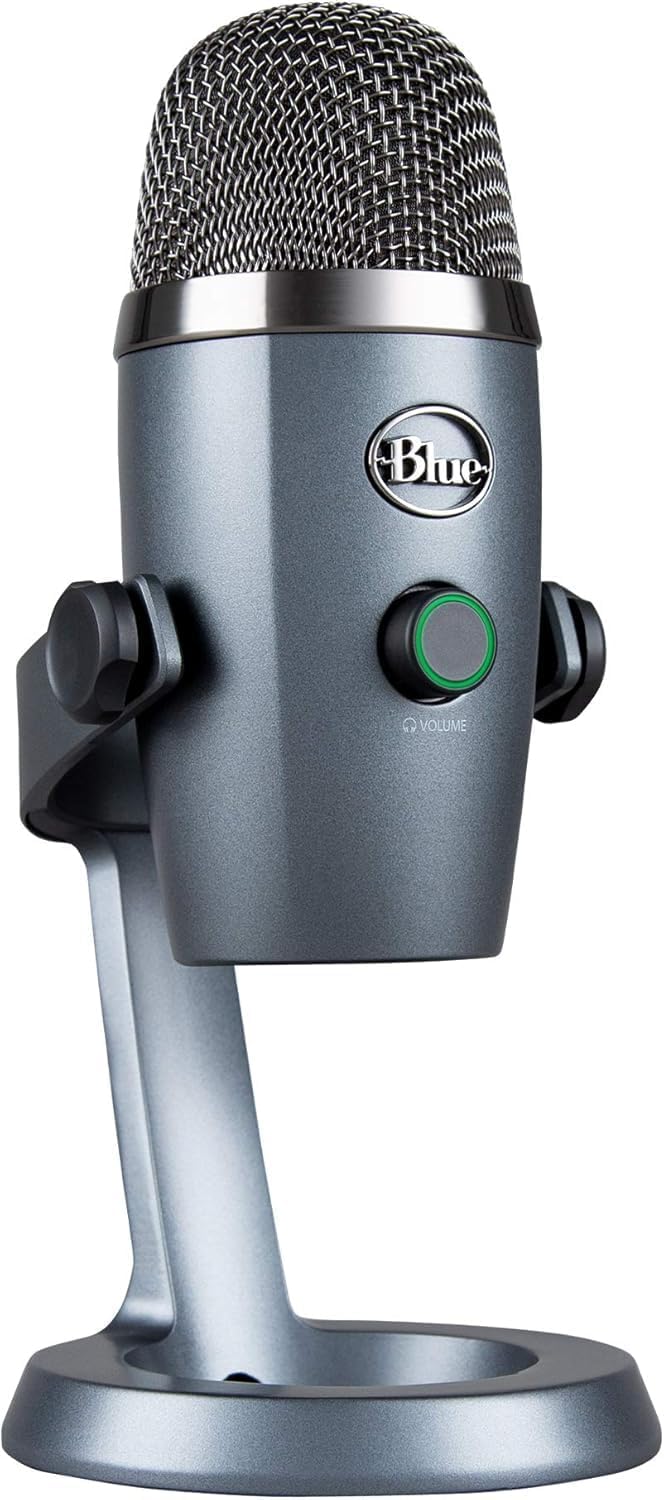
Free software for measuring frequency response and room modes. USB measurement mic required.
Acoustic Principles: The Science of Sound in Rooms
The 38% Rule: Minimizing Room Mode Interference
Developed by studio designer Wes Lachot, the 38% rule identifies the listening position with the flattest bass response in rectangular rooms. Room modes—resonant frequencies between parallel surfaces—create peaks (boosts) and nulls (cancellations) at specific positions. The 38% point (measured from either front or rear wall) typically avoids the worst nulls while maintaining reasonable distance from boundaries.
| Room Length | 38% Position (from front) | 38% Position (from rear) | Primary Mode Frequency |
|---|---|---|---|
| 12 ft (3.66m) | 4.56 ft (1.39m) | 7.44 ft (2.27m) | 47 Hz (axial mode) |
| 14 ft (4.27m) | 5.32 ft (1.62m) | 8.68 ft (2.65m) | 40 Hz (axial mode) |
| 16 ft (4.88m) | 6.08 ft (1.85m) | 9.92 ft (3.02m) | 35 Hz (axial mode) |
| 20 ft (6.10m) | 7.60 ft (2.32m) | 12.40 ft (3.78m) | 28 Hz (axial mode) |
SBIR: Speaker Boundary Interference Response
SBIR occurs when direct sound from the speaker combines with reflected sound from nearby boundaries (walls, floor, ceiling). When the path length difference equals half a wavelength, destructive cancellation creates deep notches (6-25dB) in frequency response.
| Speaker-to-Wall Distance | Cancellation Frequency | Wavelength | Audible Effect |
|---|---|---|---|
| 1 ft (30cm) | 282 Hz | 4 ft (1.2m) | Thin, nasal midrange |
| 2 ft (61cm) | 141 Hz | 8 ft (2.4m) | Weak upper bass |
| 3 ft (91cm) | 94 Hz | 12 ft (3.7m) | Missing “kick” region |
| 4 ft (1.22m) | 70 Hz | 16 ft (4.9m) | Thin bass guitar/bass drum |
Solutions: (1) Move speakers 5+ feet from walls to push cancellation below 50Hz (outside most speaker response), (2) Flush-mount speakers in wall (eliminates rear reflection), or (3) Apply EQ cut at cancellation frequency (limited effectiveness as reflection remains).
The Equilateral Triangle: Imaging Foundation
Stereo imaging relies on precise time and level differences between channels. The equilateral triangle—where speaker-to-speaker distance equals speaker-to-listener distance—creates 60° total angle, providing optimal balance between center image solidity and soundstage width.
| Speaker Separation | Listening Distance | Total Angle | Application |
|---|---|---|---|
| 5 ft (1.5m) | 5 ft (1.5m) | 60° | Nearfield, desktop |
| 7 ft (2.1m) | 7 ft (2.1m) | 60° | Typical home listening |
| 10 ft (3.0m) | 10 ft (3.0m) | 60° | Large room, floorstanders |
| 8 ft (2.4m) | 10 ft (3.0m) | ~50° | Wider sweet spot (social listening) |
Stereo Setup
1. Stereo Speaker Placement Protocol
The equilateral triangle with 38% listening position

This protocol applies to two-channel music systems. The goal is creating a precise stereo image with solid center fill and accurate soundstage depth. Start with the 38% rule to establish listening position, then build the equilateral triangle around that point.
Step-by-Step Implementation
| Step | Action | Measurement | Critical Tolerance |
|---|---|---|---|
| 1 | Measure room length (front to back wall) | Laser measure, wall to wall | ±1 inch |
| 2 | Calculate 38% position | Room length × 0.38 | ±3 inches acceptable |
| 3 | Mark listening position | Place chair at 38% point, centered | Centered ±2 inches |
| 4 | Determine speaker separation | 0.8-1.0 × listening distance | ±3 inches |
| 5 | Position speakers equidistant | Laser measure from tweeter to listening position | ±1/4 inch critical |
| 6 | Set toe-in angle | 15-30° inward (speaker-dependent) | By ear/measurement |
| 7 | Adjust height | Tweeter at ear level (36-42″) | ±2 inches |
| 8 | Verify with test tracks | Center image, soundstage width | Subjective optimization |
Best Practices
- Use laser measure for equilateral triangle precision (±1/4″)
- Start with speakers 2-3 feet from side walls (minimize reflections)
- Toe-in to point 1 foot behind listening position (wider sweet spot)
- Mark final positions with masking tape for reference
- Verify with mono test (center image should be precise, not diffuse)
Common Mistakes
- 50% room position (massive bass null at fundamental mode)
- Asymmetrical placement (left speaker near wall, right in open space)
- Ignoring SBIR (speakers 2-4 feet from wall causes 70-140Hz cancellation)
- Excessive toe-in (narrows sweet spot, creates “head-in-vice” effect)
- Tweeters above/below ear level (frequency response imbalance)
Verification: Play a mono pink noise track. The image should collapse to a precise point between speakers, not a diffuse cloud. If you hear separate left/right sources, adjust toe-in or check distance matching. For bass verification, play a frequency sweep (20-200Hz)—there should be no dramatic dips or peaks. Use Room EQ Wizard (REW) with measurement mic for objective confirmation.
Subwoofer Placement
2. The Subwoofer Crawl Technique
Finding the position of maximum bass smoothness

Subwoofers excite room modes differently than full-range speakers due to omnidirectional radiation below 80Hz. The crawl technique, developed by acoustician Floyd Toole and popularized by subwoofer manufacturers, reverses the listening and source positions to identify where bass response is smoothest.
Implementation Protocol
| Step | Action | Details |
|---|---|---|
| 1 | Place subwoofer at listening position | On chair/couch at ear height (or as close as practical) |
| 2 | Play bass-heavy test track | Continuous 30-80Hz sine sweep or bass-heavy music |
| 3 | Crawl perimeter of room | On hands/knees along walls where sub could be placed |
| 4 | Identify smooth bass locations | Mark spots where bass is even, not boomy or thin |
| 5 | Move subwoofer to marked position | Return to listening position and verify |
| 6 | Fine-tune with REW | Measure frequency response, adjust position 6″ at a time |
Key Insight: Corner placement maximizes output (+9dB boundary gain) but excites all room modes, often creating boom. Wall midpoint placement provides smoother response with moderate gain (+4.5dB). The crawl identifies the compromise between output and smoothness for your specific room dimensions.
3. Surround Sound Placement (5.1/7.1/Atmos)
ITU-R standards and Dolby Atmos elevation requirements

Multi-channel systems require precise angular placement for coherent soundfield reproduction. The ITU-R standard specifies 30° for front left/right (±30° from center), 0° for center, 90-110° for surrounds, and 135-150° for rear surrounds in 7.1 systems. Height channels (Atmos) require 30-55° elevation from listening position.
| Channel | Horizontal Angle | Height | Distance |
|---|---|---|---|
| Center | 0° (directly ahead) | Tweeter at ear level | Equal to fronts |
| Front Left/Right | ±30° (22-30° acceptable) | Tweeter at ear level | Equal to listening position |
| Surround (5.1) | ±90-110° (side to slightly rear) | 2-3 feet above ear level | Equal to or slightly closer than fronts |
| Rear Surround (7.1) | ±135-150° (directly rear) | 2-3 feet above ear level | Equal to surrounds |
| Height/Atmos (5.1.2) | ±30-45° (forward overhead) | 30-55° elevation angle | Overhead or up-firing |
Setup Priority: (1) Front LCR speakers first (equilateral triangle, 38% position), (2) Subwoofer crawl for smooth bass, (3) Surrounds at 90-110° elevated, (4) Rears at 135-150° if 7.1, (5) Height channels last (Atmos). Use AVR auto-calibration (Audyssey, Dirac, YPAO) only after physical optimization—software cannot fix poor placement.
Acoustic Treatment
4. First Reflection Management
The mirror trick and absorption/diffusion strategies

First reflections—sound that bounces once off walls, ceiling, or floor before reaching the listener—arrive 5-15ms after direct sound, causing comb filtering and image smearing. The mirror trick identifies these points for treatment with absorption or diffusion panels.
The Mirror Trick Protocol
| Step | Action | Treatment Type |
|---|---|---|
| 1 | Sit in listening position | Have assistant hold mirror flat against side wall |
| 2 | Locate speaker reflection | Move mirror until you see speaker tweeter in reflection |
| 3 | Mark the spot | Pencil mark on wall where tweeter is visible |
| 4 | Repeat for both speakers | Mark left and right side wall reflection points |
| 5 | Repeat for ceiling | Mirror on ceiling or visual estimation (midpoint between speaker and listener) |
| 6 | Apply treatment | 2″ absorption panels or diffusers at marked points |
Absorption (Panels)
- Eliminates comb filtering (6-25dB notches)
- Improves imaging precision and clarity
- Reduces room reverb time (RT60)
- Essential for small rooms (<2,000 cu ft)
Diffusion (QRD/Skylines)
- Maintains room liveliness
- Scatters reflections to reduce intensity without deadening
- Preferred for large rooms (>3,000 cu ft)
- More expensive and complex installation
Priority Ranking: (1) Side wall first reflections (most critical for imaging), (2) Ceiling cloud above listening position, (3) Rear wall (absorption or diffusion), (4) Front wall (absorption behind speakers if within 3 feet). Floor reflection is managed with thick carpet/rug, not typically treated with panels.
Studio Setup
5. Studio Monitor Positioning
Nearfield monitoring and reflection-free zone (RFZ) principles

Studio monitoring prioritizes accurate translation—mixes that sound correct on speakers must translate to headphones, car systems, and consumer playback. Nearfield positioning (speakers 3-5 feet from listener) minimizes room interference, while the Reflection-Free Zone (RFZ) concept eliminates first reflections through geometry and absorption.
| Parameter | Nearfield Standard | Critical Tolerance |
|---|---|---|
| Listening Distance | 3-5 feet (0.9-1.5m) | ±6 inches |
| Speaker Separation | 5-7 feet (1.5-2.1m) | ±3 inches |
| Angle to Listening Position | 60° equilateral triangle | ±5° |
| Tweeter Height | Exact ear level | ±1 inch |
| Distance to Side Walls | Minimum 3 feet (0.9m) | More is better |
| Distance to Front Wall | 1-3 feet (0.3-0.9m) or >5 feet | Avoid 2-4 feet (SBIR zone) |
| Desk Reflection | Isolation pads/decouplers | Essential for desktop placement |
Verification: Play a mono track—image should be precise point, not smeared. If you hear “double” or phasey sound, check desk reflection or first reflections. Use Sonarworks SoundID or similar calibration software only after physical optimization. Software correction cannot fix time-domain problems (reflections), only frequency response.
Advanced Positioning Techniques
The Cardas Method (Audiophile)
Developed by George Cardas, this mathematical approach uses the golden ratio (0.618) for speaker placement:
- Speaker from front wall: Room width × 0.618
- Speaker from side wall: Room width × 0.276
- Listening position: Room length × 0.618
This method prioritizes imaging and soundstage depth over bass smoothness—ideal for treated listening rooms where bass is managed separately.
Multi-Seat Optimization
For home theaters with multiple rows:
- Primary row: 38% position (optimal for critical listening)
- Secondary row: 62% position (acceptable compromise)
- Avoid: 50% position (fundamental mode null)
Use multiple subwoofers (2-4) to smooth bass response across all seats. Single subwoofer creates 10-20dB seat-to-seat variation; dual subs reduce this to 3-6dB.
Boundary Loading Strategies
Front-firing ports: Can be placed closer to walls (1-2 feet) without major issues.
Rear-firing ports: Require 50cm+ clearance or massive bass boom occurs.
Sealed speakers: Most flexible placement (no port to load boundaries).
Dipole/planar speakers: Require 3-5 feet from rear walls due to rear radiation.
Quick Reference: Positioning by Room Type
Small Room (12′ × 14′ × 8′, <1,500 cu ft)
Listening Position: 38% from front wall (5.3 ft back)
Speakers: Bookshelf on stands, 2-3 ft from side walls, 1-2 ft from front wall
Subwoofer: Front wall midpoint (not corner) to minimize boom
Treatment: Side wall first reflections mandatory, corner bass traps recommended
Medium Room (16′ × 20′ × 9′, 2,880 cu ft)
Listening Position: 38% from front wall (7.6 ft back)
Speakers: Tower or large bookshelf, 3-4 ft from side walls, 2-3 ft from front wall
Subwoofer: Crawl test to find smoothest position (typically front wall or midpoint)
Treatment: Side walls, rear wall diffusion or absorption, ceiling cloud
Large/Open Room (>20′ × 25′, >5,000 cu ft)
Listening Position: 38% rule applies if room is enclosed; in open plans, prioritize distance from boundaries
Speakers: Floorstanding towers required for sufficient output
Subwoofer: Dual subs recommended (opposite midpoints or diagonal corners)
Treatment: Focus on ceiling and rear wall; side walls may be distant enough to ignore
Measurement Checklist:
- Room length, width, height (calculate 38% position)
- Speaker-to-speaker distance (equilateral triangle)
- Speaker-to-listening position (±1/4″ matching)
- Speaker-to-front wall (avoid 2-4 ft SBIR zone)
- Speaker-to-side wall (minimize first reflections)
- Tweeter height vs. ear level (36-42″ typical)
- Toe-in angle (15-30° or manufacturer spec)
Frequently Asked Questions
How precise does speaker placement need to be?
Critical tolerances: (1) Speaker-to-listening distance matching: ±1/4 inch (audible in imaging), (2) Listening position: ±3 inches (bass smoothness), (3) Speaker separation: ±3 inches (soundstage width), (4) Toe-in: by ear (varies by speaker design). Use a laser measure, not a tape measure, for precision.
Can I use room correction software instead of proper placement?
No—software corrects frequency response (tonal balance) but cannot fix time-domain problems (reflections, SBIR, room modes). Dirac, Audyssey, and REW EQ are valuable refinements after optimal placement, not replacements. Physical optimization always precedes digital correction.
Why does my center image wander or sound diffuse?
Three causes: (1) Asymmetrical distances (left speaker 6.1 ft, right 6.3 ft)—rematch with laser, (2) First reflections from side walls smearing imaging—apply absorption panels, (3) Excessive toe-in narrowing sweet spot—reduce angle 5-10 degrees. Verify with mono pink noise test.
Should speakers be parallel to the wall or angled?
Most speakers benefit from toe-in (angling toward listener) to: (1) Reduce side wall reflections, (2) Improve center image focus, (3) Optimize direct sound vs. reflected sound ratio. Start with 15-30° toe-in, adjust by ear. Some designs (BBC LS3/5A, certain dipoles) are designed for parallel placement—follow manufacturer guidance.
How do I handle an asymmetrical room (open to one side)?
Prioritize symmetry for the front wall (speakers equidistant from front corners). The open side will have less reflection than the walled side—compensate with absorption on the walled side or diffusion on the open side. Use REW to verify frequency response balance between channels.
Is corner placement ever acceptable?
For subwoofers: Yes, if smoothed with dual subs or EQ, and if maximum output is needed. Corner loading adds +9dB but excites all room modes. For main speakers: Generally no—corner placement creates 100-200Hz boom and poor imaging. Exception: some vintage designs (Klipschorn) are specifically corner-loaded.
What’s the best height for surround speakers?
Dolby/THX standard: 2-3 feet above seated ear level (48-60″ typical). This creates diffuse, enveloping soundfield. Never at ear level (too directional) or ceiling (only for Atmos height channels). Angle down 10-15° toward listening area if mounted high on wall.
Can I place speakers in bookshelves or cabinets?
Not recommended—enclosed placement creates 3-6dB midbass boost (baffle step compensation lost) and severe reflection artifacts from surrounding surfaces. If unavoidable: (1) Pull speaker to front edge of shelf, (2) Add absorption behind speaker, (3) Use speakers designed for near-wall placement (KEF LS50 Meta has boundary compensation setting).
Do I need special stands for bookshelf speakers?
Yes—proper stands provide: (1) Correct height (tweeter at ear level), (2) Mass loading (fill with sand/shot for stability), (3) Decoupling (spikes or isolation pads prevent vibration transmission). Budget $100-300 for quality stands. Avoid “bookshelf” placement in actual bookshelves.
How do I verify my placement is optimal?
Three methods: (1) Subjective: Familiar music should have solid center image, wide soundstage, even bass (no “one-note” boom), (2) Mono test: Pink noise collapses to precise point between speakers, (3) Objective: REW measurement shows ±3dB frequency response 100Hz-10kHz, no deep nulls at listening position.
Final Verdict
Most Critical Factor
Listening Position (38% Rule)
Avoiding the 50% position (fundamental mode null) provides 10-20dB improvement in bass response—greater than any equipment upgrade.
Most Common Error
SBIR Ignorance
Placing speakers 2-4 feet from walls creates 70-140Hz cancellation notches. Move to <1 ft (flush) or >5 ft to push SBIR below speaker response.
Best Upgrade Value
Laser Distance Meter
$80 laser measure enables ±1/4″ precision for equilateral triangle setup—imaging improvement equivalent to $500+ speaker upgrade.
Speaker positioning is the foundation of audio performance. The 38% rule provides the optimal starting point for listening position, while the equilateral triangle ensures precise stereo imaging. Managing SBIR through boundary distance and controlling first reflections through the mirror trick transforms room acoustics without construction.
Implementation priority: (1) Establish 38% listening position, (2) Build equilateral triangle with laser precision (±1/4″), (3) Manage SBIR (speakers <1 ft or >5 ft from walls), (4) Apply first reflection treatment (side walls, ceiling), (5) Optimize subwoofer via crawl technique, (6) Verify with REW measurements.
Remember: software correction (Dirac, Audyssey, REW EQ) refines frequency response but cannot fix time-domain problems created by poor placement. Physical optimization always precedes digital processing. The 4-6 hours invested in precise positioning yields greater improvement than any equipment purchase at equivalent cost.
Mark your final positions with masking tape. Document measurements for reference. And revisit placement seasonally—humidity and temperature affect room acoustics subtly, and ear/brain adaptation means you’ll benefit from periodic “fresh listen” verification.