


Most Durable Headphones in 2026
Cheap headphones break. Ear pads flake, cables fray at the plug, hinges crack, and batteries fade — usually just after the warranty runs out. The most durable headphones avoid that cycle: they are built from metal instead of thin plastic, every wearing part can be replaced, and they keep working for years instead of months.
This guide ranks the 10 most durable headphones of 2026, from the steel-framed V-Moda Crossfade 2 to the Sennheiser HD 600, which has been in continuous production since 1997. You will also find the most durable noise cancelling headphones, what IP ratings and military standards actually mean, the common problems that kill noise cancelling pairs early, and a buying checklist so your next pair lasts. If you mainly train with yours, see our separate guide to the best over-ear gym headphones for working out.
Quick picks: the V-Moda Crossfade 2 is the best overall for build strength, the Sony WH-1000XM6 is the most durable noise cancelling pick, the Sennheiser HD 600 is the longest-lasting pair for repairability, the Sony MDR-7506 is the best professional workhorse, the Fairphone Fairbuds XL is the repairability leader among wireless models, and the Brenthaven Rugged is the best for kids.
Disclosure: as an Amazon Associate we earn from qualifying purchases. This costs you nothing extra and helps support our guides.
What Are the Most Durable Headphones?
The most durable headphones are the ones with replaceable parts, not the ones with the thickest plastic. A pair with replaceable ear pads, a detachable cable and a user-replaceable battery can outlast three pairs of sealed consumer headphones. The Sennheiser HD 600 is the gold standard — it has been in continuous production since 1997 and people still use pairs from the early 2000s because every wearing part is user-replaceable. Among wireless models, the Fairphone Fairbuds XL Gen 2 scored a perfect 10/10 on iFixit’s repairability rating, while the V-Moda Crossfade 2 remains the best pick for pure physical strength thanks to its steel headband. If you also need active noise cancelling in a long-lasting build, the Sony WH-1000XM6 is the most durable noise cancelling pick in this guide (6/10 on iFixit), beating the Apple AirPods Max 2 (4/10) and the Skullcandy Crusher ANC 2 (2/10).
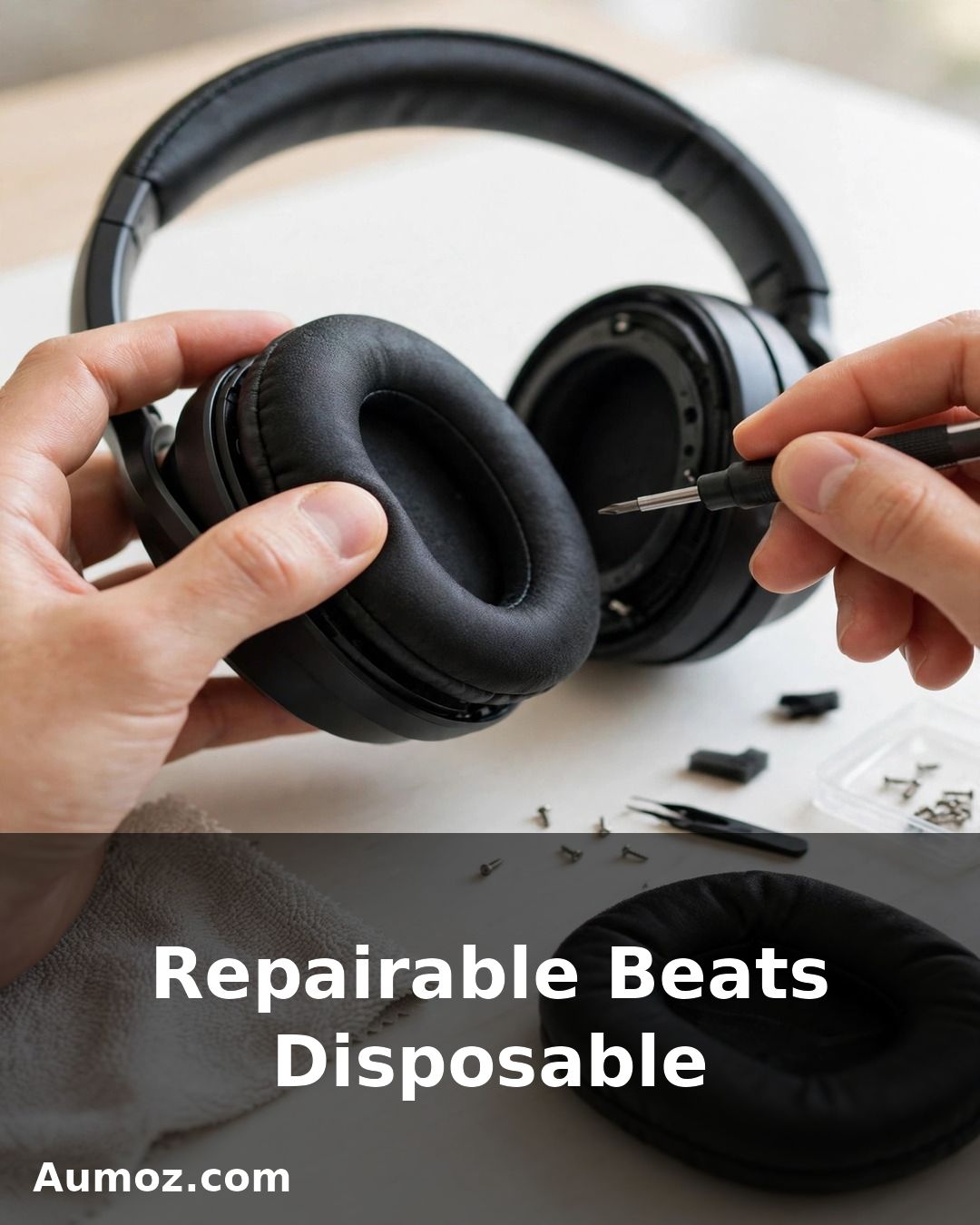
Repairability: The #1 Durability Factor (Why Most Headphones Die Young)
The headphone industry has a dirty secret: most consumer headphones are designed around components that degrade predictably. Ear pads crack and flake. Non-replaceable batteries lose capacity. Cables fray at the plug. Headband padding compresses and disintegrates. Each of these is a $5–20 part that turns a $300 headphone into landfill when it can’t be replaced.
Professional and audiophile headphones solve this by making every wearing part replaceable. The Sennheiser HD 600 has been in continuous production since 1997. People are still using the same pair after 25+ years, replacing pads and cables as needed. That’s not marketing, that’s engineering for repairability. Consumer headphones are typically designed to last 2–3 years. Professional headphones are designed to last decades. The difference is replaceable parts and build quality, not price.
According to iFixit’s repairability rating for wireless headphones, the Fairphone Fairbuds XL Gen 2 scored a perfect 10/10 for its modular design with user-replaceable battery, drivers, and headband. The Sony WH-1000XM6 scored 6/10 thanks to a modular charging port board and screw-fastened battery. The Apple AirPods Max 2 scored just 4/10, while the Beats Solo 4 and Skullcandy Crusher ANC 2 scored only 2/10 due to soldered batteries, non-removable connectors, and excessive glue.
When evaluating repairability, ask these questions:
- Can you buy replacement ear pads? If ear pads aren’t replaceable, the headphone has a 2–3 year lifespan regardless of build quality.
- Is the battery replaceable? Fairphone sells replacement batteries for $23.50, replacement drivers for $120, and ear pads for $18.
- Is the cable detachable? Detachable cables outlast fixed cables. Coiled or braided cables outlast thin rubber-coated ones.
- Is the headband padding replaceable? Compressed padding is a common failure point on older headphones.
IP Ratings and Military Standards: What They Actually Mean
IP ratings (Ingress Protection) describe specified protection against dust and water ingress. The first digit addresses solid objects or dust, while the second addresses water. An X means that category is not specified by the rating. For gym use, look for IPX4 or higher for sweat and splash protection.
Important: An IP rating does not certify resistance to dropping, twisting, or crushed hinges. Do not infer an IP rating from marketing words such as “rugged” or “outdoor.”
MIL-STD-810G and MIL-STD-810H are military standards for shock, drop, and environmental durability. The Jaybird Vista 2 is tested under MIL-STD-810H and rated IP68, designed for running, dust, drops, and heavy sweat. The Pioneer HDJ-X5-K has passed the US Military Standard MIL-STD-810H shock test and is IP55 sweat resistant.
When comparing headphones, look for:
- IPX4 – Splash resistant (good for gym, light rain)
- IPX7 – Submersion in water up to 1 meter for 30 minutes
- IP55 – Dust protected and water jet resistant
- IP67 – Dust tight and water immersion resistant
- MIL-STD-810G/H – Military shock and drop tested
Brand Reliability Rankings: Real Repair Data
When choosing durable headphones, brand matters, but not in the way you might think. Real repair data from OpenRepair.org and iFixit shows which brands actually last and get fixed.
| Brand | Fix Rate | Avg. Age at Repair | Common Issues |
|---|---|---|---|
| AKG | 71.7% | 6.9 years | Electrical (28.3%), Physical Damage (11.3%) |
| Sennheiser | 62.8% | 8.9 years | Electrical (17.5%), Audio (15%) |
| Sony | 60.8% | 4.8 years | Physical Damage (13.8%), Audio (10.4%) |
| Philips | 58.4% | 10.1 years | Electrical (18.2%), Audio (10.4%) |
| JBL | 49.3% | 3.3 years | Audio (8.5%), Battery/Power (7.7%) |
Key takeaway: Stick with the top brands and your odds of a successful repair are pretty good. Philips headphones were the oldest, on average, when brought in for repair (10.1 years), while Sennheiser combines a high fix rate (62.8%) with an average age at repair of 8.9 years. For a broader look at top-rated models across every category, see our guide to the best headphones.
The Most Durable Headphones
#1. V-Moda Crossfade 2 Headphones – Best Overall
If you are looking for sturdy headphones because you keep breaking them, the V-Moda Crossfade 2 is built for exactly that. Anyone who rides a bike, commutes daily or simply tosses headphones into a bag knows how annoying and costly it is to replace a broken pair.
Thanks to the steel headband, these headphones are among the toughest you can buy and are built to survive everyday knocks and drops. The sound quality is impressive too. These metal headphones combine lightweight components with high-resolution audio support and a wide frequency range for detailed sound. With about 14 hours of battery life and quick charging, you can use this headset wired or wirelessly. On the downside, one reviewer was frustrated that the headphones could not connect to other Bluetooth devices, and he felt that the price of around $250–$300 was a touch high, though price points are relative.
However, the Bluetooth issue appears to be an isolated concern, so take any single review with a grain of salt. Above all, the V-Moda Crossfade 2 are some of the most durable headphones available, thanks to their steel frame. Combined with the long battery life, the hybrid wireless/wired feature, the high sound quality and all of the other extras, you have an outstanding pair.
#2. Sony WH-1000XM6 – Most Durable Noise Cancelling Headphones
Sony’s flagship is the most durable noise cancelling headphones you can buy in 2026. It pairs best-in-class active noise cancelling with a build made to survive daily commuting: metal hinges, a folding design that actually folds flat into its case, replaceable ear pads, and a wired fallback through the 3.5 mm jack if the battery ever dies. Battery life runs up to 30 hours with noise cancelling on, and iFixit gave it a 6/10 repairability score — the best of any mainstream noise cancelling flagship, ahead of the Apple AirPods Max 2 (4/10) and the Skullcandy Crusher ANC 2 (2/10).
Pros: strongest noise cancelling in this guide; replaceable ear pads; metal hinges; 30-hour battery; wired listening still works with a dead battery.
Cons: the battery is not user-replaceable, so plan on a service replacement after several years; no IP rating, so it is not a gym pair — for workouts, see the Powerbeats Pro 2 below.
If you want one pair for the office, the plane, and the daily commute, and you want it to last, this is the pick. For cheaper noise cancelling options that still last, see our roundup of noise cancelling headphones under $200.

#3. Sennheiser HD 600 – Longest-Lasting Headphones (Best Repairability)
The Sennheiser HD 600 has been in continuous production since 1997. Every component is user-replaceable: ear pads, headband padding, cable, even the drivers themselves. People are still using pairs purchased in the early 2000s. This is what “buy it for life” actually means. The HD 650 offers the same durability with a warmer, bassier sound signature, and every part is interchangeable with the HD 600. The HD 6XX is the Drop version, offering the same legendary durability at a lower price.
Trade-offs: the open-back design leaks sound, so these are for home listening rather than the office or the train. There is no noise cancelling and no Bluetooth, and the 300-ohm impedance benefits from a headphone amplifier. If you want headphones you may never need to replace, nothing else on this list comes close.
#4. Beyerdynamic DT 770 Pro – Best Studio Workhorse
Reddit users consistently recommend the Beyerdynamic DT 770 Pro for durability, describing it as extremely durable and comfortable after hours of wear. It is a closed-back studio standard built in Germany, and the company sells replacement parts — ear pads, headband padding, and cables — with third-party repair support in the US for more complicated jobs. The newer DT 770 Pro X adds a detachable cable, removing the one weak point of the classic version.
Note: these are not very portable, so they are best for home or studio use rather than commuting. For long sessions at a desk, though, few headphones combine this much comfort, sound quality, and proven lifespan.
#5. Fairphone Fairbuds XL – Best Repairable Wireless Headphones
The Fairphone Fairbuds XL Gen 2 scored a perfect 10/10 on iFixit’s repairability rating — the only wireless headphones to do so. Almost every common repair is built into its design: ear pads snap off easily, the battery is user-replaceable, the headband is modular, and the drivers can be swapped. The manufacturer sells spare parts and publishes repair guides. Replacement drivers cost $120, replacement batteries $23.50, and ear pads $18.
Sound quality is solid rather than class-leading, and the design is deliberately plain. But if your priority is a wireless pair you can keep repairing instead of replacing, nothing else matches it.
#6. Sony MDR-7506 Headphones – Best Professional Workhorse
You will like these Sony headphones because they were designed with portability and comfort in mind. The ear cushions sit securely against your ears and reduce outside noise, so they provide passive isolation without any noise cancelling technology. Because they are wired, you won’t have to worry about Bluetooth connectivity problems or battery life.
They come with a coiled cable about 9.8 feet long and a gold-plated audio jack, which gives you plenty of reach. A couple of reviewers had complaints: one user said that after a time the audio started to deteriorate, and another said the headphones were easily broken, though they gave few details. The MDR-7506 has been a studio staple for decades, and its folding design, replaceable ear pads, and 40 mm drivers with neodymium magnets have made it the default choice in recording studios worldwide.
#7. Beats Powerbeats Pro 2 – Best for Gym and Sweat
The Beats Powerbeats Pro 2 earned top honors for both durability and sweat resistance in the 2026 Fitness Awards. The over-ear hook design creates one of the most secure fits available, staying locked in place through humid garage workouts, outdoor runs, and fast-paced circuits. Physical buttons proved far more reliable than touch controls when hands were sweaty. Battery life runs up to 10 hours per charge (up to 45 hours with the case), and water and sweat resistance is rated IPX4.
If your headphones mostly die from sweat and drops at the gym, this is the pair built for that abuse. For over-ear gym options instead of earbuds, see our guide to the best over-ear gym headphones.

#8. Jaybird Vista 2 – Most Durable Earbuds
The Jaybird Vista 2 is the toughest true-wireless earbud in this guide: IP68 rated against dust and water, tested to the MIL-STD-810H military standard for shock and drops, and built for runners who train in rain, dust, and heat. Battery life runs up to 8 hours per charge, with the case taking total listening time to 24 hours. The secure-fit ear gels and compact case make them easy to carry everywhere.
Trade-offs: the sound is tuned for workouts rather than critical listening, and the small size means the battery is not replaceable. For pure toughness in an earbud, though, the IP68 rating and military testing put it ahead of every other pair here.
#9. Brenthaven Rugged Kids Headphones – Best for Kids
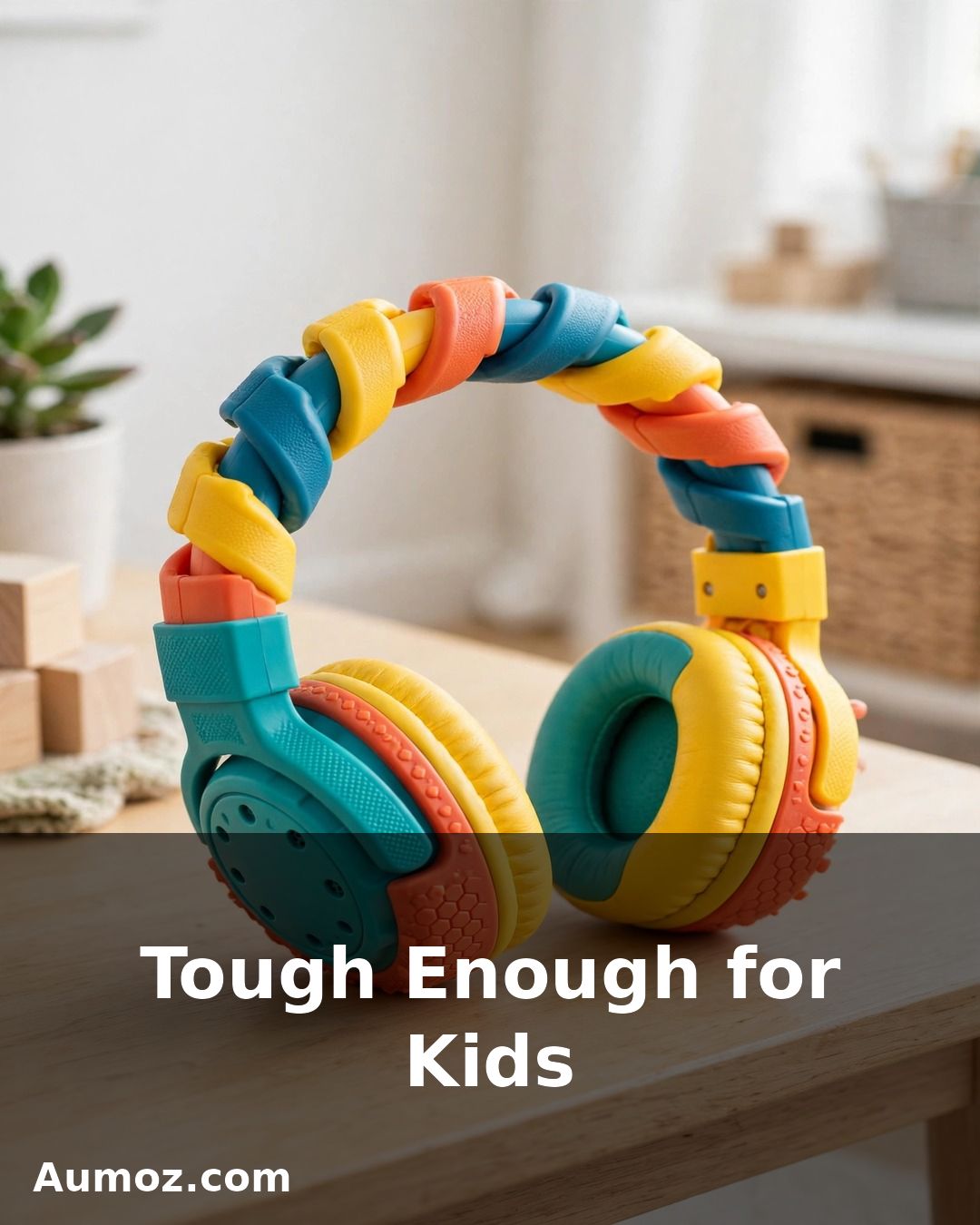
Thanks to their sturdy construction, Brenthaven’s kids’ headphones are a fantastic option for children. Kids tend to drop things, trip over things and eventually smash things at the worst possible moments. These headphones are built to handle the minor beatings that come with childhood. Even the cord has been carefully thought out: it is about six feet long and made of tough material.
If kids chew on the cord, it should hold up better than a thin cord would, which matters in a school environment where teachers would otherwise have to replace headsets on a regular basis, which can be expensive. Some reviewers were less than enthusiastic about long-term reliability, and two noted that their pairs broke easily despite being designed to withstand rough use by small children.
Customers were generally delighted with the sturdy build, so two negative reviews among many more favorable ones should not deter you. Thanks to their universal compatibility, non-break twistable headband, flexible breakaway tip adapter and durable ear cushions, the Brenthaven Rugged Kids Headphones are an excellent choice.
#10. Artix Wired Headphones – Best Budget Pick
Many children dislike wearing uncomfortable, oversized headphones. They get annoyed and want to take them off because they feel squeezed or sore. The nice thing about these headphones is that the ear pads are plush and cushioned, so kids are less likely to complain about discomfort. If you have a child who dislikes wearing headphones, these are worth a try. The built-in microphone is also handy for kids.
It lets them chat with friends and family on video calls, or use voice dictation for homework, while wearing the headset. Although these appear to be solid headphones, a few customers reported that theirs died after only a few months, so keep that in mind. It does not appear to be a widespread problem, but it has happened to a few people.
The Artix Wired Headphones are a good value thanks to their affordability, ease of use, compatibility with nearly any device with a headphone jack, light weight, foldability and one-year satisfaction guarantee.
How to Choose the Most Durable Headphones: Buying Guide
Not sure which pair is right for you? Each option above is considered one of the most durable headphones available today, but your needs may be different. The sections below help you narrow your search so you can find headphones that are built to last.
Durability Buying Checklist: 8 Factors That Matter
Before buying any headphones, run through this checklist:
- Hinges and Headband – Look for consistent adjustment and controlled earcup movement. Metal hinges outlast plastic. A reinforced part helps, but its presence does not establish total product reliability.
- Replaceable Ear Pads – Find replacement parts sold for the exact model. Confirm part compatibility rather than assuming pads from a visually similar model will fit. If ear pads aren’t replaceable, the headphone has a 2–3 year lifespan regardless of build quality.
- Replaceable Battery – Separate advertised listening hours from battery lifespan. Ask whether a battery replacement or authorized service is available. Non-replaceable batteries are the top reason headphones die.
- Charging Connection – Check connector accessibility and cable fit. Avoid designs that require a fragile or hard-to-source proprietary accessory.
- IP Rating – Look for a stated IP rating and the manufacturer’s precise exposure limits. An unrated headset should not be treated as sweatproof or waterproof. For gym use, IPX4 or higher.
- Detachable Cable – Detachable cables outlast fixed cables. Coiled or braided cables outlast thin rubber-coated ones.
- Warranty Duration – At minimum, look for a one-year warranty. Two-year warranties (like Sennheiser Momentum 2.0) show brand confidence. Verify service is offered in your location.
- Repair Community Track Record – How long has the model been in production? Are replacement parts still available for models sold 10+ years ago? Favor designs with proven multi-decade lifespans over new releases making durability claims.

How to Choose the Most Durable Noise Cancelling Headphones
Noise cancelling headphones add microphones, electronics, and a battery to every pair, so they have more ways to fail than a simple wired set. If you want the most durable noise cancelling headphones, start with the checklist above, then add these checks:
- Replaceable ear pads and a tight seal – Noise cancelling works best with a good seal. Cracked or flattened pads let noise leak in, so confirm replacement pads are sold for your exact model.
- A battery you can replace or service – Active noise cancelling needs power, and battery capacity fades over the years. Favor models with a replaceable or serviceable battery and a strong repair score.
- A wired fallback – A 3.5 mm jack or detachable cable keeps you listening if the battery dies. Check that the headphones still play in wired mode with the battery empty.
- Metal hinges and a sturdy headband – Foldable noise cancelling pairs flex at the hinges every day, so metal outlasts plastic.
- A long warranty – More electronics means more parts that can fail. Look for one year at minimum and two years if you can find it.
Among the noise cancelling models in the iFixit scores above, the Sony WH-1000XM6 (6/10) beat the Apple AirPods Max 2 (4/10) and the Skullcandy Crusher ANC 2 (2/10). In this guide, the Sony WH-1000XM6 (#2) is our most durable noise cancelling pick. For cheaper options that still last, our roundup of noise cancelling headphones under $200 is worth a look.
Expected Lifespan by Category
| Category | Expected Lifespan | Example |
|---|---|---|
| Consumer headphones | 2–3 years | Most wireless earbuds, AirPods |
| Budget bulkier builds | 3–5 years | JBL wired headphones |
| Professional/studio | 15+ years | Sony MDR-7506 |
| High-end reference | 20+ years | Sennheiser HD 600/650 |
| Repairability leaders | Indefinite with parts | Fairphone Fairbuds XL, Beyerdynamic DT series |
Common Problems With Durable Noise Cancelling Headphones (and How to Make Them Last)
Even the most durable noise cancelling headphones wear out in predictable ways. Knowing the common problems helps you prevent them or fix them early.
- Ear pads crack or flatten: Pads are the first part to wear out. Cracked pads break the seal and weaken noise cancelling. A $5–20 replacement pair can bring the headphones back to life.
- Battery capacity fades: Rechargeable batteries lose capacity over time, and noise cancelling drains them faster. Avoid heat, and pick a model with a replaceable battery if you want it to last for years.
- Weak noise cancelling or hiss: Check the seal first, then wipe dust and sweat from the microphone openings with a dry, soft cloth. If it persists, contact the maker, especially while the warranty is active.
- Cracked hinges or headband: Folding stresses the hinges. Use the case, and avoid cramming the headphones into a tight bag. One reviewer of the Sony pick above reported a cracked headband, so handle even sturdy pairs with care.
- Cable or jack failure: Fixed cables fail at the plug. A detachable cable is a cheap fix instead of a new pair of headphones.
- Bluetooth drops or pairing trouble: Forget the device on your phone and pair again. If you notice repeated drops, check for a firmware update.
- Sweat damage: Most noise cancelling headphones are not sweatproof unless they carry a stated IP rating. For the gym, choose IPX4 or higher — see our guide to the best over-ear gym headphones for officially rated options.
FAQs | Most Durable Headphones
What are the most durable headphones?
The most durable headphones are those with replaceable parts. The Sennheiser HD 600 has been in production since 1997 and every wearing part is user-replaceable. The V-Moda Crossfade 2 is the best pick for pure physical strength thanks to its steel headband. The Fairphone Fairbuds XL Gen 2 scored a perfect 10/10 on iFixit’s repairability rating. For active noise cancelling, the Sony WH-1000XM6 is the most durable noise cancelling pick (6/10 on iFixit).
What makes headphones last longer?
The #1 factor is repairability: replaceable ear pads, detachable cables, and user-replaceable batteries. The Sennheiser HD 600 has been in production since 1997 and people still use pairs from the early 2000s because every part is replaceable. Build materials (metal headbands, glass-filled nylon, braided cables) are the second factor. Consumer headphones last 2–3 years; professional headphones last decades.
What is an IP rating and which one do I need for the gym?
An IP rating indicates protection against dust and water. The first digit is for solids/dust, the second for water. For gym use, look for IPX4 or higher for sweat and splash protection. IPX7 means it can be submerged in water up to 1 meter for 30 minutes. Note: IP ratings do not certify resistance to dropping or crushing.
What does MIL-STD-810G mean?
MIL-STD-810G is a US military standard for shock, drop, and environmental durability. Headphones tested to this standard (like the Jaybird Vista 2) have passed rigorous laboratory tests for humidity, dust, drops, and sweat. MIL-STD-810H is the newer version.
Are replaceable ear pads important?
Yes. Ear pads crack and flake over time. If they aren’t replaceable, the headphone has a 2–3 year lifespan regardless of build quality. A $5–20 replacement part can extend a headphone’s life by years. Confirm replacement pads are sold for your exact model.
Which headphone brands are most repairable?
Based on real repair data: AKG (71.7% fix rate), Sennheiser (62.8%), Sony (60.8%), Philips (58.4%), and JBL (49.3%). For individual models, the Fairphone Fairbuds XL scored 10/10 on iFixit, followed by Sony WH-1000XM6 at 6/10. The Sennheiser HD 600/650 and Beyerdynamic DT 770 Pro are legendary for repairability and long-term parts availability.
How long should a good pair of headphones last?
Consumer headphones typically last 2–3 years. Professional/studio headphones like the Sony MDR-7506 last 15+ years. High-end reference headphones like the Sennheiser HD 600 last 20+ years with proper care and replacement parts. In repair data, Philips headphones had the highest average age at repair at 10.1 years.
What is the most durable headphone ever made?
The Sennheiser HD 600 is widely considered one of the most durable headphones ever made. It has been in continuous production since 1997, every component is user-replaceable, and people are still using pairs purchased in the early 2000s. For wireless, the Fairphone Fairbuds XL is the repairability leader with a perfect 10/10 iFixit score.
Are noise cancelling headphones less durable?
They can be, because they add microphones, electronics, and a battery that simple wired headphones don’t have. That doesn’t mean they can’t last. Pairs with replaceable ear pads, a serviceable battery, metal hinges, and a wired fallback hold up far longer, so shop for repairability and not just noise cancelling features.
What are the most durable noise cancelling headphones?
In this guide, the Sony WH-1000XM6 (#2) is our most durable noise cancelling pick. Among mainstream models scored by iFixit, the Sony WH-1000XM6 earned 6/10 for repairability, ahead of the Apple AirPods Max 2 (4/10) and the Skullcandy Crusher ANC 2 (2/10). If you don’t need active noise cancelling, the V-Moda Crossfade 2 pairs a steel headband with passive noise isolation.
Are foldable headphones more durable?
Not automatically. Folding adds hinges, and hinges are a common failure point. Foldable headphones with metal hinges and a hard case — like the Sony WH-1000XM6 and the V-Moda Crossfade 2 — travel better because the case protects them. Foldable pairs with plastic hinges are often the first to break at the fold. If you travel a lot, choose metal hinges and always use the case; if you mostly listen at home, a non-folding pair like the Sennheiser HD 600 has fewer moving parts to fail.
Prevent Needless Replacements With Durable Headphones
Thank you for reading this guide from start to finish. Let’s take a quick look back at what we have covered. When shopping for long-lasting headphones, look for repairability first — replaceable ear pads, detachable cables, and a replaceable battery — then steel, strong plastic, or aluminum construction, IPX4 or higher water resistance for gym and outdoor use, MIL-STD-810G/H for shock and drop protection, durable flexible cords for wired models, soft comfortable memory foam ear pads, high-quality stereo sound, and at least a one-year warranty (two years is better).
If you want to keep exploring, our guide to the noise cancelling headphones under $200 covers cheaper long-lasting options, and our noise cancelling headphones under $50 roundup is worth a look if budget is your main concern.


