Soundbar vs. Surround Sound System: The Ultimate 2026 Buying Guide
You’ve bought the 4K TV. You’ve subscribed to the 4K streaming services. But something is missing. The dialogue is muddy, the explosions sound like popcorn popping, and you find yourself constantly riding the volume button just to hear what actors are saying. It’s time for an audio upgrade.
The biggest question in home entertainment for 2026 remains: Should you buy a sleek, convenient Soundbar, or invest in a full Surround Sound system? The search data shows millions of you are torn between the wireless convenience of a bar and the immersive power of a true home theater. In this guide, we break down the pros, cons, and hidden costs of each to help you decide.
The Quick Answer: Who Wins?
If you are in a rush, here is the cheat sheet. We compared the two biggest factors: Performance vs. Convenience.
| Category | Soundbar System | Surround Sound (AV Receiver) |
|---|---|---|
| Setup Time | 15 Minutes (Plug & Play) | 2-4 Hours (Running wires) |
| Budget | $150 – $800 | $600 – $3,000+ |
| Sound Quality | Great Upgrade over TV | Cinematic / Audiophile |
| Bass | Wireless, Decent Thump | Deep, Chest-Pressurizing Rumble |
| Best For | Bedrooms, Apartments, Renters | Living Rooms, Basements, Homeowners |
The Case for Soundbars: Technology Meets Convenience
A soundbar is an all-in-one speaker enclosure that sits directly below your TV. Modern soundbars have evolved from simple stereo speakers into complex systems that use “beamforming” technology to bounce sound off your walls, tricking your ears into hearing surround sound.
Pros of Soundbars
Cons of Soundbars
- Physics: A 2-inch driver simply cannot move as much air as a 6-inch bookshelf speaker. The sound is clear, but often lacks “body” or warmth.
- Fake Surround: Unless you buy a high-end model with dedicated rear speakers, “Virtual Surround” rarely sounds like it’s actually behind you.
- Obsolescence: If the electronics inside the bar die, you throw the whole thing away. You can’t just replace the amplifier.
The Case for Surround Sound: The Real Deal
A traditional Home Theater system consists of an Audio/Video (AV) Receiver (the brain) connected by wires to separate speakers placed around the room. This is often referred to as a “Discrete” system because every sound channel has its own dedicated speaker box.
Pros of Surround Sound
Cons of Surround Sound
- Wires: You have to run speaker wire from the receiver to every single speaker. This is the #1 reason people choose soundbars.
- Complexity: Receivers have steep learning curves with menus, calibration microphones, and crossover settings.
- Space: You need room for 5 or more speakers plus a large receiver unit.
Understanding the Numbers: 2.1 vs 5.1 vs Dolby Atmos
The search data shows confusion around “channels.” Here is how to decode the numbers on the box.
| Format | What it Means | Found In |
|---|---|---|
| 2.0 | Stereo (Left + Right). No subwoofer. | Basic Soundbars |
| 2.1 | Stereo + 1 Subwoofer for bass. | Most Soundbars |
| 3.1 | Left + Right + Center + Subwoofer. (Best for dialogue). | Mid-Range Soundbars |
| 5.1 | Fronts + Center + Sub + 2 Rear Surround Speakers. | Home Theaters |
| 5.1.2 (Atmos) | 5.1 setup + 2 Height Speakers bouncing sound off the ceiling. | Premium Systems |
The Critical Factor: Room Size
Your room dictates your gear. Using search trends for “room size” and “loudest,” here is our rule of thumb for 2026:
Small Rooms (Bedrooms / Dorms / 10x12ft)
Winner: Soundbar (2.1 Channel).
In a small space, a full surround system is overkill. The wires will clutter the room, and the bass from a large subwoofer will become “boomy” and overwhelming. A decent soundbar like the Sony HT-S400 will fill the room perfectly.
Medium Rooms (Living Rooms / Apartments / 12x18ft)
Winner: High-End Soundbar OR 5.1 System.
This is the battleground. A premium soundbar (like the Samsung Q-Series or Sonos Arc) works great here. However, if you can hide the wires, a dedicated 5.1 system with bookshelf speakers will sound clearer and wider.
Large Rooms (Open Concept / Basements / 20ft+)
Winner: Surround Sound Receiver System.
Soundbars rely on walls to bounce sound. In a large open-concept room, there are no nearby walls to bounce sound off, so the “surround” effect of a soundbar vanishes. You need physical speakers behind your couch to hear surround sound in a large space.
Top Picks for 2026
Based on current pricing, performance, and user reviews, here are the best options for every budget.
Best Budget Soundbar (Under $200)
Sony HT-S400 2.1ch Soundbar
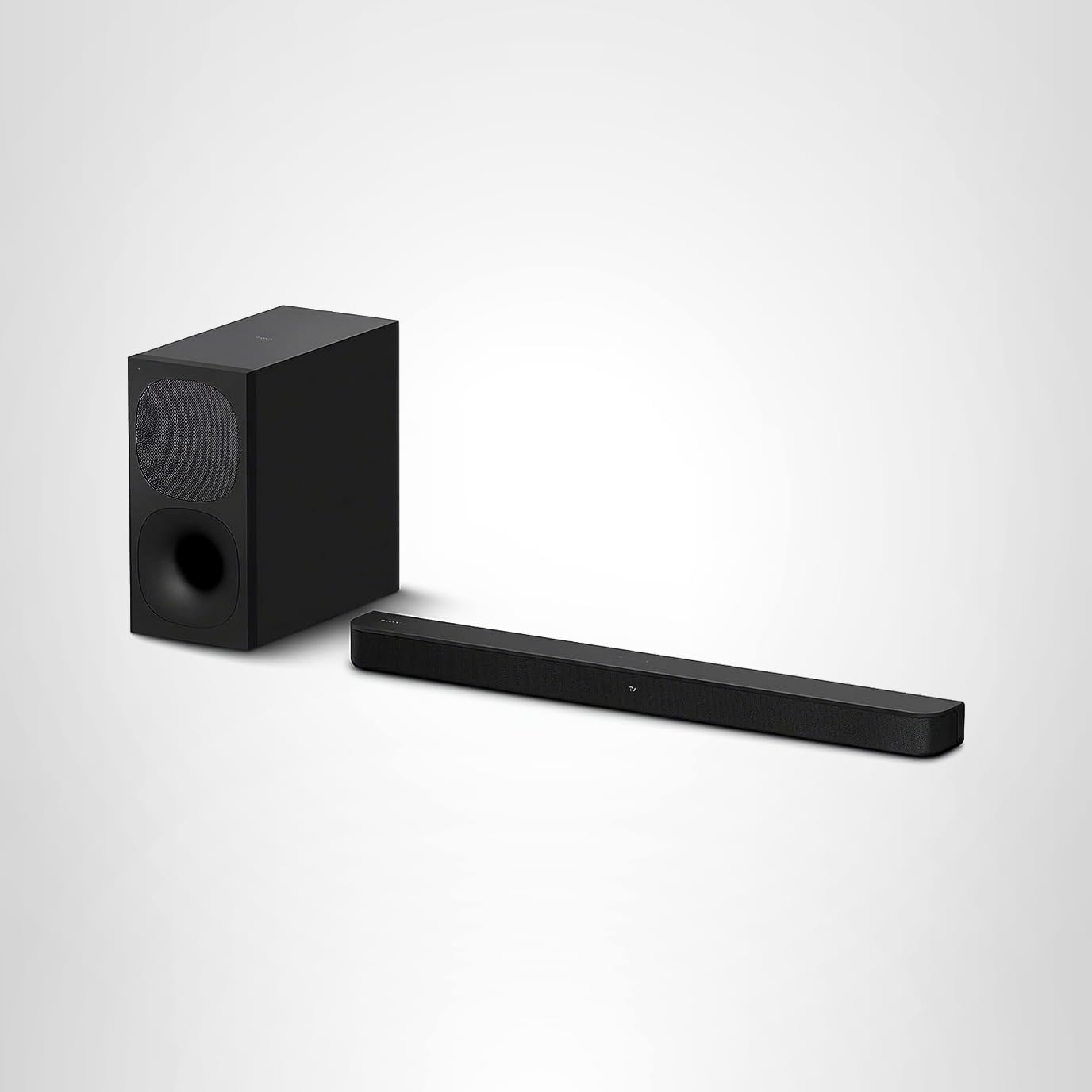
The Sony HT-S400 2.1ch Soundbar delivers a straightforward and effective audio upgrade. This soundbar focuses on simplicity and performance, offering a significant leap in sound quality compared to built-in TV speakers. Its core strength lies in its ability to produce loud and clear audio, making it ideal for various entertainment scenarios.
The included wireless subwoofer provides deep, impactful bass, enriching the listening experience, especially when watching movies or enjoying music. Connectivity is versatile, with both Bluetooth for wireless streaming from mobile devices and HDMI ARC for easy connection to your TV, simplifying setup. The soundbar significantly enhances dialogue clarity, a common weakness of many television sets, ensuring you don’t miss any of the action. Overall, the HT-S400 is a user-friendly and powerful solution for improving your home entertainment audio.
Best “Home Theater in a Box” (Under $500)
Yamaha YHT-4950U
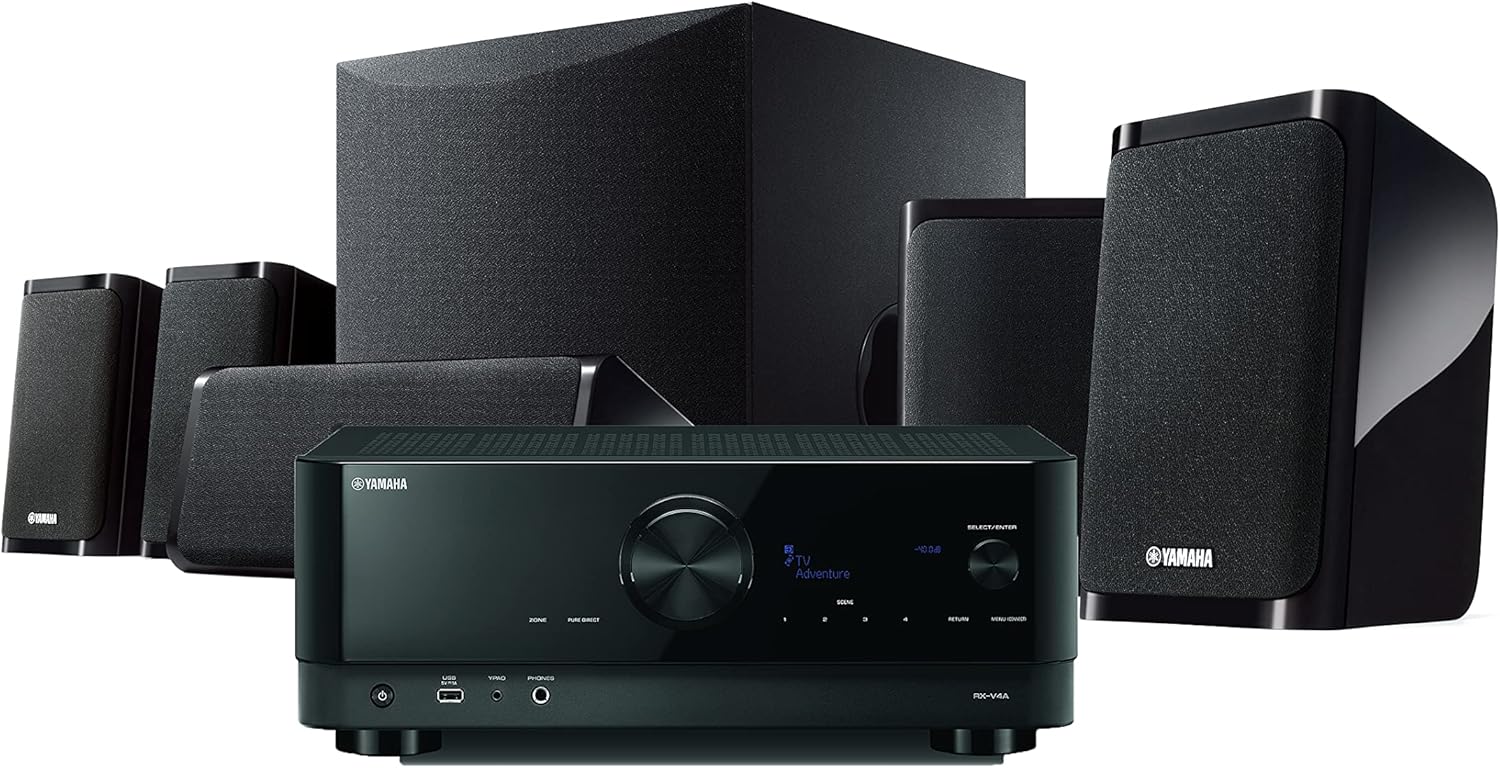
The Yamaha YHT-4950U is a highly regarded entry-level home theater system, often lauded as a fantastic starting point for those venturing into the world of immersive audio. At its heart lies a genuine Yamaha 4K receiver, the brain of the operation, responsible for processing audio and video signals and powering the speakers. This receiver supports modern standards, ensuring compatibility with your 4K television and various media players.
The system also includes a set of five discrete speakers – typically a center channel, two front speakers, and two surround speakers – allowing for a true surround sound experience. These speakers, coupled with a dedicated subwoofer, create a rich and dynamic soundstage. While the setup necessitates running speaker wires to connect the receiver to the speakers, this effort is often rewarded with significantly superior sound quality compared to soundbars in a similar price bracket.
The YHT-4950U’s ability to reproduce distinct audio channels, including the low frequencies handled by the subwoofer, creates a more realistic and engaging listening experience. Imagine the roar of a spaceship in a sci-fi film, the subtle rustling of leaves in a nature documentary, or the clear dialogue of your favorite actors. This system is ideal for those who want to learn the fundamentals of a true home theater setup, offering a practical and affordable means to explore the world of surround sound and refine their audio experience.
The “High-End” Hybrid (Over $1000)
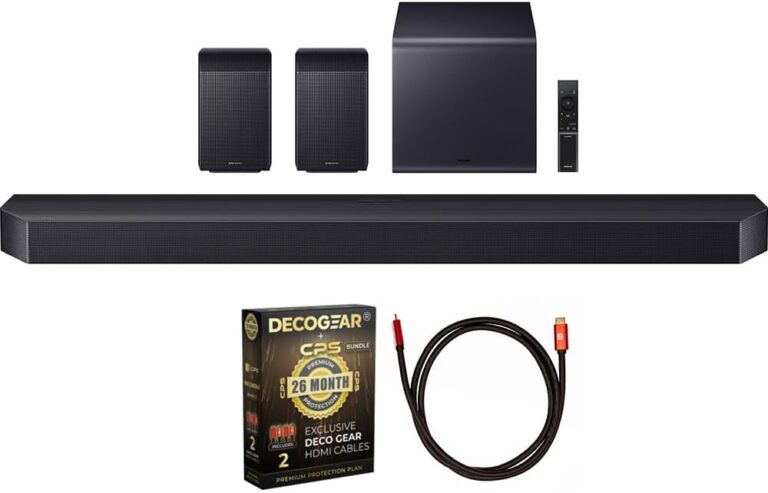
Samsung S60D

The Samsung S60D soundbar system is the pinnacle of immersive audio experiences, particularly if you’re seeking a surround sound setup that minimizes unsightly wiring. This system is designed for a truly cinematic experience, eliminating the need to run cables across your living room to the rear speakers. The core components include a substantial soundbar, a powerful subwoofer, and two wireless rear speakers. The rear speakers, while wireless in terms of signal transmission, do require access to power outlets.
The S60D’s main selling point is its ability to deliver a breathtaking 11.1.4-channel audio experience. This complex configuration translates to a soundscape that envelops you from all directions. The “11” refers to the eleven channels emanating from the soundbar and the subwoofer, providing a wide and detailed soundstage across the front and sides of the room. The “.1” represents the dedicated channel for the subwoofer, delivering deep and impactful bass. Finally, the “.4” signifies the four upward-firing speakers within the soundbar, which bounce sound off your ceiling to create the illusion of overhead audio.
Supported by Dolby Atmos technology, the S60D transports you directly into the heart of the action. Imagine the roar of a jet engine passing overhead during a movie scene, or the delicate whispers of leaves rustling in a forest. With the S60D, these sounds are not just heard, but felt, making your home entertainment setup feel like a premium cinema. The wireless rear speakers further enhance the sense of envelopment, placing you right in the middle of the soundstage.
Final Verdict
Buy a Soundbar IF: You rent your home, hate wires, have a weirdly shaped living room, or primarily watch casual TV/News/Sports. Ideally, look for a 3.1 channel bar so you get a dedicated center speaker for clear dialogue.
Buy a Surround Sound System IF: You are a movie buff, a gamer who plays competitive shooters (hearing footsteps behind you matters), or you have a large open-concept room. The setup takes longer, but the first time you hear a helicopter fly over your head, you’ll know it was worth it.
Disclaimer: As an Amazon Associate, we earn from qualifying purchases. This helps support our detailed testing and reviews.