

Bone conduction headphones send sound through your cheekbones instead of into your ear canal, so your ears stay open to traffic, voices and everything around you. That one difference makes them the safest way to listen while running, cycling or walking — and the technology has improved so much in 2026 that the best models now sound genuinely good, not just acceptable.
This guide compares the best bone conduction headphones of 2026 across 10 picks, from the flagship Shokz OpenRun Pro 2 to budget models under $40, and reviews each one for sound quality, battery life, waterproofing, comfort and fit. Quick picks: the Shokz OpenRun Pro 2 is the best bone conduction headphone overall, the Shokz OpenRun Pro is the best value, the Shokz OpenSwim Pro is the best for swimming, the Soundcore V20i is the best budget pick, and the Shokz OpenComm2 UC is the best for work calls. If you only buy one pair, buy the OpenRun Pro 2.

Best Bone Conduction Headphones 2026 at a Glance
| Headphone | Best for | Battery life | Water rating | Price |
|---|---|---|---|---|
| Shokz OpenRun Pro 2 | Best overall | Up to 12 hours | IP55 | Around $180 |
| Shokz OpenRun Pro | Best value | Up to 10 hours | IP55 | Around $110 |
| Shokz OpenRun | Best for everyday use | Up to 8 hours | IP67 | Around $130 |
| Shokz OpenSwim Pro | Best for swimming | Up to 9 hours | IP68 | Around $180 |
| Shokz OpenMove | Best budget Shokz | Up to 6 hours | IP55 | Around $80 |
| Soundcore AeroFit 2 | Best open-ear alternative | Up to 42 hours with case | IP55 | Around $80 |
| Soundcore V20i | Best budget pick | Up to 36 hours with case | IP55 | Around $30 |
| Raycon Bone Conduction Headphones | Best for workouts | Up to 13 hours | IP68 | Around $100 |
| PSIER Bone Conduction Headphones | Best ultra-budget pick | Up to 10 hours | IPX5 | Around $40 |
| Shokz OpenComm2 UC | Best for work calls | Up to 16 hours | IP55 | Around $180 |
Prices are typical US list prices as of November 2026 and change often — check the current price before you buy.
1. Shokz OpenRun Pro 2 — Best Bone Conduction Headphone Overall
The OpenRun Pro 2 is the best bone conduction headphone you can buy in 2026, and it is not close. Shokz pairs a 9th-generation bone conduction transducer with a separate air-conduction driver, so the bass finally has weight — about 20 percent more output at low frequencies than the original OpenRun Pro — while the highs stay clear. At around $180 it is the most expensive pick in this guide, but it is also the only one that sounds good enough to replace your everyday earbuds.
The 12-hour battery is the longest of any wraparound bone conduction model here, and a 5-minute quick charge adds about 2.5 hours, which covers a long run even if you forgot to charge overnight. IP55 sweat and splash resistance handles rain and hard workouts, the nickel-titanium frame weighs about 30 grams, and dual wind-resistant microphones keep calls clear on the move. If you run or cycle outdoors and want one pair that does everything, start here.
Why it wins: the best sound in the category, the longest battery life, and a secure, barely-there fit. Watch out for: the $180 price, and like every bone conduction model, the bass still cannot match sealed in-ear earbuds.
2. Shokz OpenRun Pro — Best Value Bone Conduction Headphone
The original OpenRun Pro is the value pick because it keeps most of what makes the Pro 2 great at roughly $70 less. Its 8th-generation dual-suspension transducer delivers noticeably fuller bass than the standard OpenRun, and the 10-hour battery covers a full week of daily runs for most people. At around $110 it is the sweet spot of the Shokz range.
You give up the Pro 2’s second air-conduction driver and two hours of battery, and the charging is slower, but the fit, the IP55 rating and the call quality are essentially the same. This is the pair to buy if the Pro 2’s price feels steep and you mostly listen to podcasts, audiobooks and playlists rather than bass-heavy music at high volume.
Why it wins: near-flagship sound and comfort for about $110. Watch out for: no quick-charge boost as fast as the Pro 2, and the older transducer is a step behind on bass.
3. Shokz OpenRun — Best Bone Conduction Headphone for Everyday Use
The standard OpenRun is the lightest and simplest Shokz in the lineup, and it is the easiest one to wear all day. It weighs about 26 grams, wraps comfortably under a cap or helmet, and its IP67 rating actually beats the Pro models on paper — it survives full immersion in shallow water, where the Pro models are rated for jets and splashes only.
The trade-off is sound: the 8-hour battery is shorter, and the older transducer sounds thinner, with less bass than either Pro model. But for commuting, walking the dog and everyday listening, the OpenRun is more than good enough, and at around $130 it is often discounted well below that. If you want the lightest possible open-ear pair for daily use, this is it.
Why it wins: the lightest fit in the range and a stronger IP67 water rating. Watch out for: the thinnest bass of the three Shokz models here and the shortest battery life.
4. Shokz OpenSwim Pro — Best Bone Conduction Headphone for Swimming
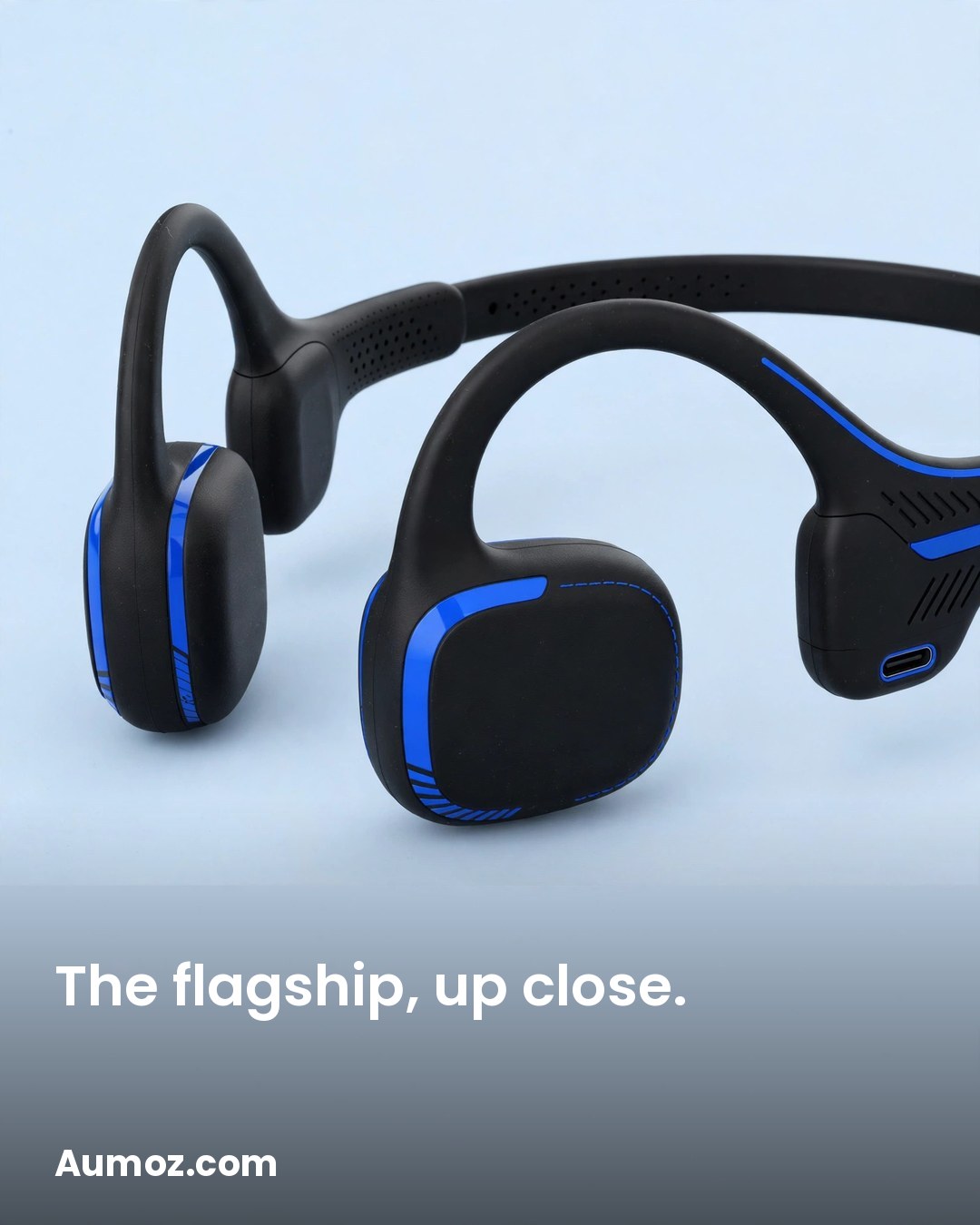
The OpenSwim Pro is the only pick in this guide built for the pool. Its IP68 rating certifies submersion to 2 metres for up to 2 hours, and — critically — it stores music on 32 GB of onboard memory, because Bluetooth signals do not travel through water. Load your playlists as MP3 files, switch to MP3 mode at the pool, and the music keeps playing underwater where a Bluetooth-only pair would go silent.
Out of the water it works as a normal Bluetooth bone conduction headset with about 9 hours of battery, so it doubles as a running pair. The fit is the familiar Shokz wraparound, and the controls are glove-friendly buttons rather than touch panels that misfire when wet. If you swim laps and want music, there is no substitute: no other model here is rated for submersion.
Why it wins: the only true swimming pick — IP68 plus onboard MP3 storage. Watch out for: you must load music files yourself for pool use, and the 9-hour battery is shorter than the Pro 2’s. For more swimming picks, see our guide to the best headphones for swimming.
5. Shokz OpenMove — Best Budget Shokz Bone Conduction Headphone
The OpenMove is the cheapest way into the Shokz lineup at around $80, and it is the right pick if you want the Shokz fit and the 2-year warranty without paying flagship money. It uses an earlier-generation transducer, so the sound is flatter than the Pro models, but the open-ear awareness, the wraparound stability and the sweat resistance are all there.
The 6-hour battery is the shortest in this guide, which matters on long training days — charge it after every couple of runs and you will never notice. For casual runners, walkers and gym users who want a dependable, comfortable open-ear pair, the OpenMove delivers the core bone conduction experience for less than half the price of the Pro 2.
Why it wins: genuine Shokz quality and fit for around $80. Watch out for: the 6-hour battery and the least detailed sound of any Shokz pick here.
6. Soundcore AeroFit 2 — Best Open-Ear Alternative to Bone Conduction
The AeroFit 2 is not a bone conduction headphone — it is an open-ear air-conduction pair from Soundcore that hooks over your ear and aims a small speaker at it — but it belongs in this guide because many buyers cross-shop the two designs, and for music lovers the AeroFit 2 sounds better than most true bone conduction models. Its larger drivers produce richer bass, and the 42-hour total battery with the charging case dwarfs every wraparound pair here.
Four adjustable ear-hook positions help it fit different ear sizes, and the IP55 rating covers sweat and rain. The trade-off is awareness: because the speaker sits just outside your ear canal, it leaks more sound to people nearby at high volume, and it does not sit as securely as a wraparound band during hard sprints. If sound quality matters more to you than the wraparound form factor, try this one first.
Why it wins: the best sound in this guide outside the Pro 2, with a huge 42-hour total battery. Watch out for: more sound leakage than bone conduction models, and the hook fit is less secure for intense running.
7. Soundcore V20i — Best Budget Bone Conduction Headphone
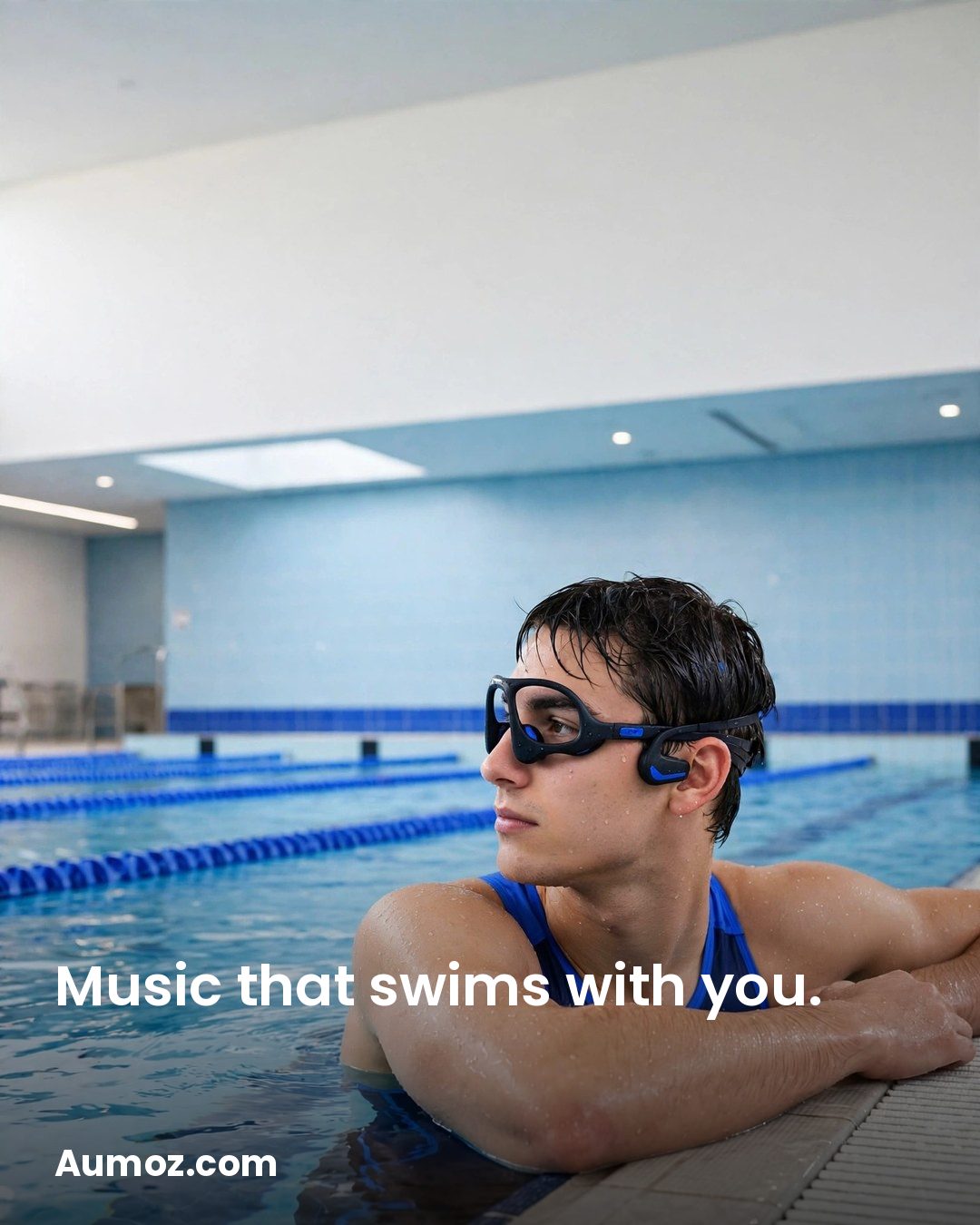
The Soundcore V20i proves you do not need to spend $100 to get open-ear listening right. At around $30 it is the cheapest pick in this guide, yet it delivers a secure hook fit, IP55 sweat resistance and 36 hours of total playtime with its charging case — more than any wraparound model here.
Like the AeroFit 2 it uses open-ear air-conduction drivers rather than true bone conduction, so purists should note the difference, but in practice the experience is the same: ears open, music playing, surroundings audible. The bass is modest and calls are average, but for the price nothing else comes close. This is the pick for anyone who is curious about open-ear listening and does not want to risk $180 finding out.
Why it wins: open-ear sound and all-day battery for around $30. Watch out for: thin bass, average microphones, and it is air conduction, not true bone conduction.
8. Raycon Bone Conduction Headphones — Best Bone Conduction Headphone for Workouts
Raycon’s bone conduction pair is built for the gym: a secure wraparound fit, an IP68 water rating that shrugs off sweat and rain, and a 13-hour battery that outlasts the Shokz Pro 2. At around $100 it sits between the budget picks and the Shokz flagships, and it is the longest-lasting single-charge option in this guide after the Pro 2.
Sound quality is clear and balanced for workouts, though it will not match the Pro 2’s dual-driver bass. The controls are simple physical buttons that work with sweaty hands, and the microphone is good enough for calls between sets. If your training is mostly indoors and you want a tough, long-lasting pair without paying Shokz prices, the Raycon is the workout pick.
Why it wins: 13-hour battery, IP68 rating and a gym-tough fit for around $100. Watch out for: bass and detail trail the Shokz Pro models, and the brand’s tuning favours clarity over warmth.
9. PSIER Bone Conduction Headphones — Best Ultra-Budget Pick
At around $40, the PSIER is the cheapest true bone conduction pair in this guide, and it covers the basics well: a wraparound band, Bluetooth 6.0, 10 hours of battery and an IPX5 splash rating. For runners on a tight budget it delivers the core experience — open ears, stable fit, music on the move — at a quarter of the flagship price.
Expect compromises: the sound is thinner than the Shokz models, the microphone is basic, and the build feels lighter and less premium. But if you are buying a first pair to test whether bone conduction suits you, or you need a spare pair you will not mind losing, the PSIER is hard to argue with at this price.
Why it wins: true bone conduction for around $40 with a 10-hour battery. Watch out for: thin sound, a basic mic, and only an IPX5 splash rating — no swimming.

10. Shokz OpenComm2 UC — Best Bone Conduction Headphone for Work Calls
The OpenComm2 UC is the only pick designed for the office rather than the trail. It adds an adjustable boom microphone to the familiar Shokz wraparound design, and the mic’s noise cancellation keeps your voice clear on calls even in a noisy room. It is UC-certified for Microsoft Teams and Zoom, connects to two devices at once, and runs for up to 16 hours — the longest battery in this guide.
Because your ears stay open, you can hear a colleague at your desk without taking the headset off, which is exactly the point for all-day wear. The trade-off is price — around $180 — and music sound that is tuned for voice clarity rather than bass. If you spend your day on calls and want to stay aware of your surroundings, this is the work pick. For more running-focused open-ear options, see our 5 best open-ear earbuds for running.
Why it wins: the best call microphone in the category, 16-hour battery and dual-device pairing. Watch out for: music sounds flatter than the Pro 2, and the boom mic is overkill if you never take calls.
How Do Bone Conduction Headphones Work?
Bone conduction headphones rest small transducers on your cheekbones, just in front of your ears. The transducers vibrate, and those vibrations travel through your skull bones directly to your inner ear, bypassing the eardrum entirely. Because nothing blocks or covers your ear canal, you hear your music and the world at the same time — a car approaching, a cyclist calling out, a colleague asking a question.
The technology is not new: it has been used in hearing aids and military headsets for years, and the science of bone conduction is well established. What changed recently is the tuning — dual drivers, better transducers and smarter EQ have closed much of the sound-quality gap with conventional earbuds, which is why bone conduction has moved from a niche sport accessory into the mainstream in 2026.
Bone Conduction vs Open-Ear Air Conduction: What’s the Difference?
Two designs compete for the same open-ear buyer, and the labels get mixed up constantly. Bone conduction models (Shokz OpenRun Pro 2, OpenRun Pro, OpenSwim Pro, Raycon, PSIER) vibrate sound through your cheekbones. Open-ear air conduction models (Soundcore AeroFit 2, Soundcore V20i) hook over your ear and play sound from a small speaker aimed at your ear canal, with nothing inserted into it.
In practice, air-conduction pairs usually sound fuller, with better bass, because they use larger conventional drivers. Bone conduction pairs usually leak less sound to people nearby and sit more securely during intense exercise, because the wraparound band holds the transducers firmly against your cheekbones. If you prioritise sound quality, lean air conduction; if you prioritise a secure fit and minimal leakage, lean bone conduction. Our open-ear vs traditional earbuds guide explains the wider trade-offs in more detail.
IP Ratings Explained: IP55 vs IP67 vs IP68
The IP rating tells you how much water and dust a pair can handle, and it matters more for bone conduction headphones than for most audio gear because they are worn in sweat and rain. IP55 (OpenRun Pro 2, OpenRun Pro, OpenMove, AeroFit 2, V20i, OpenComm2 UC) means protection against dust and low-pressure water jets — sweat and rain are fine, submersion is not. IP67 (OpenRun) adds protection against immersion in shallow water for up to 30 minutes. IP68 (OpenSwim Pro, Raycon) certifies continuous submersion — the OpenSwim Pro is rated to 2 metres for 2 hours.
Two rules follow from this. First, only IP68 models with onboard music storage are real swimming headphones, because Bluetooth does not work underwater — that is why the OpenSwim Pro stores MP3 files. Second, never charge a wet pair: wipe the charging contacts dry first, or the contacts can corrode over time. For more on choosing headphones that survive hard training, see our guide to the most durable headphones.
How to Choose the Best Bone Conduction Headphones
Start with your main activity. Runners and cyclists should prioritise a secure wraparound fit and wind-resistant microphones — the OpenRun Pro 2 or OpenRun Pro. Swimmers need IP68 plus onboard storage, which means the OpenSwim Pro. Gym users can save money with the Raycon or the OpenMove. Office workers should look at the OpenComm2 UC for its boom mic and 16-hour battery.
Check the battery against your longest session. Six hours (OpenMove) is fine for daily runs but tight for a marathon training block; 12 hours (OpenRun Pro 2) or 16 hours (OpenComm2 UC) removes charging from your routine entirely. Quick charging matters too — the Pro 2’s 5-minute charge for 2.5 hours of playback is genuinely useful.
Try the fit if you can. Bone conduction sound depends on the transducers sitting firmly on your cheekbones. A loose fit sounds thin and quiet; a tight fit can ache after an hour. Most people find the Shokz wraparound comfortable for hours, but if you wear glasses, test the combination — the band, the transducers and the glasses arms all share the same space behind your ears. And remember that bone conduction headphones are open by design: at 60–70 percent volume, people nearby can hear a faint version of your music, so they are a poor choice for a quiet library or a crowded train. For gym sessions where you want a sealed fit instead, our best over-ear gym headphones guide covers the alternatives.

Frequently Asked Questions About Bone Conduction Headphones
Are bone conduction headphones safe for your hearing?
Yes, when used sensibly. Because they do not seal your ear canal, you can listen at lower volumes and still hear your surroundings, which reduces the temptation to crank the volume up. That said, very loud sound conducted through bone can still damage hearing over time, just as loud sound through the air can. Keep the volume moderate and take listening breaks on long sessions. The US National Institute on Deafness and Other Communication Disorders has guidance on noise-induced hearing loss if you want the detail.
Do bone conduction headphones leak sound?
Yes, some. At low to moderate volume the leakage is minimal, but at 60–70 percent volume people sitting close to you can hear a faint version of what you are playing. The vibration itself is silent; the leakage comes from the transducer housing. If you listen in quiet shared spaces, keep the volume down or use sealed earbuds instead.
Can you swim with bone conduction headphones?
Only with models built for it. The Shokz OpenSwim Pro is IP68-rated and stores music on 32 GB of onboard memory, because Bluetooth does not transmit through water — a Bluetooth-only pair goes silent underwater. IP55 models such as the OpenRun Pro 2 handle sweat and rain but must not be submerged.
How is the bass on bone conduction headphones?
Weaker than sealed in-ear earbuds, but much better than it used to be. The Shokz OpenRun Pro 2’s dual-driver design — bone conduction plus a separate air-conduction driver — delivers the fullest bass in this category. Budget models sound noticeably thinner. If deep bass is your top priority, a sealed pair such as the ones in our best noise-cancelling headphones under $200 guide will suit you better.
Do bone conduction headphones work with glasses?
Usually yes, with a small adjustment. The wraparound band and the transducers sit in the same area as glasses arms, so you may need to position the glasses slightly higher or the transducers slightly lower until both sit comfortably. Most wearers adjust within a few minutes and forget about it. If you wear thick-framed glasses, try the fit before a long run.
What is the best bone conduction headphone for running?
The Shokz OpenRun Pro 2 is the best bone conduction headphone for running in 2026: 12 hours of battery, the best sound in the category, an IP55 sweat and rain rating, and a secure wraparound fit that stays put at any pace. If your budget is tighter, the Shokz OpenRun Pro at around $110 keeps most of the performance, and the Soundcore V20i at around $30 is the best way to try open-ear running cheaply. For the technical background, our guide to headphone specifications explains the drivers and ratings used in this guide.
The Bottom Line
The best bone conduction headphones in 2026 are genuinely good headphones, not just a safety compromise. The Shokz OpenRun Pro 2 leads on sound and battery life, the OpenRun Pro is the value pick, the OpenSwim Pro owns the pool, and the Soundcore V20i proves you can try open-ear listening for around $30. Whichever you choose, you get the same core benefit: your music, your podcast or your call — with your ears open to the world around you. If you still want a sealed, noise-cancelling fit for travel or the office, our best gaming headsets of 2026 roundup covers the strongest closed-back options of the year.