5 Best Powered Speakers for Mobile DJs vs. Club Systems in 2026 — Tested & Ranked
Choosing powered speakers as a DJ in 2026 means navigating a fundamental tension: mobile DJs need portability, versatility, and fast setup, while club-level systems demand raw SPL, precise frequency response, and the headroom to run all night at high volume without distortion. These are not the same speaker. The five picks in this guide cover both worlds — from the QSC K12.2, the professional standard for touring and club work, to the JBL EON ONE MK2, a self-contained battery-powered column system built for mobile DJs working without AC power. We rank them honestly for each use case, give you the complete specs, and tell you exactly which speaker is right for your gig type, budget, and touring reality in 2026.
Why “Best DJ Speaker” Means Two Completely Different Things
The phrase “best powered speaker for DJs” is used to describe everything from a battery-powered 8-inch portable for backyard sets to a 15-inch 134dB-capable PA tower that can fill a 2,000-capacity club. These are not different grades of the same product — they are different tools designed for fundamentally different jobs, and buying the wrong one for your use case is one of the most expensive mistakes in DJ gear.
Mobile DJs — wedding DJs, corporate event specialists, birthday party performers, school disco operators — need speakers that can be loaded into a car or van, set up by one person in 20 minutes, run at moderate indoor volume levels across a wide range of music genres, and sound clean and balanced across the full frequency range without requiring a dedicated subwoofer to handle low end. Portability, versatility, and reliability under frequent transport are the defining criteria.
Club systems — resident DJs, festival stage systems, fixed installs in bars and nightclubs — have entirely different priorities. They need maximum sustained SPL output (measured in dB), precise frequency response that sounds accurate at high volumes, thermal management for hours of continuous operation at high drive levels, and often the ability to integrate with a multi-speaker array driven by a dedicated DSP processor. Weight and portability are secondary considerations. Sounding good at 115dB for six hours straight is the job.
The five speakers in this guide represent the best of both worlds — with honest scores for each use case so you never buy a club speaker when you needed a mobile rig, or vice versa.
Mobile DJ vs. Club System: Key Differences at a Glance
| Factor | Mobile DJ Priority | Club System Priority |
|---|---|---|
| Weight | ⭐⭐⭐⭐⭐ Critical — must carry solo | ⭐ Low priority — installed or crew-moved |
| Max SPL | ⭐⭐⭐ 120–126dB adequate for most gigs | ⭐⭐⭐⭐⭐ 130dB+ for large rooms |
| Frequency Balance | ⭐⭐⭐⭐⭐ Flat and versatile across genres | ⭐⭐⭐⭐ Tuned for dance music impact |
| Setup Time | ⭐⭐⭐⭐⭐ Under 20 minutes, solo | ⭐⭐ Multi-person, complex routing acceptable |
| Battery Power | ⭐⭐⭐⭐⭐ Extremely valuable for outdoor gigs | ⭐ Usually mains-only — clubs have power |
| Bluetooth Streaming | ⭐⭐⭐⭐ Useful for background music, transitions | ⭐ Rarely used in professional installs |
| Subwoofer Dependency | ⭐⭐ Many mobile rigs run tops-only | ⭐⭐⭐⭐⭐ Sub is non-negotiable for club work |
| DSP & EQ | ⭐⭐⭐ Basic presets and app control useful | ⭐⭐⭐⭐⭐ Advanced DSP for room tuning essential |
| Budget per unit | $300–$800 typical | $700–$1,500+ per speaker |
Speaker manufacturers routinely advertise peak wattage — a number measured over milliseconds at maximum instantaneous power that bears little relationship to real-world loudness or sustained output. Always look for RMS (Root Mean Square) wattage, which represents continuous, real-world output capability. A speaker rated at “5,000W peak” may only sustain 500W RMS. For club gigs, aim for at least 800–1,200W RMS per speaker. For mobile DJ work, 500–1,000W RMS is typically adequate for venues up to 300 people.
Top 5 Powered DJ Speakers at a Glance (2026)
| Rank | Speaker | Woofer | Power (RMS) | Max SPL | Weight | Mobile DJ Score | Club Score | Price (each) |
|---|---|---|---|---|---|---|---|---|
| 🥇 #1 | QSC K12.2 | 12″ | 2,000W peak / ~500W RMS LF+HF | 132dB | 38 lbs / 17kg | ⭐⭐⭐⭐⭐ | ⭐⭐⭐⭐⭐ | ~$999 |
| 🥈 #2 | JBL EON715 | 15″ | 1,300W | 127dB | 32 lbs / 14.5kg | ⭐⭐⭐⭐⭐ | ⭐⭐⭐⭐ | ~$599–$699 |
| 🥉 #3 | Electro-Voice ZLX-15P G2 | 15″ | 1,000W | 126dB | 35 lbs / 15.9kg | ⭐⭐⭐⭐ | ⭐⭐⭐⭐ | ~$449–$549 |
| ⭐ #4 | Mackie SRM215 | 15″ | 1,600W | 132dB | 46 lbs / 21kg | ⭐⭐⭐ | ⭐⭐⭐⭐⭐ | ~$599–$699 |
| ⭐ #5 | JBL EON ONE MK2 | 10″ + column array | 1,500W peak | ~120dB | 42 lbs / 19kg all-in-one | ⭐⭐⭐⭐⭐ | ⭐⭐ | ~$799–$999 |
Top 5 Best Powered DJ Speakers in 2026 — Full Reviews
🥇 #1 — QSC K12.2: The Industry-Standard That Does Both Jobs Better Than Anything Else
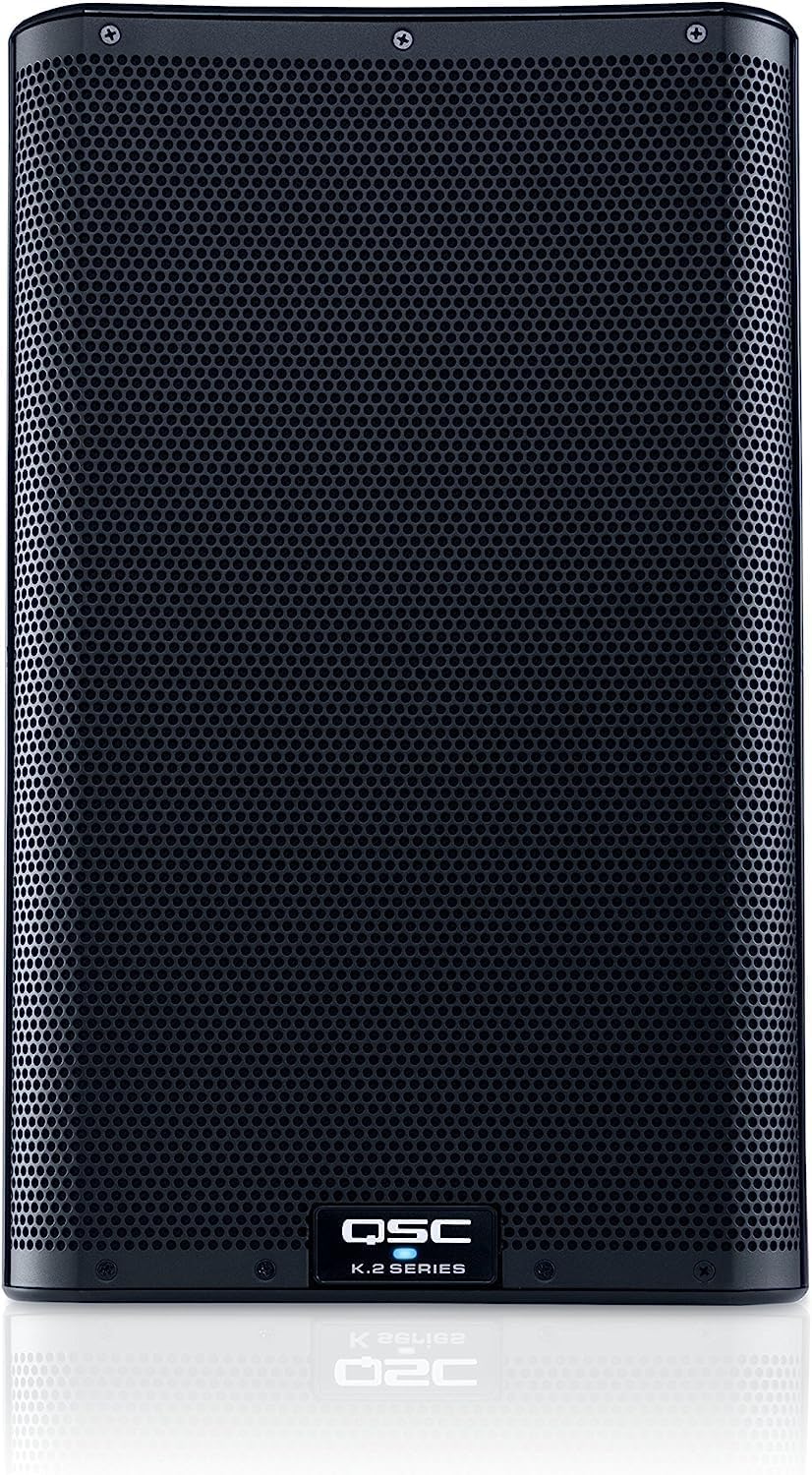
| Woofer Size | 12-inch |
| Power | 2,000W peak (bi-amplified: ~500W LF + ~500W HF) |
| Max SPL | 132dB |
| Frequency Response | 50Hz – 20kHz (-10dB); 55Hz – 20kHz (-6dB) |
| Weight | 38.3 lbs (17.4kg) |
| Inputs | 2x Combo XLR/TRS, Stereo ƈ in, Mix Out XLR |
| DSP | Advanced DSP with 4 presets: DJ, Live, Monitor, Outdoor |
| Form Factor | Pole-mountable, floor wedge monitor position, lightweight ABS enclosure |
| Bluetooth | No (can add separate adapter) |
| Price | ~$999 per speaker |
Why It’s the Professional Standard for Both Mobile and Club Work
Ask any working DJ, live sound engineer, or touring musician which powered speaker they would use if given the choice, and the QSC K12.2 will appear on more lists than any other single model. It is the professional-standard reference for the $800–$1,200 powered speaker category, widely cited by ZIPDJ, GearRank, Our DJ Talk, and AVS Forum as the benchmark that other speakers are measured against. The reason is not one killer feature but rather the combination of outstanding performance in every area simultaneously: clarity, dynamics, reliability, DSP quality, and build durability.
The K12.2’s DSP section includes four selectable EQ presets — DJ, Live, Monitor, and Outdoor — that make the speaker genuinely versatile across use cases without requiring external signal processing. The DJ preset applies a subtle V-shaped EQ curve that adds punch and presence to dance music without the harshness or smearing that characterises less sophisticated speaker designs. The Outdoor preset compensates for the bass roll-off characteristic of outdoor environments by boosting low frequencies — a practically useful feature for mobile DJs working outdoor corporate events, festivals, and garden parties.
The bi-amplified design — with separate amplifier stages for the low-frequency driver and the compression tweeter — is one of the most misunderstood aspects of the K12.2. QSC markets it as “2,000W peak” but the reality, as community users on Our DJ Talk and TalkBass correctly identify, is that the amplifier provides approximately 500W continuous to the LF driver and 500W to the HF driver — a more honest representation of the continuous output capability. In real-world use, this bi-amplified approach produces better control of the tweeter and woofer independently, resulting in cleaner transients and less intermodulation distortion at high drive levels than single-amp designs of equivalent power ratings.
The professional community consensus on speaker-to-subwoofer pairing is clear: when running a dedicated subwoofer, use 12-inch tops rather than 15-inch. The 15-inch woofer’s lower frequency extension overlaps with the sub’s output, causing phase issues and muddiness in the bass-to-sub handoff region. A 12-inch top like the QSC K12.2 hands off cleanly at 80–100Hz to a dedicated sub, resulting in a tighter, more impactful low end and better clarity in the crossover region. This is why the K12.2 remains a top choice for club systems running with a KW181 or KS118 subwoofer.
🥈 #2 — JBL EON715: Best App-Controlled Mobile DJ Speaker in 2026
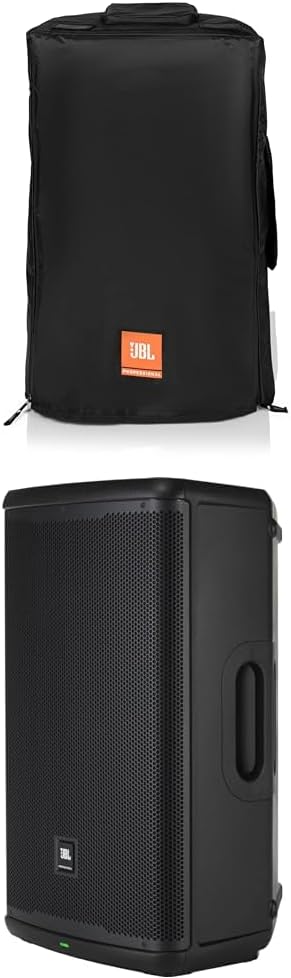
| Woofer Size | 15-inch |
| Power | 1,300W |
| Max SPL | 127dB (continuous); 130dB peak |
| Frequency Response | 36Hz – 20kHz |
| Weight | 31.7 lbs (14.4kg) |
| Inputs | Combo XLR/TRS (Ch1), Combo XLR/TRS (Ch2), RCA stereo |
| Bluetooth | Yes — Bluetooth 4.2 streaming |
| App Control | JBL Pro Connect app (iOS/Android) — full EQ, presets, monitoring, remote control |
| DSP | Advanced 7-band parametric EQ, dbx DriveRack-style processing, visual spectrum display |
| Price | ~$599–$699 per speaker |
App Control + 15-Inch Bass + JBL’s DJ-Friendly Tuning
The JBL EON715 is the most versatile mobile DJ speaker on this list. Its combination of a 15-inch woofer, 1,300W amplification, Bluetooth 5.0, and full smartphone app control via the JBL Pro Connect app makes it arguably the most feature-rich powered speaker in its price category. ZIPDJ describes it as combining “power and accuracy with portability” and specifically calls it a compelling option for DJs who need consistent performance across all venue types. The 36Hz frequency extension — deeper than the QSC K12.2’s 50Hz — makes the EON715 more capable of handling bass-heavy genres without a dedicated subwoofer, a genuine practical advantage for mobile DJs running tops-only setups.
The JBL Pro Connect app is the EON715’s defining differentiator. Via smartphone, DJs can access a full 7-band parametric EQ, save custom presets, monitor system status, and adjust settings without going behind or beside the speaker during a performance. For a mobile DJ who frequently fine-tunes room-to-room and gig-to-gig, this remote control capability is genuinely transformative — the ability to adjust EQ from the DJ booth without walking to the speaker and interrupting the set is a real-world workflow advantage.
The JBL Pro Connect app allows you to save multiple named EQ presets — one for each type of venue you regularly play. Save a “Small Venue” preset for rooms under 50 people, a “Large Venue” preset for halls and ballrooms, and an “Outdoor” preset for garden events. When you arrive at a familiar venue type, load the preset immediately and fine-tune from there rather than starting from flat. Professional mobile DJs who develop a library of venue-specific presets spend significantly less time on soundcheck and more time on the performance — and deliver more consistent sound results across diverse booking types.
🥉 #3 — Electro-Voice ZLX-15P G2: Best Value Club-Ready Speaker Updated for 2025
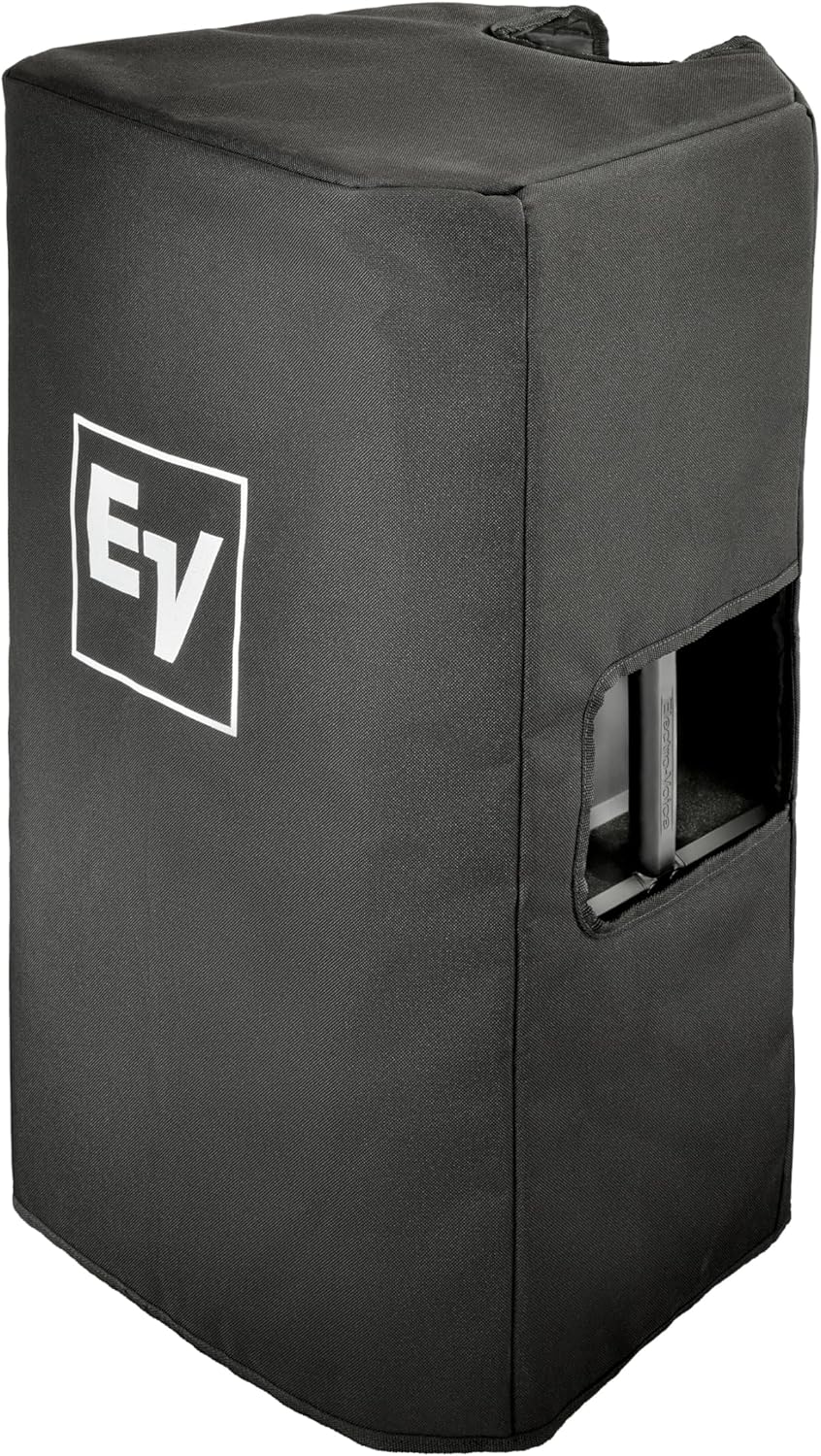
| Woofer Size | 15-inch |
| Power | 1,000W |
| Max SPL | 126dB |
| Frequency Response | 49Hz – 20kHz |
| Weight | 35 lbs (15.9kg) |
| Inputs | XLR/TRS Combo (x2), Mix Out XLR |
| Bluetooth | Yes — Bluetooth 5.0 (G2 update) |
| DSP | Smart DSP with improved presets (G2 update) |
| Key Update | 2025 G2 release adds Bluetooth 5.0 streaming and improved DSP presets over the original ZLX-15P |
| Price | ~$449–$549 per speaker |
The DJ-Tuned EV with a 2025 Refresh That Adds Bluetooth
The Electro-Voice ZLX-15P has been a community favourite for years, frequently recommended alongside the QSC K12.2 as the alternative worth serious consideration — and consistently praised by experienced DJs for its naturally scooped frequency curve that emphasises highs and lows over midrange. This is precisely the sonic signature that most dance music genres sound best through: deep, punchy bass, clear extended highs, and slightly recessed mids that keep the mix from sounding harsh or congested at high volumes. As multiple experienced DJs note across Our DJ Talk and TalkBass forums: “For DJ work, probably EV over QSC.”
The 2025 G2 update meaningfully improves the ZLX-15P’s relevance by adding Bluetooth 5.0 wireless streaming and updated DSP presets — bringing it up to date with JBL and Mackie competitors that added these features earlier. The Smart DSP improvement makes real-time EQ tuning more accessible and the preset library more useful across different venue types. At $449–$549, the ZLX-15P G2 is the best-value professional-grade powered speaker on this list, sitting at nearly half the per-unit price of the QSC K12.2 while delivering competitive SPL and the EV’s legendary low-frequency punch.
⭐ #4 — Mackie SRM215: Best Raw Power for Club Installs and High-Volume Events
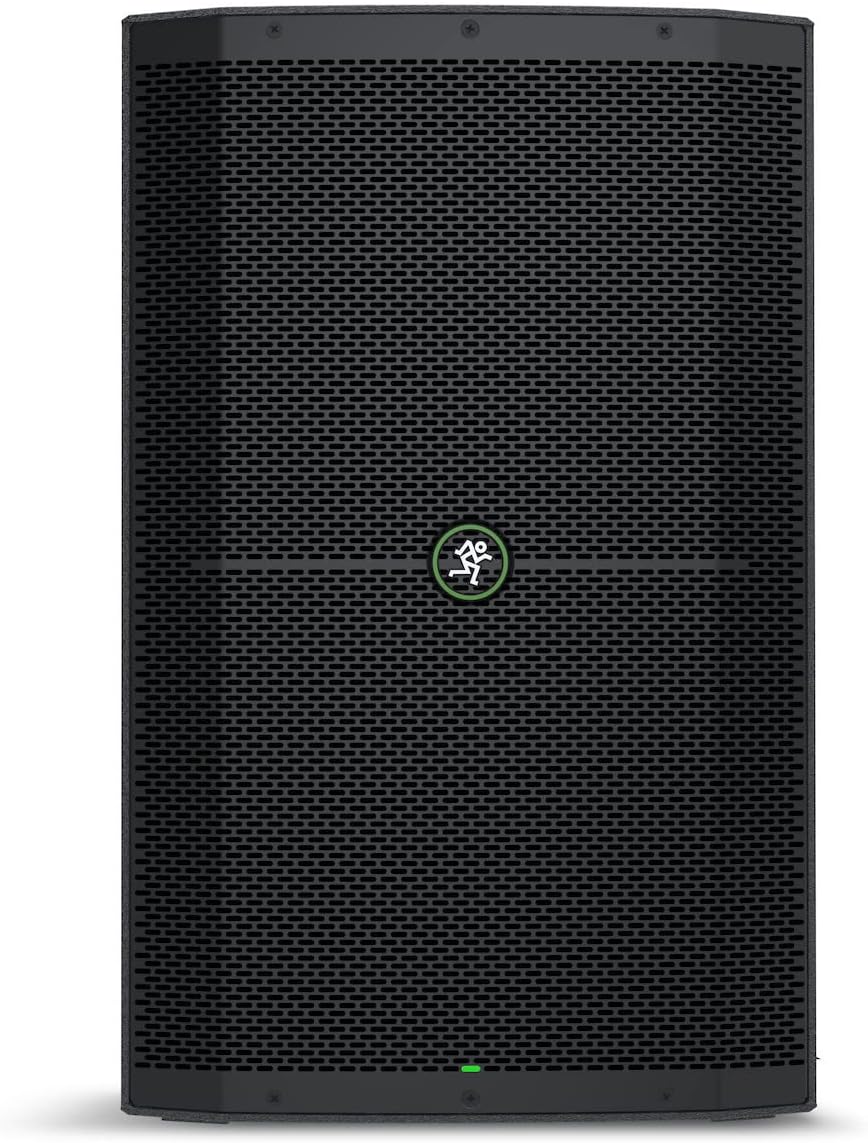
| Woofer Size | 15-inch |
| Power | 1,600W (bi-amplified) |
| Max SPL | 132dB |
| Frequency Response | 45Hz – 20kHz |
| Weight | 46 lbs (21kg) |
| Inputs | XLR/TRS Combo (x2), dedicated HF and LF level controls |
| DSP | 3-band EQ with dedicated bass, mid, treble controls — simple and reliable |
| Enclosure | Wood cabinet — adds rigidity and acoustic benefits over ABS plastic |
| Price | ~$599–$699 per speaker |
Deep Bass, High SPL, Wood Cabinet — Built for the Club
The Mackie SRM215 is the HomeDJStudio team’s number one choice for 2026 — and the reasons are straightforward: it combines the deepest bass extension on this list (45Hz, with a 15-inch woofer and 1,600W bi-amplified power) with the highest SPL on a 15-inch speaker (132dB, matching the K12.2), all in a wood cabinet enclosure that provides better acoustic rigidity and bass coupling than the ABS plastic enclosures on every other speaker in this comparison. Wood enclosures are the standard in high-end professional loudspeakers for good acoustic reasons — the stiffer the cabinet, the less energy is lost to cabinet flex and vibration, and the tighter the bass response.
For club installations, fixed installs in bars, and high-volume events where maximum sustained SPL and deep bass impact are the priority, the SRM215 is the strongest performer on this list. Its deep low end and powerful output make it an exceptional choice for DJs who spin EDM, hip-hop, or bass-heavy electronic genres where the physical sensation of bass pressure in the room is as important as the audio quality.
Wood cabinet speakers like the Mackie SRM215 are acoustically superior for bass response and imaging, but they are heavier and more susceptible to cosmetic damage during frequent transport. For a fixed installation in a bar, nightclub, or event space where the speaker stays in one place, choose the wood cabinet. For a touring mobile DJ rig where speakers are loaded in and out of vehicles multiple times per week, the lighter ABS enclosures of the QSC K12.2 or JBL EON715 are more practical and durable under transport conditions.
⭐ #5 — JBL EON ONE MK2: The Self-Contained Battery-Powered Mobile DJ System
| Design | Column array + 10-inch subwoofer — all-in-one integrated system |
| Power | 1,500W peak (column array + 10-inch woofer) |
| Bass Extension | Down to 37Hz |
| Battery | Up to 6 hours rechargeable battery at full output |
| Mixer | Integrated 5-channel digital mixer with Lexicon effects and dbx compression |
| Weight | 42 lbs / 19kg (complete system, column nests into base) |
| Connectivity | XLR combo inputs, Bluetooth, USB |
| Transport | Column nests into subwoofer base — single integrated unit for transport |
| App Control | JBL Pro Connect app — EQ, mixer, monitoring |
| Price | ~$799–$999 |
When You Need to Play Without AC Power — Nothing Comes Close
The JBL EON ONE MK2 is a fundamentally different type of product from the other four speakers on this list. Rather than a traditional cabinet loudspeaker, it is an all-in-one column array system combining a 10-inch subwoofer base with an 8-element column tweeter array and a built-in 5-channel digital mixer — all powered by an internal rechargeable battery providing up to 6 hours of operation. Internet Tattoo’s October 2025 review calls it “one of the best all-in-one portable speakers available” for outdoor gigs and pop-up events where AC power is not guaranteed.
The column array design provides a key acoustic advantage over traditional point-source speakers: it produces a very wide horizontal dispersion pattern (covering the audience evenly) while maintaining a narrow vertical dispersion pattern (throwing sound at the crowd rather than the ceiling or floor). This makes the EON ONE MK2 particularly effective for outdoor events and irregular venue shapes where coverage consistency is challenging with traditional speakers. The deep 37Hz extension from the 10-inch sub base means genuine bass impact for a self-contained system — more than adequate for small-to-medium mobile DJ gigs.
The integrated 5-channel mixer with Lexicon effects and dbx compression means the EON ONE MK2 can serve as a complete PA system for a mobile DJ without requiring a separate mixer — reducing setup complexity, cable count, and the number of items to carry significantly.
Which Speaker Is Right for Your DJ Setup? — Decision Guide
| Your Use Case | Best Pick | Why |
|---|---|---|
| Club DJ / Resident / Festival Stage | 🥇 QSC K12.2 | Industry-standard 132dB headroom, bi-amplified precision, best DSP, 3-year warranty |
| Wedding / Corporate Event Mobile DJ | 🥈 JBL EON715 | App EQ control, Bluetooth, lighter 15-inch option, excellent all-round frequency response |
| EDM / Hip-Hop DJ needing maximum bass | ⭐ Mackie SRM215 | Deepest bass (45Hz) and highest SPL of any 15-inch on this list; wood cabinet punch |
| Budget-conscious DJ needing club-quality sound | 🥉 EV ZLX-15P G2 | Best price-to-performance ratio; DJ-optimized EQ curve; 2025 G2 adds Bluetooth |
| Outdoor events / Battery-powered gigs | ⭐ JBL EON ONE MK2 | 6-hour battery; all-in-one column system; no AC required; integrated mixer |
| DJ pairing speakers with a dedicated subwoofer | 🥇 QSC K12.2 | 12-inch top pairs best with sub; cleaner crossover at 80-100Hz; professional standard combo |
| Mobile DJ running tops-only (no sub) | 🥈 JBL EON715 or 🥉 EV ZLX-15P G2 | Both 15-inch speakers reach 36–49Hz standalone — adequate bass impact without a sub for most venues |
| Fixed bar or club installation | ⭐ Mackie SRM215 | Wood cabinet excels in fixed installs; no transport wear; best sustained output quality |
Powered DJ Speaker Buyer’s Checklist for 2026
- ☐ What is my typical venue size? — Under 100 people: 500–800W RMS is adequate. 100–300 people: 1,000W+ per speaker. Over 300 or outdoor: 1,200W+ with a subwoofer.
- ☐ Do I need battery power? — If any gigs are outdoors without guaranteed AC power, the JBL EON ONE MK2 is the only serious option on this list.
- ☐ Will I use a subwoofer? — If yes, choose a 12-inch top (QSC K12.2) for the cleanest sub crossover. If no, a 15-inch (JBL EON715, EV ZLX-15P) handles low end better standalone.
- ☐ How important is remote EQ control? — JBL EON715’s app control is the best on this list for in-set adjustments without leaving the booth.
- ☐ How often will I transport these speakers? — Solo loading multiple times per week: prioritize weight (JBL EON715 at 31.7 lbs). Fixed or crew-assisted: weight matters less (Mackie SRM215 at 46 lbs is fine).
- ☐ What genres do I primarily play? — Dance music and EDM: EV ZLX-15P G2’s scooped DJ curve or Mackie SRM215’s deep bass. Live music and multi-genre: QSC K12.2’s flat, accurate response.
- ☐ What is my budget per speaker? — $449–$549: EV ZLX-15P G2. $599–$699: JBL EON715 or Mackie SRM215. $999: QSC K12.2. Always buy the best speaker you can afford — audio gear bought right is bought once.
- ☐ Beware of peak watt claims: Always ask for RMS wattage, not peak. A speaker claiming “5,000W peak” with 500W RMS is not more powerful than a speaker rated at 1,000W RMS.
Frequently Asked Questions (FAQ)
Q1: How many watts do I need for a mobile DJ at a wedding or corporate event?
For a typical indoor wedding or corporate event venue accommodating 50–200 guests, a pair of powered speakers delivering 800–1,300W per speaker is more than sufficient. For rooms this size, SPL and clean dynamic headroom matter more than raw wattage numbers. Both the JBL EON715 (1,300W) and the EV ZLX-15P G2 (1,000W) are over-specified for this use case, which is actually desirable — operating speakers well below their maximum output produces lower distortion and much longer speaker life than running them near their limits at every gig.
Q2: Should I buy 12-inch or 15-inch speakers as a mobile DJ?
This depends on whether you plan to run a subwoofer. If you are running a dedicated subwoofer, choose 12-inch tops — the 12-inch woofer’s crossover point aligns better with a sub’s output frequency, resulting in tighter bass integration. If you are running tops only without a subwoofer, choose 15-inch speakers, which provide deeper bass extension and can handle low-end reproduction without sub support more effectively. For most mobile DJs doing weddings and corporate events without a sub, the 15-inch JBL EON715 or EV ZLX-15P G2 is the practical choice.
Q3: Is the QSC K12.2 worth the extra cost over the JBL EON715 or EV ZLX-15P?
For professional DJs who gig frequently and require the highest level of reliability, SPL headroom, and DSP precision, yes — the QSC K12.2 is worth the premium. For part-time or weekend mobile DJs playing venues under 300 people, the JBL EON715 or EV ZLX-15P G2 deliver excellent performance at significantly lower cost. The QSC’s advantage shows most clearly in demanding environments: large outdoor events, clubs running at high volume for hours, or complex multi-speaker setups where the K12.2’s superior DSP and headroom are genuinely put to work.
Q4: Can I use powered speakers for a club installation or are passive speakers better for fixed installs?
Modern powered (active) speakers are completely appropriate for club and bar installations. In fact, they are increasingly preferred over passive speaker + separate amplifier setups because the amplifier is matched by the manufacturer to the specific drivers, eliminating impedance mismatches and simplifying system maintenance. The Mackie SRM215 and QSC K12.2 are both used in permanent installs. The main disadvantage of powered speakers in a fixed install is that if the amplifier section fails, the entire speaker must be serviced — whereas with a passive setup, you can simply swap the amplifier independently.
Q5: What is the most important specification when comparing DJ speakers?
Maximum SPL (Sound Pressure Level, measured in dB at 1 meter) is the single most practically informative specification when comparing DJ speakers. It tells you how loud the speaker can get, which directly determines how large a venue it can adequately fill. A speaker with 132dB max SPL can cover a significantly larger room than one with 120dB — every 3dB represents a doubling of perceived loudness. After SPL, look at frequency response (lower Hz = deeper bass capability) and RMS wattage — not peak watts. Build quality and the manufacturer’s service reputation are equally important for professional DJs who depend on their gear at every booking.
Drop your venue size, typical crowd count, budget, and genre in the comments — we’ll recommend the exact speaker configuration that matches your booking reality. Whether you’re just starting out or upgrading a well-worn rig, the right powered speaker makes every gig sound better and every setup go faster.