


How to Choose the Right Soundbar for Your Home: Ultimate Buying Guide
Sound Bar Buying Guide Cheat Sheet
Short on time? Here’s what to know before buying a soundbar:
- Choose a soundbar with 3+ channels minimum. Avoid basic 2-channel models; 3+ channels provide simulated surround sound for immersive movies and TV shows.
- Opt for an active soundbar. Active soundbars have built-in amplifiers, saving space and simplifying setup compared to passive models.
- Consider placement first. Decide between wall-mounting or placing on a table. Ideally, your soundbar shouldn’t exceed your TV’s width and should be centered below or above the screen.
- Prioritize connectivity. Look for Wi-Fi and Bluetooth to stream music from phones, tablets, or computers. HDMI switching simplifies audio source management.
- Buy from authorized retailers. Ensure warranty coverage and manufacturer support. Some retailers offer extended customer service and expert advice.
- Skip the research—choose a top-rated model. Consider our curated list of the best sound bars for quality and value.
Are Soundbars Worth It?
Soundbars are ideal for space-limited rooms where a full home theater surround sound system isn’t feasible. Traditional home theater setups require an amplifier, five speakers, and a subwoofer—costing more and needing more space. A quality soundbar improves TV audio dramatically, offering clearer dialogue, richer sound, and a cinematic experience without complexity.
Soundbars vs. Sound Bases: What’s the Difference?
Both enhance TV audio, but differ in design:
What’s a Soundbar?
A soundbar is a slim, rectangular bar containing multiple speakers. It improves dialogue clarity and delivers wider stereo separation. Soundbars can be wall-mounted, placed on a table, or on a shelf. Many include a separate wireless subwoofer for deeper bass.

What’s a Sound Base?
A sound base is deeper and designed to sit beneath your TV, often with more powerful built-in amplification and bass drivers. It’s a stable platform that elevates your TV slightly.

Expert Tips:
- Soundbars generally provide better stereo separation than sound bases due to wider speaker placement.
- Thinner soundbars may compromise bass; consider adding a subwoofer for full-range audio.
- Ensure your soundbar doesn’t block your TV’s IR sensor; use an IR extender if needed.
Key Factors When Buying a Soundbar
1. Placement & Room Setup
Your TV’s location determines whether a soundbar or sound base works best. Soundbars offer flexible mounting options (wall or table), while sound bases sit directly under the TV. Measure available space to ensure a proper fit.


Expert Tips:
- Place soundbars above the TV only if necessary; optimal placement is centered below the screen.
- Sound bases raise your TV by a few inches—account for this in your measurements.
- Some brands design soundbars to aesthetically match specific TV models (e.g., Sony soundbars with Sony TVs).
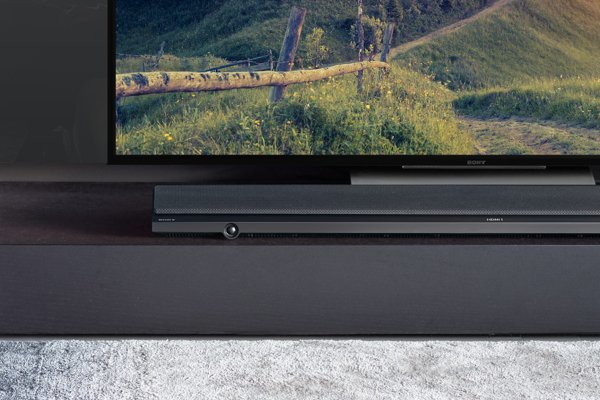
2. Soundbar Size & TV Compatibility
For aesthetics, choose a soundbar no wider than your TV. Ensure your TV has compatible audio outputs (HDMI ARC, optical) especially if it’s older than 8 years.
3. Active vs. Passive Soundbars
Active soundbars have built-in amplifiers and processors—easier setup, fewer wires. Ideal for most users. Passive soundbars require a separate receiver/amplifier but may offer higher audio quality. Best for custom installations.
4. Soundbar Channels Explained
Channels represent independent audio sources or speakers:
- 2-channel: Left and right speakers (basic stereo).
- 3-channel: Left, right, and center (improved dialogue).
- 5-channel: Adds surround speakers for immersive sound.
- 7-channel: Enhanced surround with more speakers.
- Dolby Atmos soundbars: Include upward-firing speakers for overhead sound effects (ideal for rooms with flat, reflective ceilings).
Recommendation: More channels generally provide a more immersive experience.
5. Connectivity Options
Essential connections for modern soundbars:
- HDMI ARC: Simplifies audio with a single cable; supports multi-channel audio.
- Wireless: Bluetooth for streaming from devices; Wi-Fi for whole-home audio systems.
- Optical Audio: Reliable connection but limited to 5.1 surround.
- USB: Primarily for firmware updates.
6. Control Options
Most soundbars include remotes, but many can be controlled via TV remotes (HDMI CEC) or smartphone apps. Reduce remote clutter with universal remote programming.
Frequently Asked Questions
Can you add speakers to a soundbar?
Some soundbars support wireless rear speakers (e.g., Sonos, HEOS, Bose). This is ideal for creating a multi-room audio system or expanding to surround sound.
Can you add a subwoofer to a soundbar?
Many soundbars include or support wireless subwoofers for enhanced bass. Check for a subwoofer output or bundled options.
Do you need a receiver with a soundbar?
Not with active soundbars. Passive soundbars require an external receiver/amplifier.
What are Dolby Atmos soundbars?
These use upward-firing speakers to bounce sound off the ceiling, creating a semi-immersive 3D audio effect. A good compromise for spaces that can’t accommodate overhead speakers.
What is “Cinema Sound” mode?
A digital processing feature that simulates surround sound by adding audio delay and reverb. It enhances spaciousness but isn’t true multi-channel surround.
Can a soundbar be used as a center speaker?
Technically possible with passive soundbars, but not recommended—they’re designed as all-in-one solutions.
Which soundbar brands are best?
Reputable brands include Sonos, Bose, Sony, Yamaha, and Sennheiser. Check our updated best soundbars guide for recommendations.
What about warranties?
Purchase from authorized dealers to ensure full manufacturer warranty and customer support.
Summary: How to Choose the Right Soundbar
Selecting the right soundbar involves considering your room layout, TV compatibility, desired features (like wireless streaming), and budget. Start with 3+ channels, prioritize HDMI ARC for easy setup, and consider adding a subwoofer for full bass. For personalized advice, consult audio experts or trusted retailers with proven customer service records.
Enjoy your upgraded audio experience!


Sound Bar W with dialogue enhancement Wired subwoofer Bluetooth NFC HDMI Optical Brief product description Close . No reviews yet Quick Compare As Advertised Panasonic Soundbar SCHTBGNK
thanks for the nice comments, keep reading and sharing
[…] you’ve got your new soundbar in the home, and you might want to know tips on how to run that like a professional. Effectively, now we have […]
[…] with TV is a no brainer. You simply merely can’t depend on inside speakers of your TV. Soundbar placement choices should be thought of earlier than choosing your piece. Placing it below your TV beats all different positions. Also, It is a matter of […]
[…] https://aumoz.com/how-to-choose-the-right-soundbar-for-your-home […]