


Car Speaker Sizes Explained: Which Size Fits Your Car? (2026 Guide)
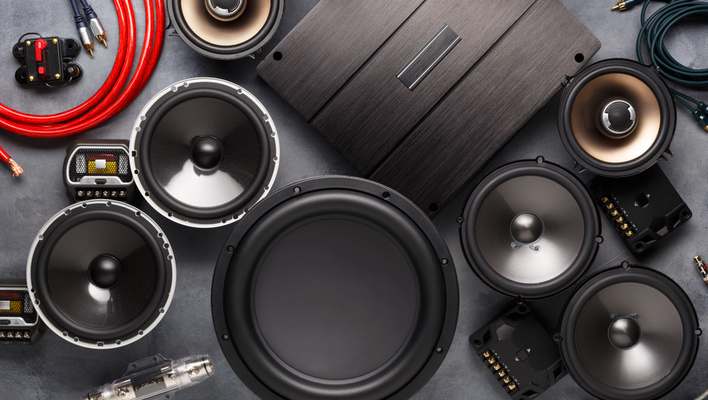
Choosing the right car speaker takes more than finding one that looks like it will fit. Car speakers come in several standard sizes, but the advertised size does not always match the exact dimensions of the speaker or the opening in your vehicle.
The quick answer: match the size your car already uses, then confirm the speaker’s diameter, mounting depth, mounting holes, and shape against the space in the door, dashboard, or rear deck. Vehicle-specific mounting brackets and adapters may also be required.
This car audio guide explains the most common car speaker sizes, how speaker dimensions work, how to measure your existing speakers, and what to check before you buy a replacement.
Quick size guide: 4×6 and 5.25-inch speakers fit compact dashboard and door locations, 5×7 and 6×8 speakers are common oval door speakers, 6.5-inch is the most popular round replacement size, and 6×9 is the most common rear-deck size.
What Does Car Speaker Size Mean?
When a speaker is described as 4×6, 5.25-inch, 6×8, 6.5-inch, or 6×9, the number does not necessarily represent the exact diameter of the cone or the complete outside dimensions of the speaker.
Speaker sizes are generally based on standard mounting dimensions and the overall frame design. Two speakers advertised as the same size can therefore have slightly different physical measurements.
Do not assume that a speaker will fit simply because its advertised size matches your existing speaker. Before buying, check the actual mounting dimensions, cutout size, mounting-hole pattern, and mounting depth.
The manufacturer’s specifications are a good starting point, but measuring the existing speaker location is the safest way to confirm compatibility. You should also check whether your vehicle requires an adapter bracket or wiring adapter.
Common Car Speaker Sizes
Car manufacturers use a wide range of speaker sizes and shapes. The six sizes below are the most common, but you may also run into 3.5-inch, 4-inch, and 6.75-inch speakers in some vehicles, so confirm your car’s size before you shop.
| Speaker Size | Common Installation Location | What to Check |
|---|---|---|
| 4×6 | Dashboard, doors, or rear locations | Oval shape, mounting holes, cutout dimensions |
| 5.25-inch | Doors, rear deck, or other compact locations | Cutout diameter and mounting depth |
| 5×7 | Doors and rear locations | Mounting pattern and vehicle-specific adapter requirements |
| 6×8 | Front and rear doors | Oval frame dimensions and mounting holes |
| 6.5-inch | Front and rear doors | Cutout diameter, mounting depth, and adapter requirements |
| 6×9 | Rear deck and some door locations | Oval cutout, mounting depth, and available space |
4×6 Car Speakers
4×6 speakers are compact speakers commonly used in dashboards and other locations where installation space is limited. Their relatively small size makes them useful for vehicles that cannot accommodate larger speakers without modification.
Because the cone is relatively small, a 4×6 speaker is not normally the first choice when strong low-frequency output is the main priority. If you want more bass, a properly matched subwoofer can handle the lower frequencies while the smaller speakers reproduce the midrange and high frequencies.
When replacing 4×6 speakers, check the frame dimensions and mounting-hole pattern rather than relying only on the 4×6 label. Also compare the speaker’s RMS power rating and impedance with the rest of your car stereo system.
5.25-Inch Car Speakers
5.25-inch speakers are compact and are commonly found in rear doors, front doors, and rear-deck locations. Their relatively small footprint makes them suitable for vehicles where installation space is limited.
They can be used as factory replacements or as part of an aftermarket audio upgrade. If you are replacing factory speakers, compare the new speaker’s mounting depth and power requirements with the original equipment.
For installation, do not rely solely on the advertised 5.25-inch size. Check the actual cutout diameter, mounting holes, and available clearance before purchasing.
5×7 Car Speakers
5×7 speakers are slightly larger than 5.25-inch speakers and use an oval frame. They are found in a number of factory car audio systems and can provide a useful upgrade when the vehicle is designed for this size.
One important consideration with 5×7 speakers is the mounting pattern. Some vehicles require a specific adapter bracket or a compatible replacement design. Always check vehicle compatibility before ordering. 5×7 and 6×8 speakers often share similar mounting dimensions, and some models are sold as fitting both, but confirm this for your specific vehicle.
As with other speaker sizes, compare the speaker’s RMS power handling and impedance with the head unit or amplifier that will drive it.
6×8 Car Speakers
6×8 speakers have an oval shape and are commonly used in vehicle doors and other factory mounting locations. Their larger frame provides more cone area than many smaller speaker sizes while still fitting relatively compact installation spaces.
When replacing factory 6×8 speakers, pay particular attention to the mounting-hole pattern and the depth available behind the mounting surface. A speaker can have the correct 6×8 designation and still require an adapter for a particular vehicle.
Many aftermarket brands make 6×8 speakers, but always confirm fit for your specific vehicle rather than relying on the size label.
6.5-Inch Car Speakers
6.5-inch car speakers are among the most common aftermarket speaker sizes. They are widely used in front and rear doors and are available in both coaxial and component configurations.
A 6.5-inch speaker can provide a good balance between midrange, upper frequencies, and bass response, but the actual sound depends on the speaker design, installation, enclosure, amplifier, and vehicle environment.
If you are replacing factory speakers, check the available mounting depth carefully. Some aftermarket 6.5-inch speakers have larger magnets or deeper baskets than the original speakers and may require spacers or mounting adapters.
You should also compare RMS power handling and impedance with your amplifier or factory head unit. Choosing a speaker solely because it is labeled 6.5 inches does not guarantee that it will be a suitable replacement. Some vehicles also use 6.75-inch speakers, which are sometimes listed alongside 6.5-inch models, so measure before you order.
6×9 Car Speakers
6×9 speakers have an oval frame and provide a relatively large cone area. They are commonly used in rear-deck installations and some larger door locations.
The additional cone area can help a 6×9 speaker produce stronger mid-bass than many smaller speakers, although the final bass response depends on the speaker design and installation.
Many 6×9 coaxial speakers also include a dedicated tweeter. This allows the same speaker assembly to reproduce a wider range of frequencies.
If you are considering a 6×9 replacement, make sure the available mounting area is large enough and check the cutout dimensions, mounting holes, and speaker depth before buying.
What About Tweeters, Woofers, and Subwoofers?
The six speaker sizes above are common full-range or coaxial speaker formats, but car audio systems can also use separate tweeters, woofers, and subwoofers.
Tweeters
Tweeters are small drivers designed primarily to reproduce high frequencies. They are often used with larger speakers in component systems and may be installed in the dashboard, door trim, pillars, or other locations.
Tweeter size alone does not determine sound quality. When selecting a tweeter, also consider its frequency range, power handling, impedance, mounting requirements, and compatibility with the crossover and other drivers in the system.
Full-Range and Coaxial Car Speakers
Coaxial speakers combine two or more drivers in a single speaker assembly. A typical 2-way coaxial speaker combines a woofer or midrange driver with a tweeter, while a 3-way design adds another driver.
The main advantage is straightforward installation because the drivers are integrated into one unit. Coaxial speakers are therefore a common choice for replacing factory speakers without completely redesigning the audio system.
Component Speaker Systems
Component speakers use separate drivers, typically including a woofer, tweeter, and crossover. Because the drivers can be installed in different positions, component systems provide greater flexibility when building a custom audio system.
Component systems can require more installation work than coaxial speakers, so available space, mounting depth, wiring, and crossover placement should all be considered before installation.
Woofers and Subwoofers
Woofers and subwoofers are designed to reproduce lower frequencies. They are generally larger than the small full-range speakers installed in doors and dashboards.
If your main goal is significantly stronger bass, replacing your factory door speakers with larger speakers is not always the most effective solution. A properly installed subwoofer and amplifier can be used to handle the lowest frequencies while the main speakers concentrate on midrange and high-frequency reproduction.
Subwoofers also require sufficient enclosure and installation space, so check the available trunk or rear cargo area before choosing one.
Which Car Speaker Size Is Right for You?
The correct speaker size is primarily determined by your vehicle’s existing mounting location. You should not choose a speaker simply because it is larger or because you prefer a particular size.
- Check the existing speaker first. If your vehicle currently uses 6×8 speakers, start by looking for compatible 6×8 replacements.
- Measure before buying. Confirm the cutout dimensions, mounting-hole pattern, and available depth.
- Check for adapters. Some vehicles require mounting brackets, spacers, wiring adapters, or other installation hardware.
- Consider your bass requirements. If you want substantially more low-frequency output, consider whether a dedicated subwoofer would be more appropriate.
- Match the speaker to your system. Check RMS power handling and impedance against the head unit or amplifier.
- Consider the speaker’s construction. Size alone does not determine sound quality. Materials, sensitivity, frequency response, power handling, and installation all matter.
How to Measure Car Speaker Size (Step by Step)
If you are unsure which speakers fit your vehicle, measuring the existing installation is one of the safest ways to avoid buying an incompatible replacement.
Depending on the vehicle, you may need a screwdriver, tape measure, panel-removal tools, and a notebook or phone for recording measurements.
- Remove the speaker grille or door panel. Some speakers are accessible behind a grille, while others require removal of part of the interior trim.
- Remove the existing speaker. Carefully disconnect the wiring and remove the mounting screws.
- Measure the mounting depth. Measure from the mounting surface to the deepest point behind the speaker. Make sure there is enough clearance for the replacement speaker’s magnet.
- Measure the cutout. Record the diameter or dimensions of the opening where the speaker is mounted.
- Measure the mounting-hole pattern. Note the position and spacing of the screw holes.
- Check the overall available space. Make sure the replacement speaker will not interfere with the door panel, window mechanism, grille, or other components.
- Record all measurements. Keep the measurements with the vehicle information so you can compare them with the manufacturer’s specifications before purchasing.
For additional car-audio testing information, see our guide on how to test and check car audio.
What to Check When Choosing Different Speaker Sizes
Speaker size is important, but it is only one part of choosing the right replacement. A speaker that physically fits may still not be the best match for your vehicle’s audio system.
Installation Space and Speaker Diameter
Start by checking the opening where the speaker will be installed. Measure the cutout and compare it with the manufacturer’s mounting dimensions.
Remember that a speaker’s advertised size is not always the same as its exact outside dimensions. Oval speakers such as 4×6, 5×7, 6×8, and 6×9 also require careful attention to their width, height, and mounting-hole pattern.
Mounting Depth
Mounting depth is the distance from the speaker’s mounting surface to the deepest part of the speaker assembly, usually around the magnet.
This measurement is particularly important for door speakers. If the replacement speaker is too deep, it may interfere with the window mechanism or the inside of the door.
Mounting Holes and Adapters
Even when the speaker diameter is correct, the mounting holes may not line up with the factory mounting points.
In that situation, a vehicle-specific adapter bracket may be required. Check the manufacturer’s vehicle-fit information before purchasing.
Power Handling and Impedance
Check the speaker’s RMS power handling and impedance before connecting it to your factory head unit or an aftermarket amplifier.
A speaker’s advertised maximum or peak power figure is less useful for matching an audio system than its RMS rating. The amplifier and speaker should be selected as a compatible system.
Sound Quality
Different speaker sizes can have different strengths, but size alone does not determine sound quality. Speaker design, materials, sensitivity, frequency response, installation, amplification, and the vehicle’s acoustics all affect the final result.
Smaller speakers are often used for midrange and high-frequency reproduction, while larger drivers can generally move more air and provide stronger low-frequency output. However, the specific design of the speaker matters just as much as its physical size.
Frequently Asked Questions About Car Speaker Sizes
How do I know what size speakers my car needs?
Check your owner’s manual or the vehicle-fit tool on a car audio retailer’s or speaker manufacturer’s website, then confirm by measuring the existing speaker. Check the cutout dimensions, mounting-hole pattern, mounting depth, and available clearance before buying a replacement.
Can I install a different speaker size?
Sometimes. A different size may be possible with a mounting adapter, spacer, or modification to the mounting location. However, modifying a vehicle should be done carefully because the speaker location may contain wiring, window mechanisms, or other components.
Are bigger car speakers always better?
No. A larger speaker can provide greater cone area and may offer stronger low-frequency output, but sound quality depends on many factors. A properly matched speaker that fits correctly can perform better than a larger speaker that is poorly installed or mismatched with the audio system.
Do 6.5-inch speakers fit every car?
No. 6.5-inch speakers are common, but vehicles use different mounting depths, brackets, cutouts, and mounting-hole patterns. Always check vehicle compatibility before ordering.
What is the most common car speaker size?
6.5-inch speakers are among the most common for doors, 6×9 speakers are the most common for rear decks, and 5.25-inch and 4×6 speakers are common in smaller or older vehicles. The right size for you is whatever your vehicle was built to use.
Do I need an amplifier for aftermarket car speakers?
Not necessarily. Many aftermarket speakers can be powered by a factory head unit, provided their power requirements are suitable. An amplifier may be useful when you need more power or want to build a higher-output audio system.
Final Thoughts
Choosing the correct car speaker size starts with the vehicle, not the speaker box. Measure the existing installation, check the mounting depth and hole pattern, and compare the manufacturer’s specifications before buying.
Common sizes such as 4×6, 5.25-inch, 5×7, 6×8, 6.5-inch, and 6×9 cover many factory and aftermarket applications, but there is no universal speaker size that fits every vehicle.
If you are upgrading your system, also consider speaker sensitivity, RMS power handling, impedance, speaker type, and installation quality. When these factors are matched correctly, you can build a car audio system that delivers the sound you want without buying speakers that do not fit.


[…] Speaker wire size instance #1 […]
[…] evenings, this is the show for you because it focuses on conversation. However, due to the modest size of the speakers, it may not provide the best sound quality for music, particularly rock and […]
[…] of TV are providing exterior sound gadgets together with TV. Evidently, they know that the interior speakers are not only less than usual in size however are underpowered as well. Furthermore, the interior speakers are built-in right into a […]
[…] Size of the speaker, i.e., the size of the speaker. […]